
DDP (Delivered Duty Paid) and DDU (Delivered Duty Unpaid) define responsibility for customs clearance, duty payment, and final delivery.
DDP places full import responsibility on the seller, while DDU requires the buyer to handle duties and taxes upon arrival.
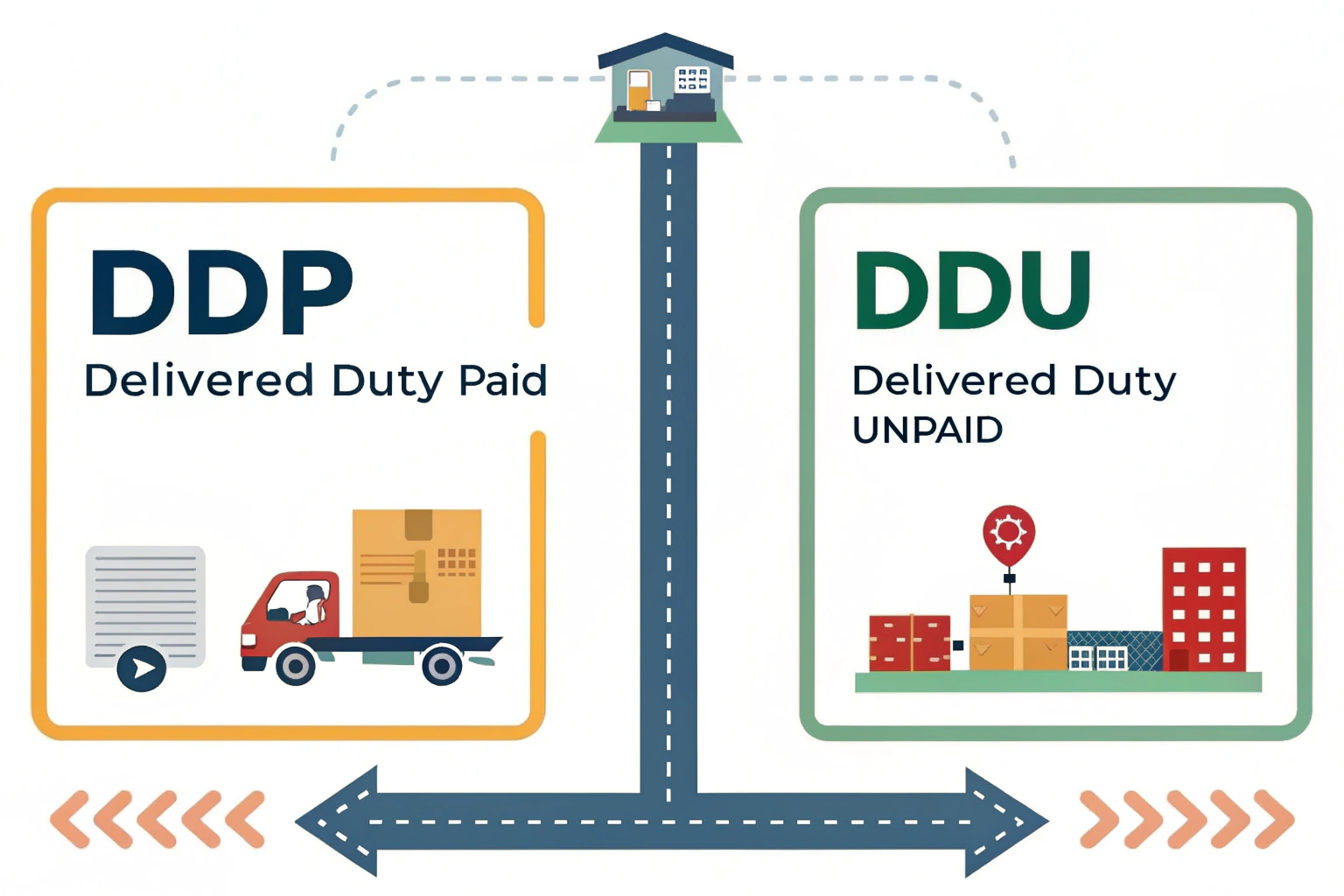
Clear understanding of these terms ensures predictable logistics planning, consistent landed-cost calculations, and smoother cross-border operations.
Core Definitions of DDP and DDU
DDP — Delivered Duty Paid
All import responsibilities fall on the shipper. Duties, taxes, customs procedures, and final delivery are completed before handover at destination.
DDU — Delivered Duty Unpaid
The shipper delivers goods to the destination country, but duties, taxes, and customs release remain the consignee’s responsibility.
DDU is not included in the current Incoterms framework but remains widely used in international trade under commercial practice.
Responsibility Breakdown Under Each Term
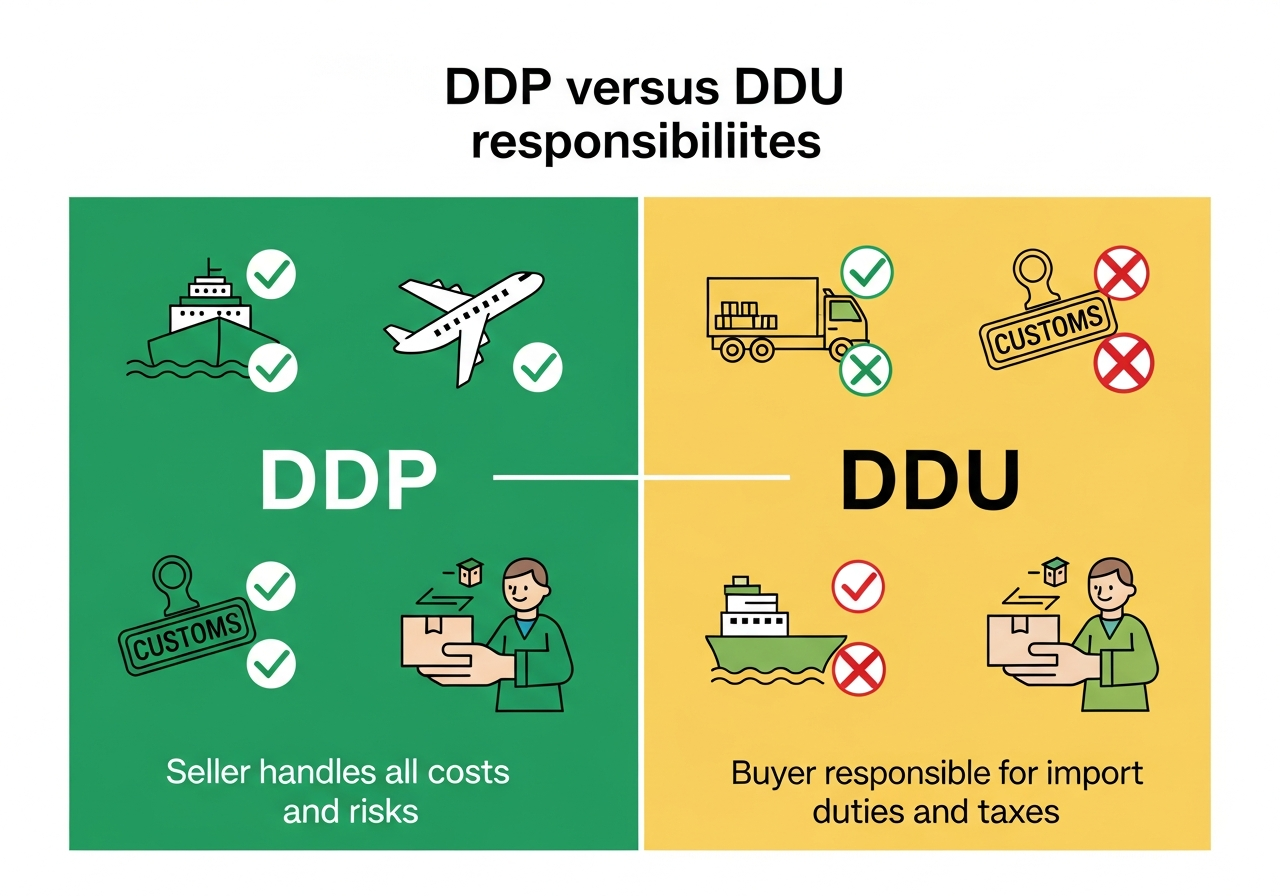
Clear allocation of responsibilities helps avoid confusion at border entry points.
Under DDP
- Export clearance handled by shipper
- International freight and insurance arranged by shipper
- Import customs, duties, and VAT paid by shipper
- Final delivery completed before turnover to consignee
Under DDU
- Export procedures and freight handled by shipper
- Import customs, duties, and VAT handled by consignee
- Delivery after customs release may involve additional local fees
Cost and Risk Implications
DDP centralises cost control with the shipper but requires accurate knowledge of destination taxes and compliance rules.
DDU shifts tax exposure and administrative burden to the consignee, often resulting in unexpected charges on arrival.
Cost visibility differences
- DDP provides a complete landed-cost figure
- DDU may create variability because local duties and handling charges are assessed at customs
Risk considerations
- DDP increases regulatory exposure for the entity managing import clearance
- DDU may lead to delays if the consignee is unprepared for customs procedures
Operational Impact on Customs and Last-Mile Delivery
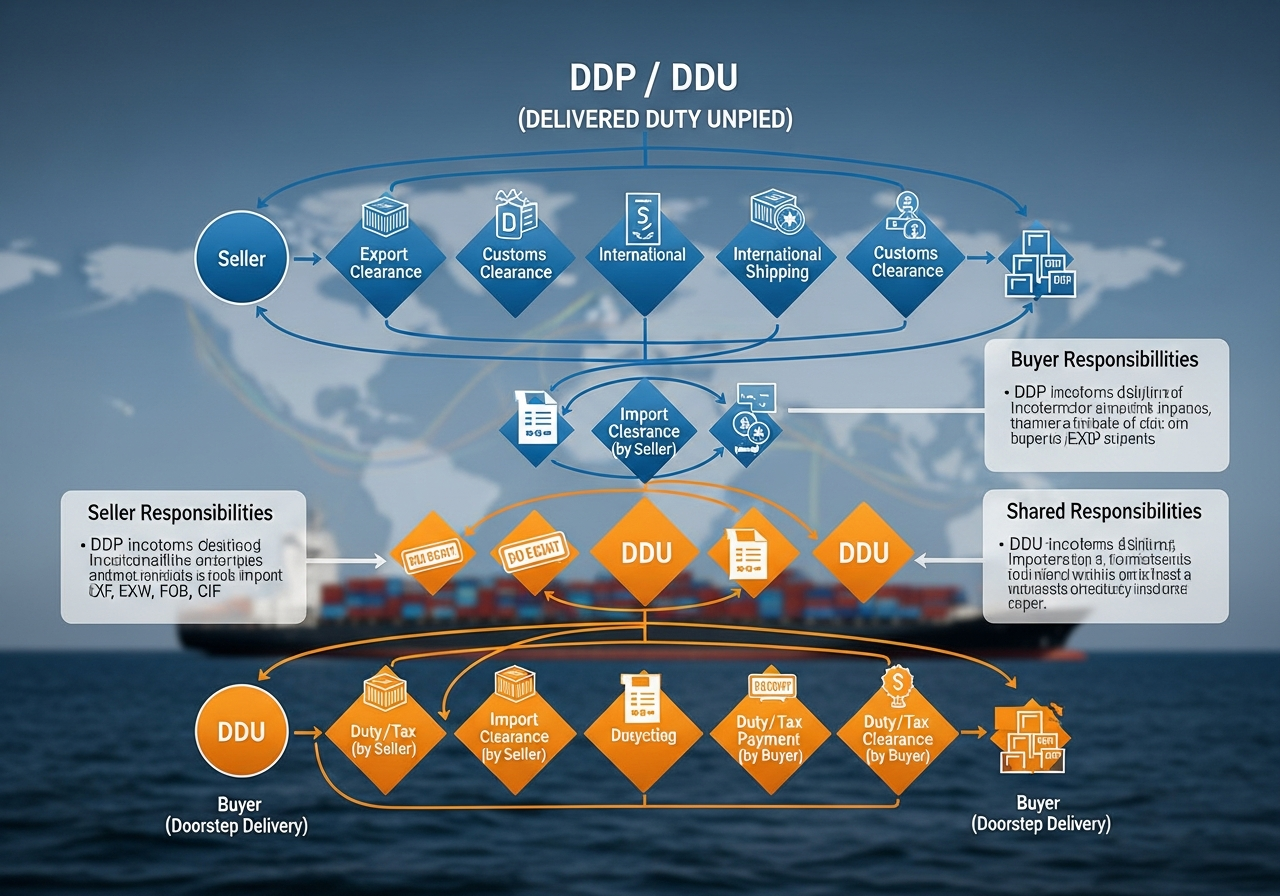
DDP shipments typically clear faster because customs preparation occurs before arrival.
DDU shipments may experience hold times if duties remain unpaid or required documents are incomplete.
Operational effects
- Faster release with pre-filed documents under DDP
- Potential storage fees or failed delivery attempts under DDU
- Importance of harmonised HS codes, accurate values, and compliant packaging in both models
When to Use DDP or DDU in International Logistics
Best use cases for DDP
- High-value consumer goods where predictable delivery matters
- Destinations with strict customs processes
- Transactions requiring full landed-cost clarity
- Multi-supplier consolidation where uniform documentation is essential
Best use cases for DDU
- Markets with complex import tax structures
- Situations where the consignee prefers direct control of customs procedures
- Low-value or sample shipments with minimal duty exposure
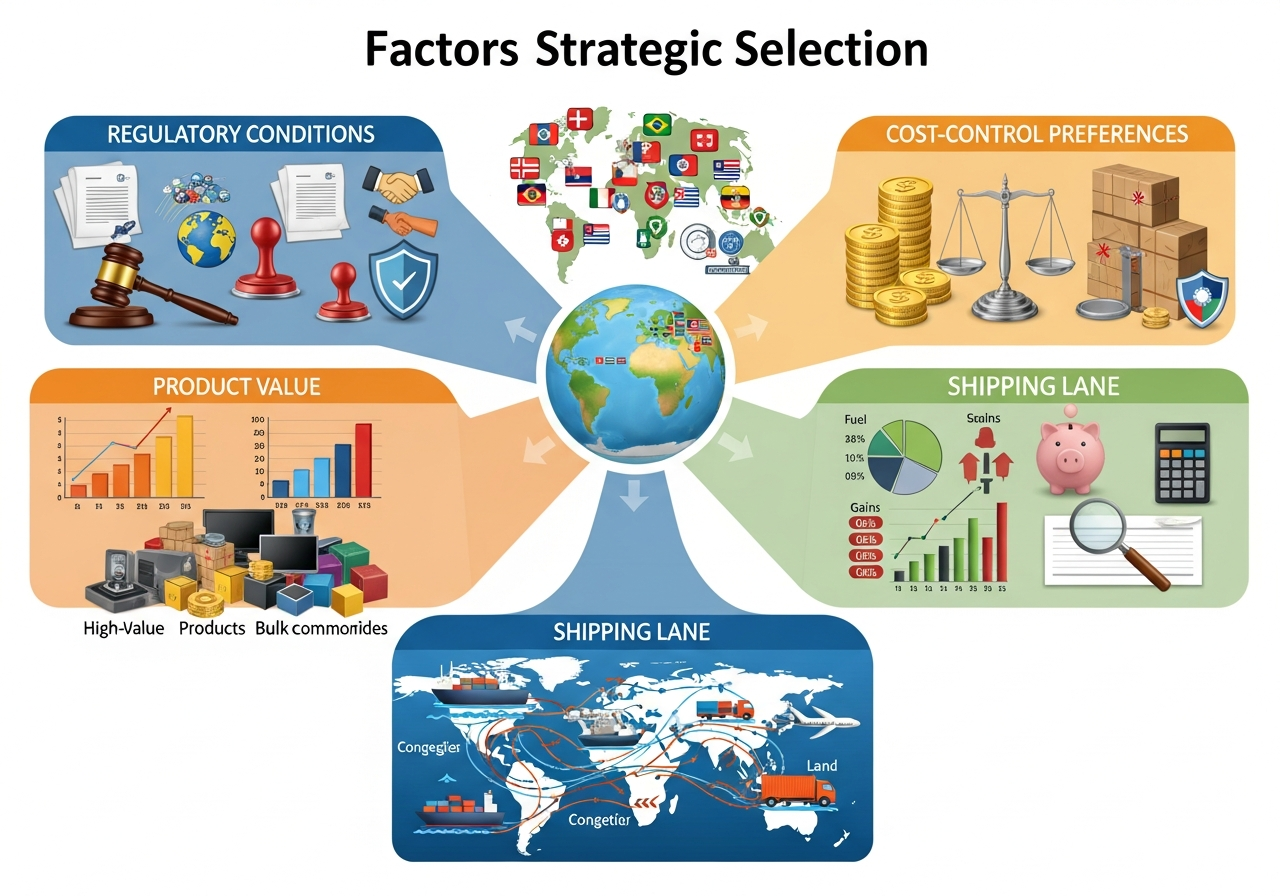
Strategic selection depends on regulatory conditions, product value, shipping lane, and cost-control preferences.
Documentation Requirements for Smooth Execution
Both terms rely on aligned documentation to avoid customs intervention.
Critical documents
- Commercial invoice with precise HS codes
- Packing list matching physical carton data
- Origin information where applicable
- Digital customs submissions for express carriers
- Clearance instructions indicating DDP or DDU billing structure
Documentation accuracy directly influences customs speed and overall transit performance.
Conclusion
DDP and DDU define responsibility distribution across customs procedures, tax settlement, and final delivery.
DDP centralises duty payment and provides predictable landed costs, while DDU places import charges and regulatory steps on the receiving side.
Effective selection of these terms depends on cost-control strategy, compliance requirements, and operational capacity across the supply chain.
Consistent documentation, correct HS classification, and aligned customs instructions strengthen reliability under both models, supporting smooth cross-border movement and stable delivery outcomes.

 Chinese
  English