
US import tax and duties are calculated based on product type, declared value, HS code, and applicable trade policies. Correct classification and accurate documentation ensure smooth customs clearance and predictable cost.
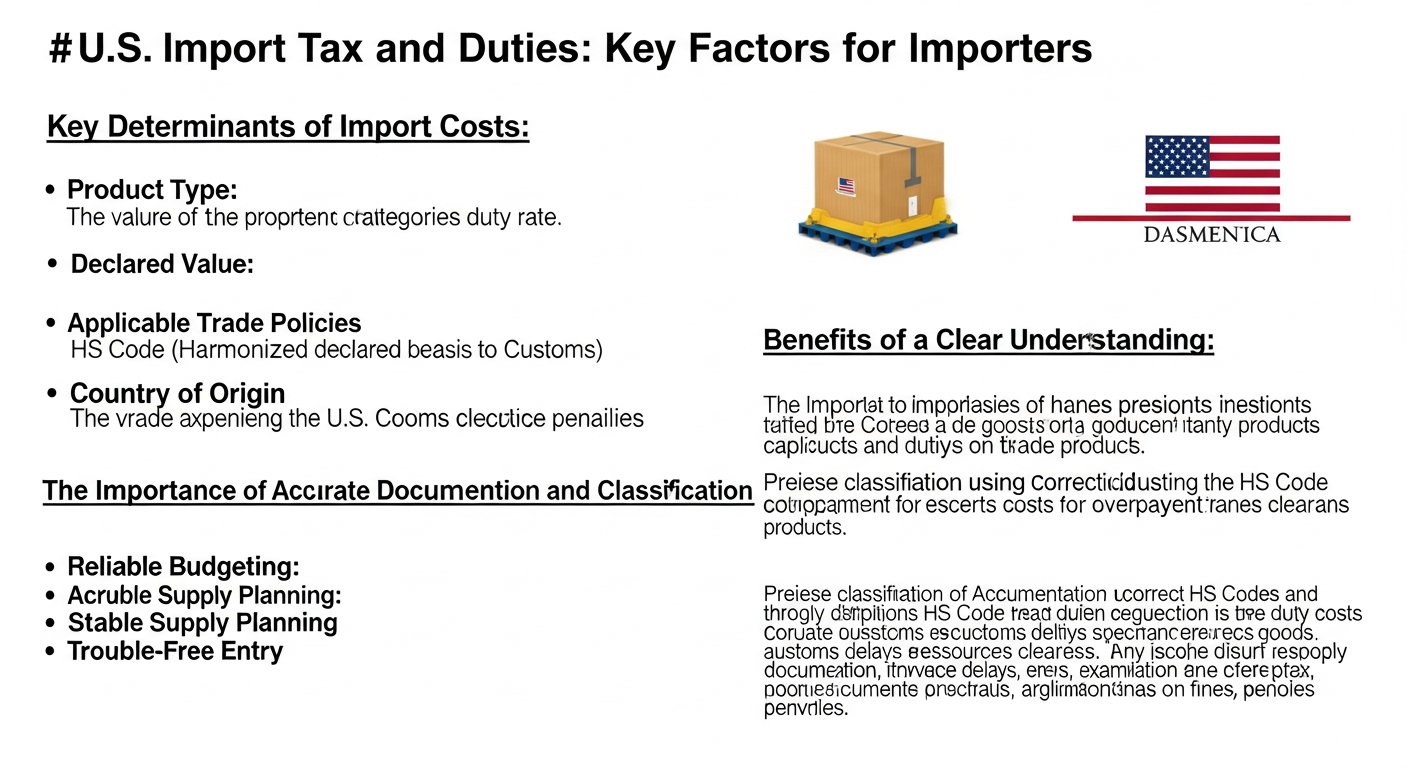
A clear understanding of these rules supports reliable budgeting, stable supply planning, and trouble-free entry for shipments arriving from overseas suppliers.
What determines how much import duty is charged?
Duty depends on HS code, product category, declared value, and special tariffs. Each factor influences the final amount.
Import duty is calculated using the product’s HS code and the declared customs value.
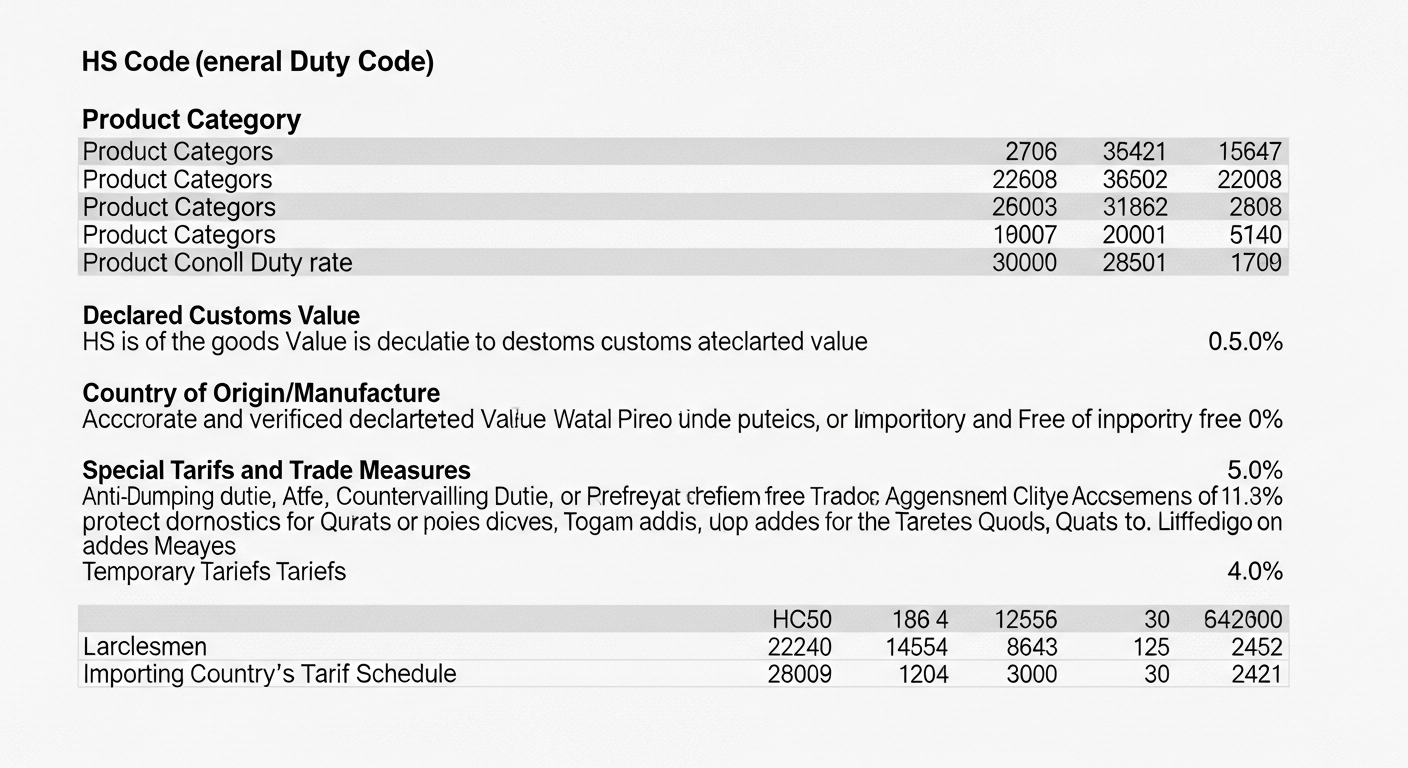
How duty calculation works
U.S. Customs and Border Protection (CBP) uses the HS code to determine the duty rate. Different categories—electronics, apparel, tools, home goods, auto parts—carry different percentages. The customs value includes product cost plus shipping and insurance if applicable.
Special tariffs, such as Section 301 duties on certain China-made goods, may apply on top of regular duty rates. Inconsistent product descriptions or incorrect HS codes often trigger customs reviews and delay clearance. Clear labeling, accurate specification sheets, and consistent supplier documentation reduce these risks.
Stable export preparation also helps. When shipments are consolidated, item information stays uniform, minimizing classification errors. Predictable HS coding prevents unexpected duty costs and keeps import planning efficient.
How does customs value affect taxes and fees?
Customs value is the base figure used to calculate duty, tariff, and sometimes additional taxes.
Higher declared value results in higher duty. Lower or inaccurate value may trigger customs inspection.
Understanding customs valuation
CBP uses the transaction value (the price paid to the supplier). Attempts to undervalue goods often cause customs to request invoices, bank records, or supplier contracts. This slows clearance and can lead to penalties.
Correct valuation keeps the calculation transparent. When suppliers provide consistent invoices, packing lists, and descriptions, customs processing becomes faster. Consolidated export paperwork also reduces mismatches between product lists and actual cargo. A structured valuation process ensures shipments pass through ports without unnecessary checks.
What additional taxes apply besides duty?
Depending on the product, importers may pay MPF (Merchandise Processing Fee), HMF (Harbor Maintenance Fee), and special tariffs.
MPF applies to most entries, while HMF applies to ocean shipments entering U.S. ports.
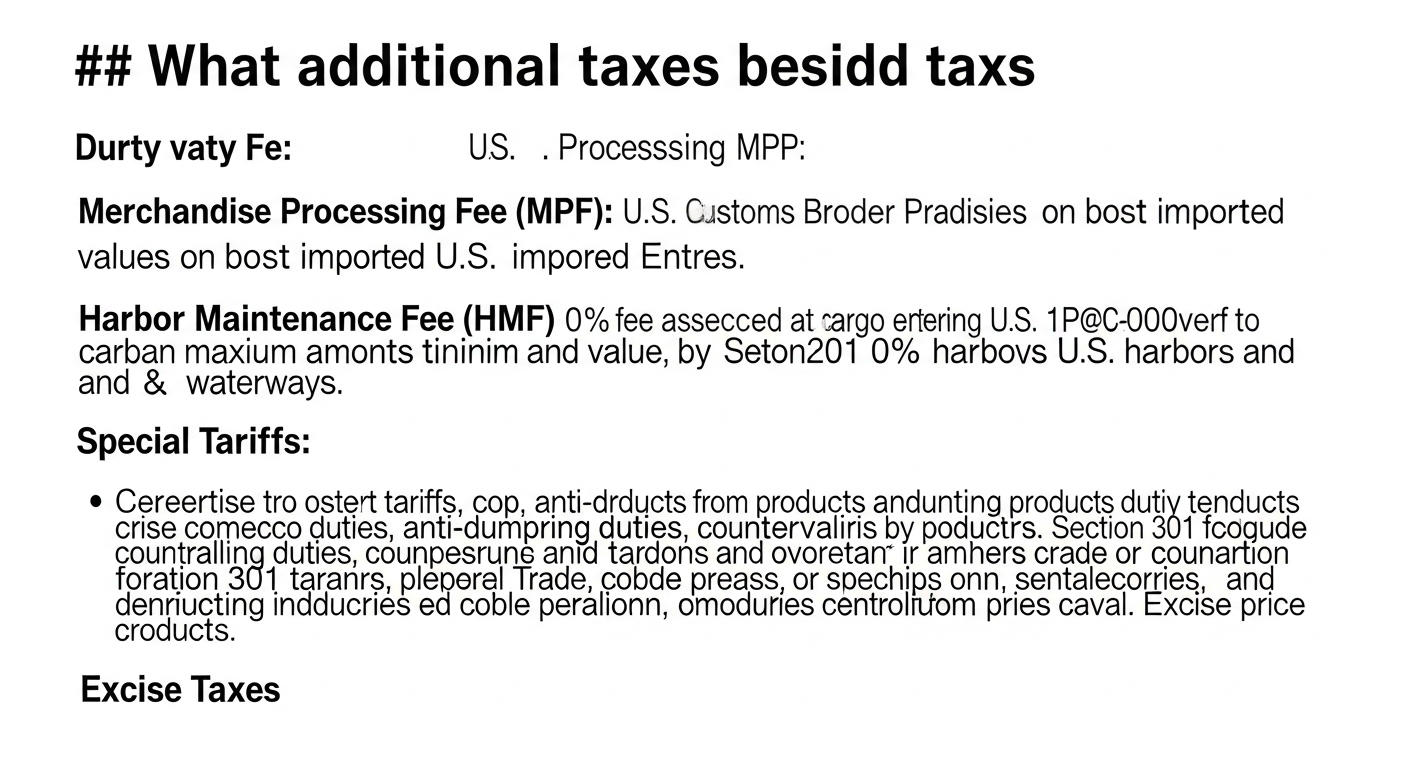
How these fees work
MPF is typically a small percentage of the customs value with a set minimum and maximum charge. HMF applies only to sea freight and is calculated as a percentage of the cargo value.
Some products face anti-dumping or countervailing duties (AD/CVD). These arise when U.S. authorities determine that certain imports receive unfair subsidies or are priced below market value. These duties are significant and require accurate classification to avoid errors.
Consistent documentation, stable sourcing, and reliable supplier declarations reduce the risk of falling under AD/CVD scrutiny. Clear data also supports predictable landed cost planning, an essential factor in final pricing and profit margins.
How does customs clearance work?
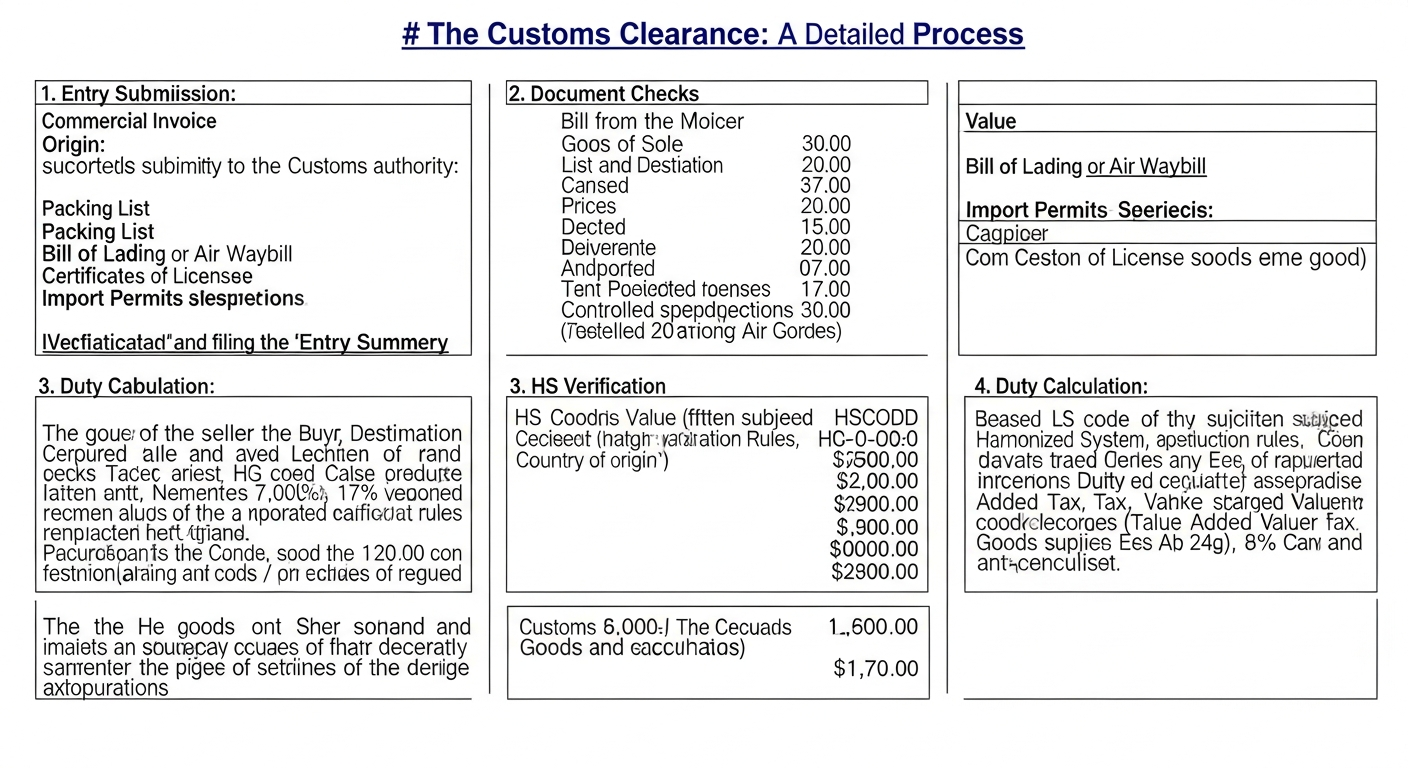
Customs clearance involves entry submission, document checks, HS verification, and duty calculation.
Clearance finishes once customs approves the entry and releases the shipment.
Why clearance takes time
CBP reviews entries electronically through the Automated Commercial Environment (ACE). Customs evaluates invoices, packing lists, HS codes, and certificates. If details match and no irregularities appear, clearance is quick. Delays occur when product descriptions are vague, codes look incorrect, or shipment types fall under restricted categories.
Goods like electronics, batteries, liquids, medical items, and branded goods often require extra compliance checks. Stable export preparation—unified labeling, correct HS coding, and consistent value declaration—prevents extended reviews. When clearance flows smoothly, transit times remain predictable and warehouse planning stays on track.
How to avoid delays or unexpected duties?
Delays usually come from incorrect HS codes, incomplete documents, or inconsistent product data.
Accurate documentation and unified declarations reduce duty errors and customs holds.

Preventing duty-related problems
Customs frequently flags shipments when:
- HS codes are misclassified
- Values appear too low or inconsistent
- Product descriptions lack detail
- Supplier invoices differ from actual cargo
- Sensitive goods lack proper certificates
A consistent workflow helps avoid these issues. Standardized supplier paperwork, pre-checks at origin warehouses, and consolidated export documentation reduce mismatches. Stable routing channels also prevent repacking or re-labeling that may confuse customs systems.
Well-prepared entries move through ports faster, minimize duty surprises, and support stable cost planning.
Conclusion
US import tax and duty rules depend on HS code, declared value, shipment type, and additional tariffs. Understanding these factors helps maintain accurate budgeting and smoother customs clearance. Proper documentation, consistent labeling, and unified supplier information prevent duty errors and reduce inspection risk. When entries follow clear standards—from product classification to valuation—shipments move through customs predictably, supporting steady supply flow and reliable delivery across all trade routes. This structured approach keeps operations efficient, protects margins, and ensures each shipment enters the U.S. market with minimal disruption.
 Chinese
  English