
Break bulk cargo refers to goods that are shipped individually—such as crates, bags, pallets, barrels, machinery, and oversized items—rather than in standard containers.
Break bulk is used for cargo too large, heavy, irregular, or specialized for container loading.
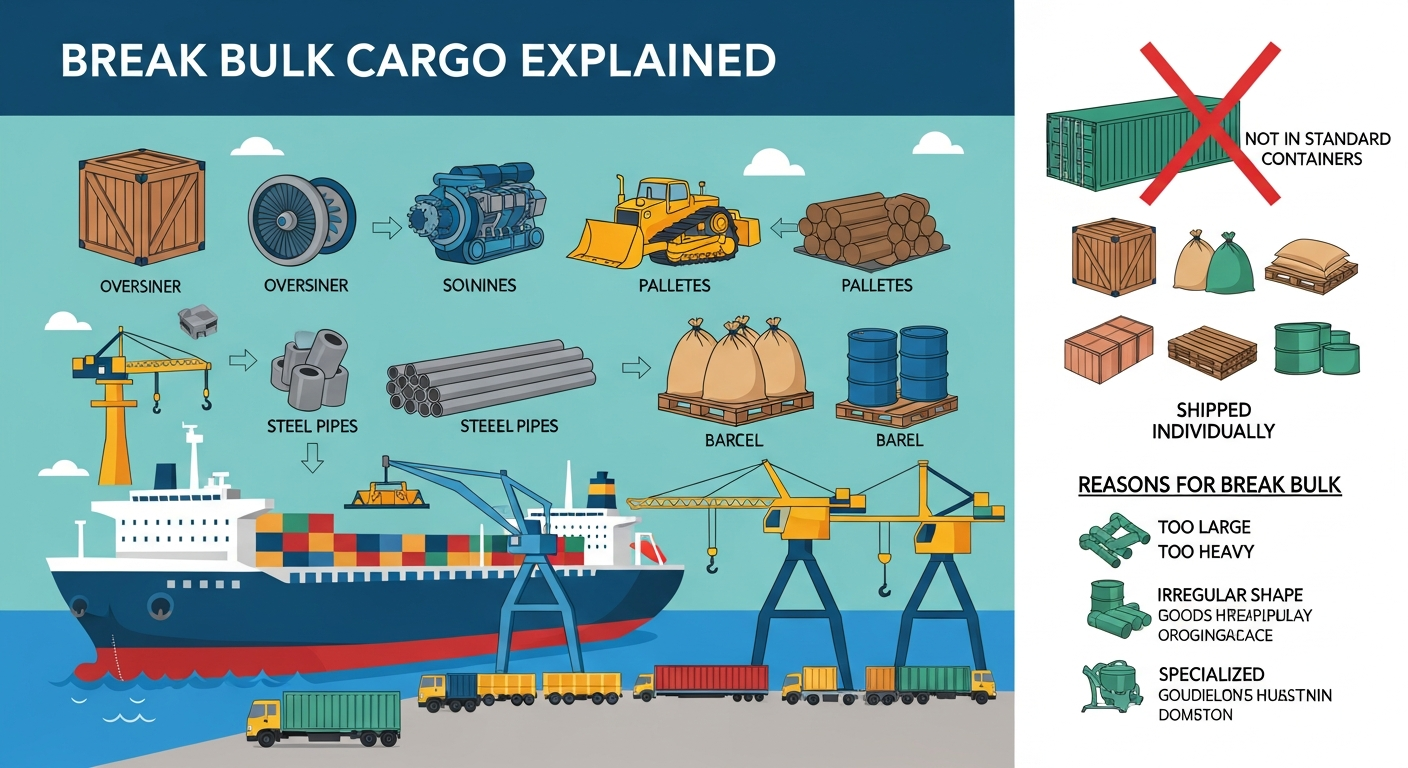
Understanding break bulk cargo helps importers plan safe handling, prevent damage, and coordinate specialized shipping for machinery, construction materials, vehicles, and industrial equipment.
What is break bulk cargo?
Traditional containers cannot hold every type of shipment, especially oversized or irregular goods.
Break bulk cargo includes items moved piece-by-piece instead of inside standardized shipping containers.
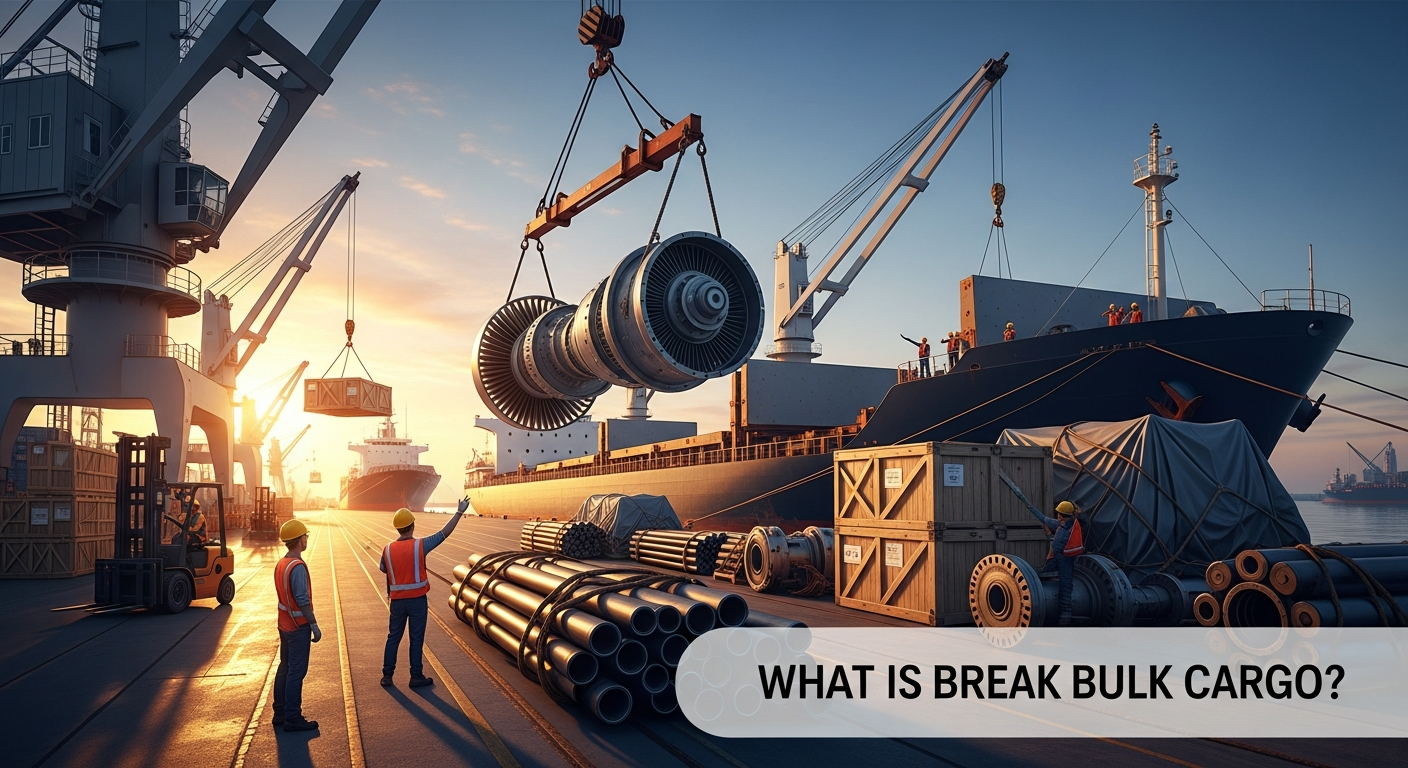
Definition, Cargo Types, and Shipping Characteristics
Break bulk cargo refers to individually loaded goods transported on vessels using cranes, slings, nets, or forklifts. Unlike containerized freight, these items are not placed inside 20GP or 40HQ containers. Instead, they are moved onto the vessel’s deck or hold as stand-alone units.
Common break bulk cargo types include:
- Heavy machinery and industrial equipment
- Steel coils, pipes, beams, and construction materials
- Project cargo (wind turbines, generators, transformers)
- Palletized goods too large for container doors
- Vehicles, boats, or oversize machinery requiring roll-lift operations
Break bulk offers flexibility for large or odd-shaped freight. Port terminals use specialized equipment and trained personnel to ensure safe loading. With proper planning, break bulk allows efficient movement of cargo that cannot fit standard containers.
When should break bulk shipping be used?
Some shipments are too large, too heavy, or too awkward for containerized transport.
Break bulk shipping is used when cargo cannot fit inside containers or requires special lifting methods.
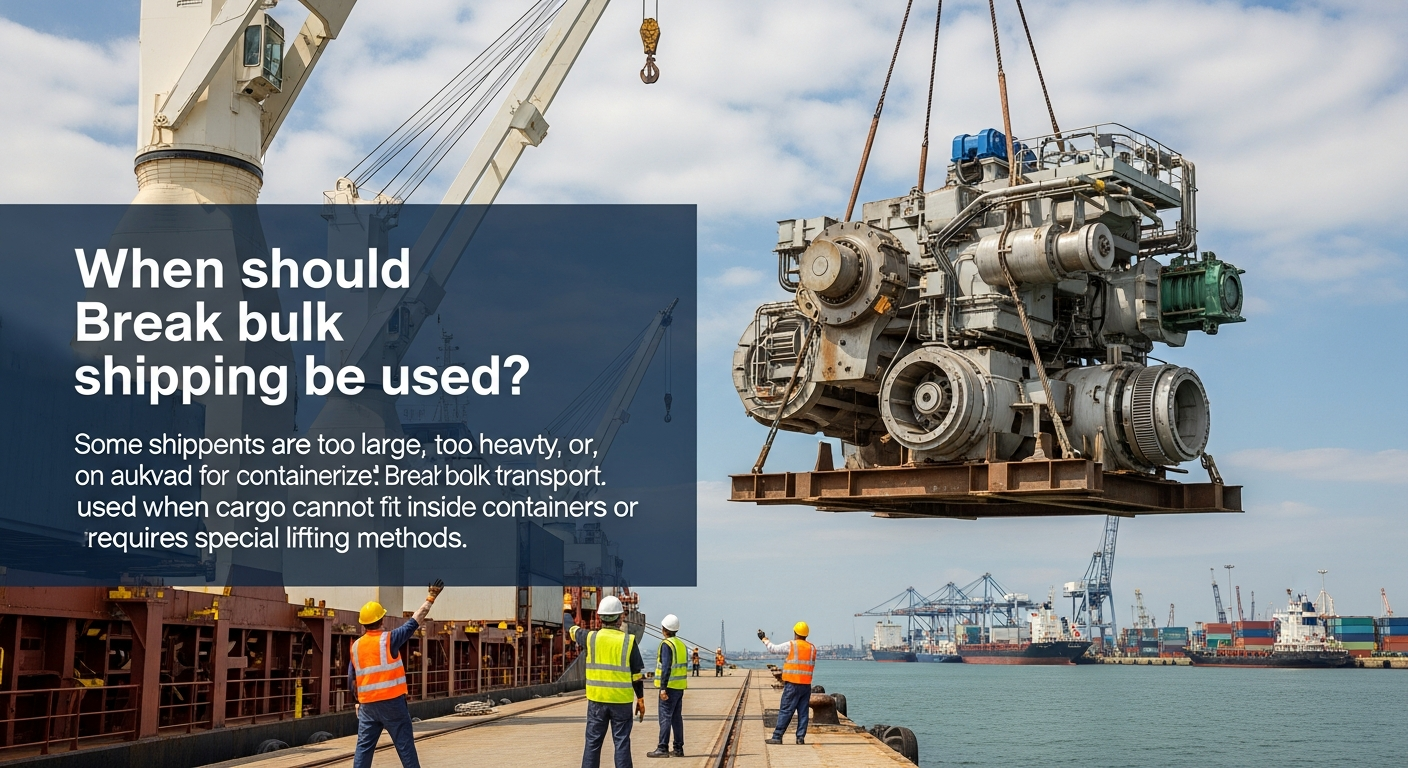
Cargo Limitations, Special Handling, and Cost Considerations
Break bulk becomes the right choice when:
- Cargo dimensions exceed container or flat-rack capacity
- Cargo weight surpasses container safe limits
- Machinery or equipment must stay assembled
- Cargo requires direct crane lifting to the vessel
- Oversized items must be transported as project cargo
- Palletized or bundled goods make containerizing inefficient
Although break bulk can cost more than container shipping, it avoids expensive disassembly, repacking, and reassembly. Heavy industries—construction, mining, oil and gas, automotive, and manufacturing—frequently rely on this method.
Planning includes detailed measurements, weight declarations, lifting diagrams, and securing methods to ensure safe vessel loading.
How does break bulk shipping work?
Break bulk requires specialized port equipment, careful planning, and precise coordination to handle oversized or irregular goods.
Break bulk shipping works by lifting individual cargo pieces onto vessels and securing them for ocean transport.
Loading Flow, Port Handling, and Voyage Operations
A typical break bulk workflow includes:
-
Pre-shipment measurement and documentation
Cargo dimensions, weight, lifting points, and securing instructions are confirmed. -
Warehouse or factory pickup
Trucks move goods—often on pallets, cradles, or steel frames—to the port. -
Port receiving and staging
Terminal staff inspect cargo, apply handling labels, and prepare equipment. -
Vessel loading
Using cranes, slings, forklifts, and lifting frames, crews load each piece into the hold or onto the deck. -
Securing and lashing
Chains, straps, timber blocks, steel supports, and welded points stabilize cargo. -
Ocean voyage and monitoring
Crews check securing gear regularly to ensure safety, especially in rough weather. -
Discharge at destination
Cargo is lifted off the vessel and transferred to trucks for inland delivery.
Break bulk shipping requires detailed planning to meet port regulations and safety requirements. Strong communication between carriers, suppliers, and logistics teams ensures successful execution.
What equipment is used in break bulk operations?
Oversized cargo requires specialized tools that standard container operations do not use.
Break bulk shipping uses cranes, slings, lifting frames, and custom cradles.

Lifting Gear, Securing Tools, and Support Structures
Common equipment includes:
- Ship and dockside cranes
- Heavy-duty slings, spreader bars, and lifting beams
- Timber or steel cradles for machinery
- Forklifts and reach stackers
- Chain lashing, ratchet straps, and welded securing points
- Roll-on/roll-off ramps for wheeled cargo
Each tool ensures safe transfer of weight and stability during lifting. Properly engineered lifting points and load distribution prevent damage and ensure compliance with port safety standards.
Industrial cargo may also require custom-built packaging supports to avoid movement during ocean transit.
What challenges come with break bulk shipping?
Handling large and irregular cargo increases operational risks and requires strict planning.
Break bulk challenges include higher handling risk, longer loading time, and higher cost.

Damage Risk, Weather Exposure, and Operational Complexity
Break bulk cargo faces challenges such as:
- Larger exposure to weather and sea conditions
- More handling steps compared to containers
- Higher port and labor fees
- Longer loading and unloading schedules
- Need for specialized vessels and crew
- Complex documentation including lifting plans and engineering drawings
Damage risk increases with improper packing, weak cradles, or insufficient securing. For importers sourcing heavy machinery from China, accurate measurements and reinforced packaging are essential to avoid delays or rejected cargo at ports.
Working with experienced break bulk operators ensures compliance with safety requirements and reduces operational surprises.
How should break bulk cargo be packed?
Improper packing leads to shifting, breakage, or instability during loading.
Break bulk requires reinforced packing using cradles, frames, and industrial-grade materials.
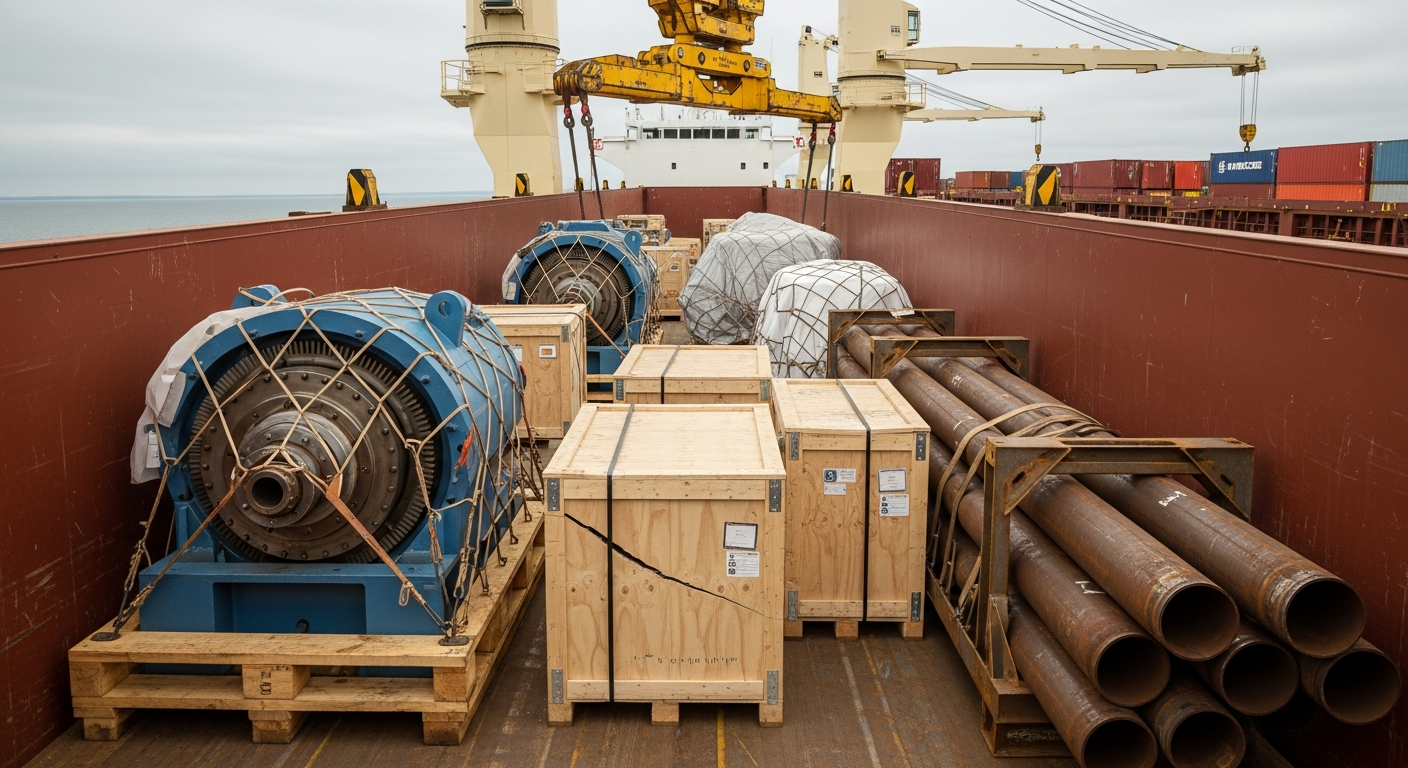
Crating, Lashing Points, and Reinforcement
Packing considerations include:
- Heavy-duty wooden crates for machinery
- Steel frames or skids for oversized loads
- Waterproof wrapping for moisture-sensitive cargo
- Strong lifting points built into the structure
- Shock-absorbing materials for fragile industrial equipment
- Center-of-gravity markings for safe crane operation
Port teams rely on clear labels, handling instructions, and weight markings to plan lifting operations safely. Reinforced packing prevents accidents and ensures compliance with international handling standards.
Which industries commonly use break bulk shipping?
Break bulk shipping is essential for heavy industrial sectors relying on non-containerized cargo.
Industries using break bulk include energy, construction, automotive, mining, and manufacturing.
Industrial Sectors and Their Cargo Types
Common industry applications include:
- Oil and gas: pipes, drilling rigs, turbines
- Construction: beams, steel bars, prefab structures
- Mining: heavy vehicles, machinery, crushers
- Automotive: oversized vehicles or parts
- Factories: CNC machines, production lines, industrial equipment
Break bulk is indispensable for large infrastructure projects where container shipping is impractical or impossible.
What documents are needed for break bulk shipping?
Break bulk requires more detailed documentation due to the complexity and cargo type.
Key documents include lifting plans, packing details, and safety certifications.

Documentation, Compliance, and Customs
Essential documents include:
- Commercial invoice and packing list
- Bill of lading (break bulk format)
- Weight certificates
- Lifting diagrams and engineering drawings
- Hazardous cargo documents (if applicable)
- Cargo insurance details
- HS codes and customs declaration files
Accurate documentation prevents customs delays, reduces risk during loading, and ensures compliance with carrier safety standards.
Conclusion
Break bulk cargo is essential for oversized, heavy, or irregular goods that cannot fit into standard containers. It relies on specialized handling, lifting equipment, reinforced packing, and detailed planning across ports and vessels. With proper measurements, strong documentation, and experienced operators, break bulk shipping offers a reliable solution for large industrial shipments, heavy machinery, and project cargo—ensuring safe movement from origin to final destination.
 English
  Chinese