
Pro forma and commercial invoices look similar, but their purpose in international trade is completely different.
A pro forma invoice is a preliminary quotation for the buyer, while a commercial invoice is an official shipping and customs document used for export and import clearance.
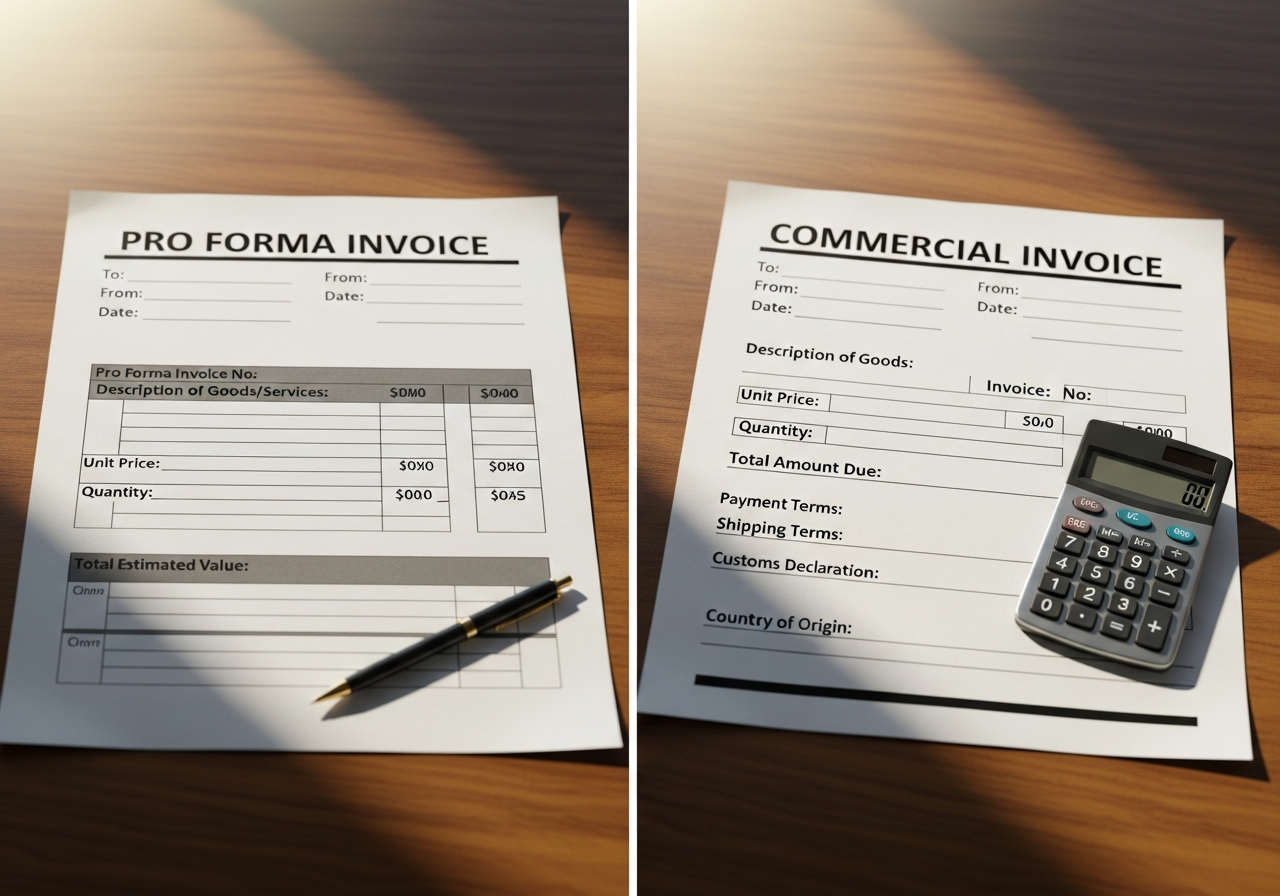
When I first started managing export logistics for overseas clients, I confused these two documents more than once. The mix-ups caused delays at customs and frustrated buyers. Once I understood the difference, shipping became smoother and far more predictable.
What is a Pro Forma Invoice?
Many importers misunderstand the pro forma invoice because it looks like a real invoice. I remember sending one to a U.S. customer who tried to use it for customs—and customs rejected it immediately.
A pro forma invoice is a preliminary document that outlines the expected price, terms, and product details before shipment. It is not used for payment or customs.
Deep dive: What pro forma invoices do—and don’t do
Purpose
A pro forma invoice acts as a formal quotation. It confirms pricing, incoterms, dimensions, HS codes, and estimated shipping costs so both sides agree before production or shipment.
When it is issued
Suppliers issue it before the goods are made or shipped. Importers use it to:
- apply for internal approval
- compare suppliers
- prepare payment
- check packaging, weight, and carton data
- plan logistics (FCL/LCL, air freight, courier)
Why it matters
A pro forma invoice prevents misunderstandings. Importers like Michael—my typical B2B buyer—hate unclear pricing. This document gives them a clear breakdown.
How we support buyers
When clients ask us to coordinate multiple suppliers, we collect their pro forma invoices, correct HS codes, unify carton details, and prepare a master packing list. This avoids mismatch during export clearance and helps us plan DDP routes, sensitive cargo handling, and warehouse consolidation.
What is a Commercial Invoice?

A commercial invoice is the backbone of cross-border shipping. In my early logistics days, I once received a shipment where the supplier forgot the commercial invoice—the container was stuck at customs for three days.
A commercial invoice is the official document required for export, import, customs declaration, and payment. It records the actual transaction and shipment details.
Deep dive: What commercial invoices include and why they matter
Purpose
The commercial invoice is used to:
- declare the value to customs
- determine duties and taxes
- prove ownership and payment
- confirm the final shipping details
- support insurance claims if needed
When it is issued
It is created after the order is confirmed and the goods are ready for shipment. It reflects real data—quantities, values, incoterms, and product descriptions.
Required details
A proper commercial invoice includes:
- exporter & importer info
- invoice number & date
- product description + HS codes
- quantity, unit price, total amount
- incoterms (EXW/FOB/CIF/DDP…)
- shipping method
- signature or company chop
- country of origin
Even small errors—wrong HS code, vague description, unrealistic value—can delay customs clearance.
How we help importers avoid problems
Our logistics team reviews every commercial invoice before export. We adjust HS codes for sensitive goods, verify declared value to avoid red-flag inspections, and match the invoice to the packing list and shipping labels.
For customers importing to the U.S., Australia, EU, and Middle East, this reduces:
- re-inspection
- customs holds
- requests for additional documents
- duty disputes
Our goal is simple: make customs clearance fast, predictable, and stress-free.
What Are the Key Differences Between Pro Forma and Commercial Invoices?
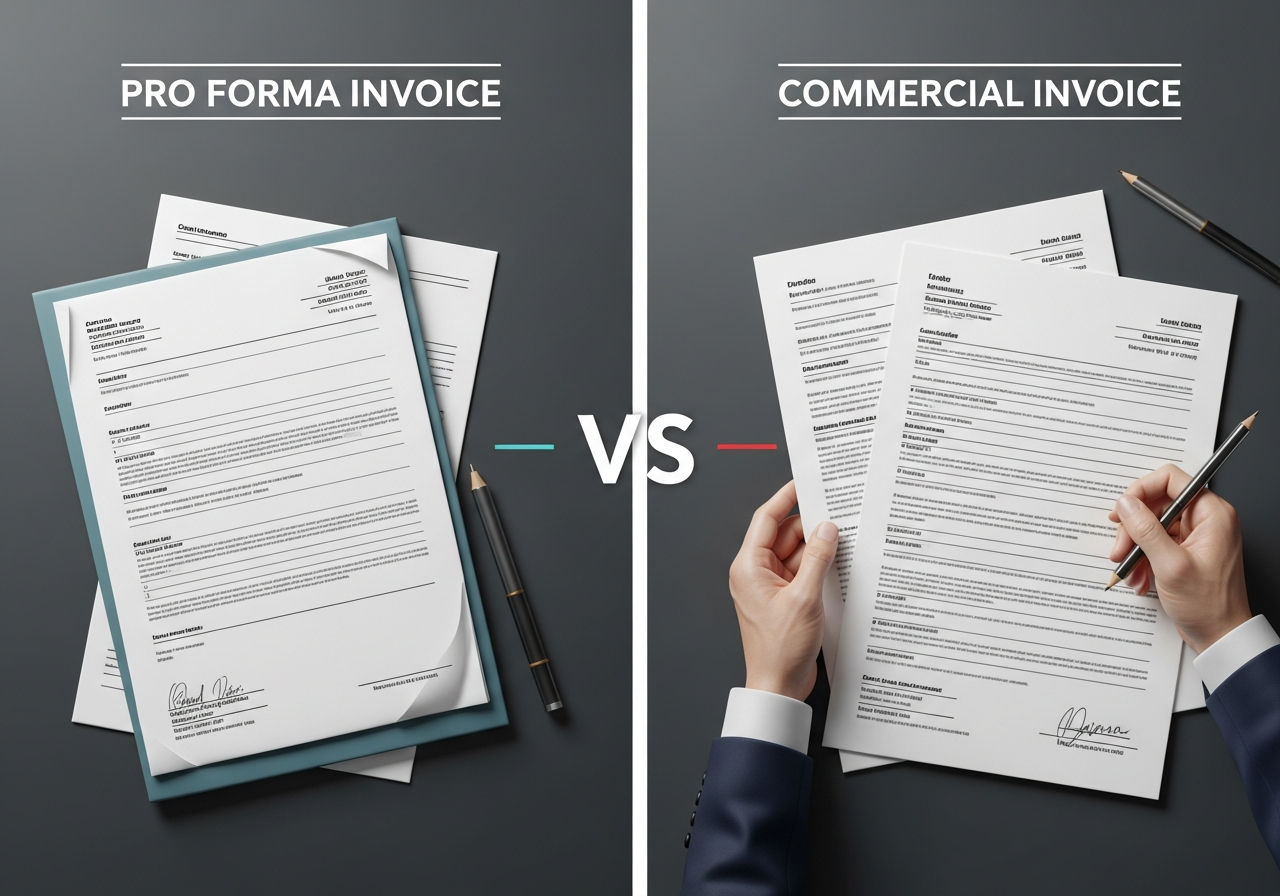
The two documents often look identical, but their legal meaning is not. I tell new importers to think of them like “proposal vs contract.”
A pro forma invoice is a quotation issued before shipment, while a commercial invoice is an official legal and customs document issued after the goods are ready to ship.
Deep dive: Side-by-side comparison
| Feature | Pro Forma Invoice | Commercial Invoice |
|---|---|---|
| Purpose | Quotation / Pre-agreement | Official customs & payment document |
| When Issued | Before production or shipment | After goods are produced and ready to ship |
| Legal Status | Not legally binding | Legally required for customs |
| Used For | Budgeting, approval, planning | Duties, clearance, ownership |
| Shows | Estimated details | Final shipment details |
| Payment | Not used for final payment | Used for payment & accounting |
| Customs Use | Not accepted | Mandatory |
Why understanding this difference matters for importers
Most importing problems come from mismatched documents. When suppliers change quantities, packaging, or HS codes at the last minute, customs may flag inconsistencies.
Our job is to:
- unify all seller documents
- correct errors early
- prepare export-ready files
- provide door-to-door DDP shipping for sensitive or mixed cargo
This keeps shipments flowing without the “document nightmare” many importers fear.
Conclusion
A pro forma invoice sets expectations; a commercial invoice confirms the real shipment. Knowing the difference protects you from delays and customs problems. If you need help preparing compliant documents or handling DDP logistics from China, our team can manage the full process for you.

 English
  Chinese