
Tare, net, and gross weight are three core measurements used in shipping, customs clearance, and warehouse handling.
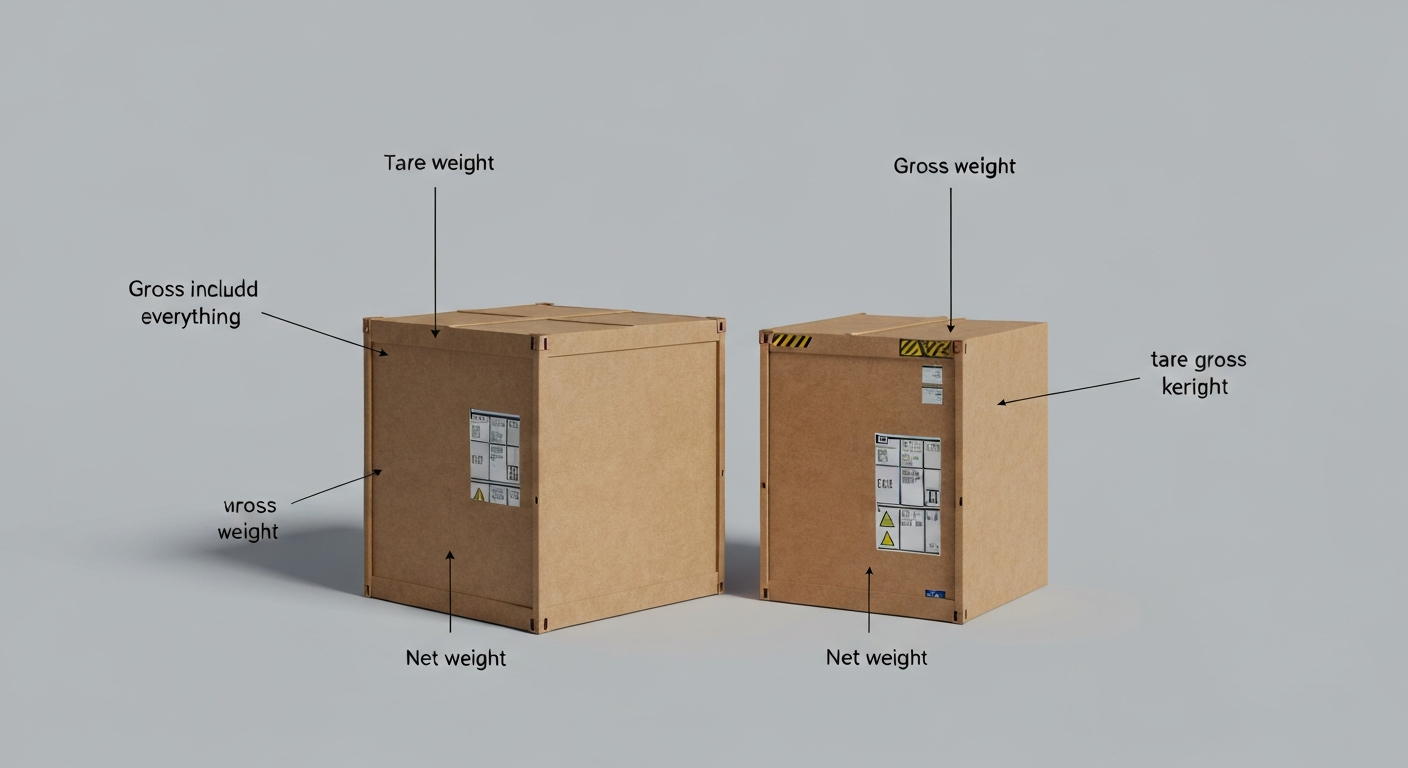
Gross weight includes everything, net weight measures only the product, and tare weight represents packaging and container weight.
Understanding these weight terms helps importers plan freight costs accurately, avoid customs issues, and improve shipment efficiency across global supply chains.
What do tare, net, and gross weight mean?
Confusion between these weight terms often leads to incorrect documents, unexpected charges, or customs delays.
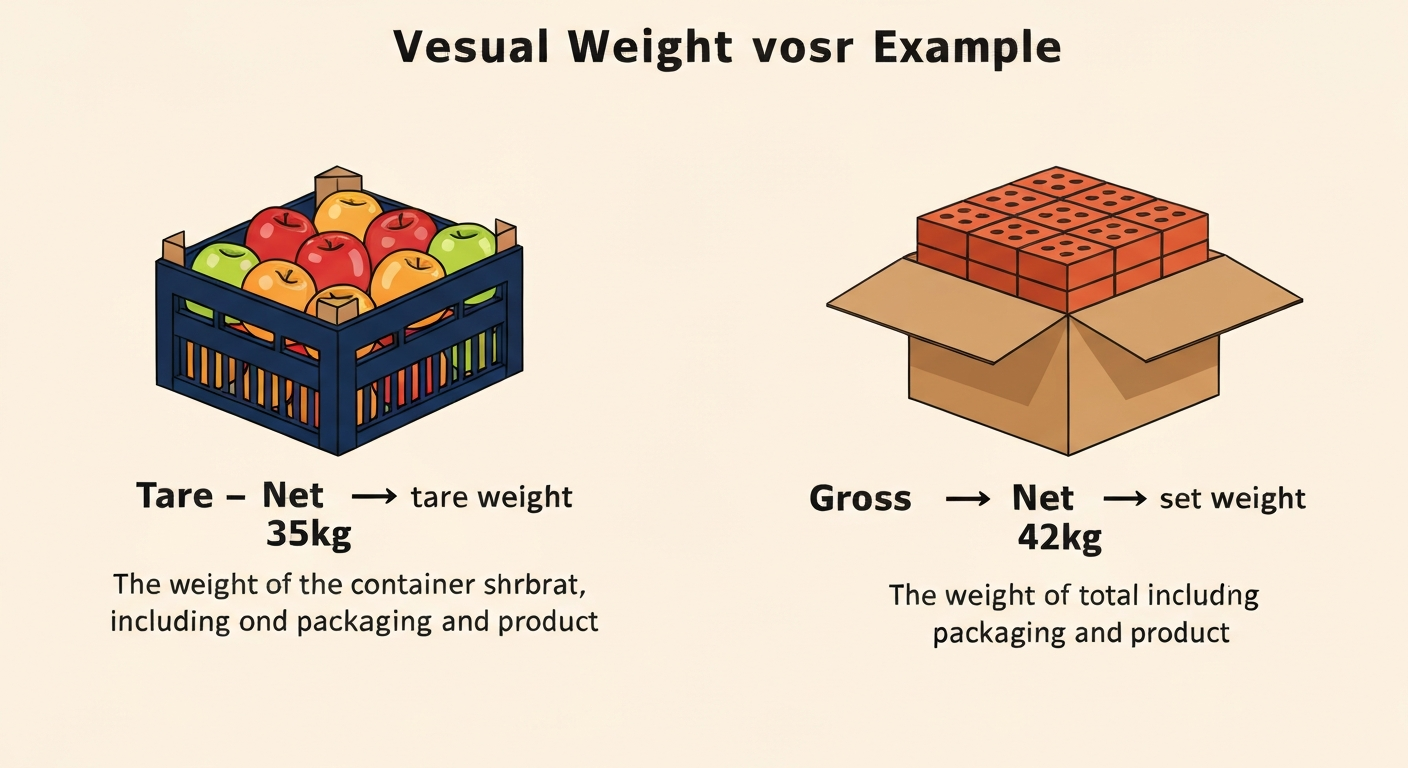
Net weight is the product alone, tare weight is packaging or container weight, and gross weight is the total.
Definitions, Calculation Rules, and Operational Use
Net weight refers to the weight of the product only, without packing materials or containers.
Tare weight includes cartons, pallets, straps, and in FCL shipping, the weight of the empty container itself.
Gross weight equals net weight plus tare weight, representing the full weight transported or declared for customs.
These measurements appear on invoices, packing lists, container manifests, export declarations, and transportation documents. Precision matters. Incorrect weight declarations can cause customs holds, overweight penalties, or warehouse rework. Because ocean carriers enforce strict weight limits—especially for 20GP and 40HQ containers—accurate calculations help avoid overweight surcharges or terminal rejections.
Warehouses conduct weight checks during consolidation. This verifies supplier accuracy, prevents misalignment with carrier manifests, and ensures cargo fits within safe limits for handling equipment like forklifts and pallet jacks. Consistency across all documents prevents delays at major export hubs such as Shenzhen, Ningbo, Shanghai, and Guangzhou.
Why is tare weight important in logistics?
Packaging and container weight directly affect freight cost and legal compliance.
Tare weight defines how much of the total weight is not actual product.

Packaging Materials, Container Limits, and Cost Impact
Tare weight includes all packaging layers—inner boxes, polybags, foam, cartons, pallets, and straps. For FCL shipments, the empty container weight (marked on every container door) becomes critical. For example:
- 20GP tare weight: ~2,000–2,300 kg
- 40GP tare weight: ~3,600–3,900 kg
- 40HQ tare weight: ~3,800–4,200 kg
Inaccurate tare calculations trigger overweight issues at origin terminals. Some ports refuse overweight containers, causing re-loading, delays, or re-booking fees. Inland trucking also has strict axle-weight laws, especially in the United States and Europe. A missed tare-weight calculation can create costly problems during drayage.
Professional warehouse teams measure and record tare weight accurately during palletizing. This ensures safe loading, compliant documents, and carrier acceptance. Proper tare management also improves freight-cost forecasting for medium to large-volume shipments.
Why does net weight matter for buyers?
Net weight determines duty calculations, customs compliance, and product specifications.
Net weight represents the product itself, without packaging.

Duties, Product Specs, and HS Code Validation
Customs agencies often assess duties based on net weight, especially for commodities, raw materials, and bulk products. A wrong net weight leads to incorrect duty payments or customs audits. For regulated goods—such as batteries, liquids, powders, and chemicals—net weight determines safety documentation requirements and category classification.
Net weight also affects internal procurement planning. Importers compare net weight with carton dimensions to calculate stocking density, pallet planning, and warehouse space usage. When dealing with multiple suppliers across China, consistent net-weight reporting keeps consolidation processes smooth.
Accurate net weight prevents discrepancies during customs filing at both origin and destination. Logistics teams verify supplier-provided weights, ensuring they match packing lists, invoices, and HS-code descriptions.
How is gross weight used in shipping and customs?
Gross weight determines freight cost, handling safety, and customs clearance accuracy.
Gross weight is the total weight of cargo including packaging and tare.
Shipping Charges, Container Safety, and Documentation
Shipping lines, trucking companies, and air carriers rely heavily on gross weight. Ocean carriers charge overweight fees when a container exceeds safe working limits. Air freight pricing uses chargeable weight—based on gross weight or volume weight, whichever is higher. For LCL shipments, gross weight combined with CBM determines cost allocation.
Gross weight also appears on export declarations (e.g., China Customs), where it must match the packing list and invoice. Any mismatch can trigger customs queries or inspections. Terminals weigh containers during gate-in, and the Verified Gross Mass (VGM) requirement ensures every FCL container reports gross weight before loading.
Forwarding teams help align documents, verify warehouse weights, and submit VGM through carrier portals to prevent loading rejection.
What problems occur when tare, net, and gross weights don’t match?
Incorrect weights create customs delays, shipping rejections, and unexpected charges.
Mismatched data triggers holds during export or import clearance.
Compliance Risks, Extra Costs, and Operational Disruption
Common issues include:
- Customs rejecting filings due to inconsistent totals
- Carriers refusing overweight containers
- LCL terminals recalculating weight and billing extra handling fees
- Warehouses needing to repack or split shipments
- Drayage trucks facing overweight fines
These problems often arise when suppliers guess weights or use outdated carton data. A strong logistics team resolves this by verifying carton dimensions, conducting spot weighing, and aligning all documents before export.
Consistent weight management protects timeline accuracy and prevents emergency costs that damage profit margins for small and medium importers.
How can importers ensure weight accuracy?
Multiple suppliers and different packing styles make weight accuracy a challenge.
Weight accuracy requires verified warehouse checks, aligned documents, and proactive communication.

Warehouse Procedures, Supplier Coordination, and Document Control
Key practices include:
- Cross-checking supplier packing lists with actual measurements
- Using calibrated warehouse scales for verification
- Ensuring tare weight is counted correctly for pallets and cartons
- Updating invoices and packing lists before export declaration
- Submitting VGM early to avoid loading delays
- Coordinating with suppliers to follow consistent packing standards
Strong consolidation hubs in China manage weight verification for mixed shipments, ensuring cartons from multiple suppliers fit into one accurate document set. This reduces customs risks and keeps LCL/FCL loading smooth.
With aligned tare, net, and gross weights, importers enjoy better cost prediction, cleaner customs clearance, and fewer disruptions in the international logistics chain.
Conclusion
Tare, net, and gross weight form the foundation of accurate logistics planning, customs processing, and freight-cost control. Tare shows packaging weight, net shows product weight, and gross reflects the total. When these numbers align across documents and warehouse checks, shipments move smoothly from origin to destination. For importers sourcing from multiple Chinese suppliers, reliable weight verification reduces risk, prevents penalties, and builds a more stable and efficient supply chain.
 English
  Chinese