
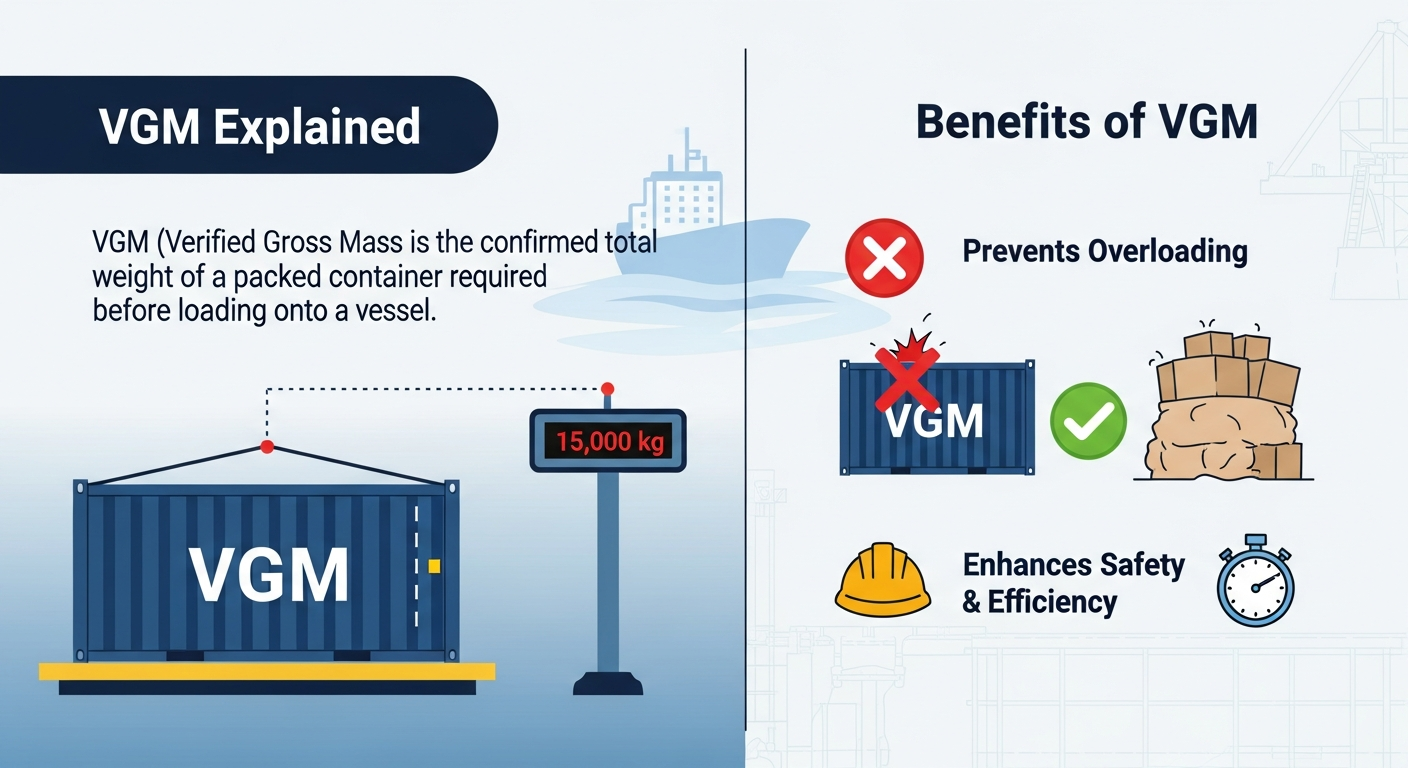
VGM (Verified Gross Mass) is the confirmed total weight of a packed container required before loading onto a vessel.
VGM ensures containers are not overloaded, preventing safety risks and operational delays at ports.
Understanding VGM helps importers avoid loading rejection, customs issues, and last-minute operational costs when shipping from global ports.
What is VGM in shipping?
Many importers confuse gross weight with VGM, leading to declaration errors.
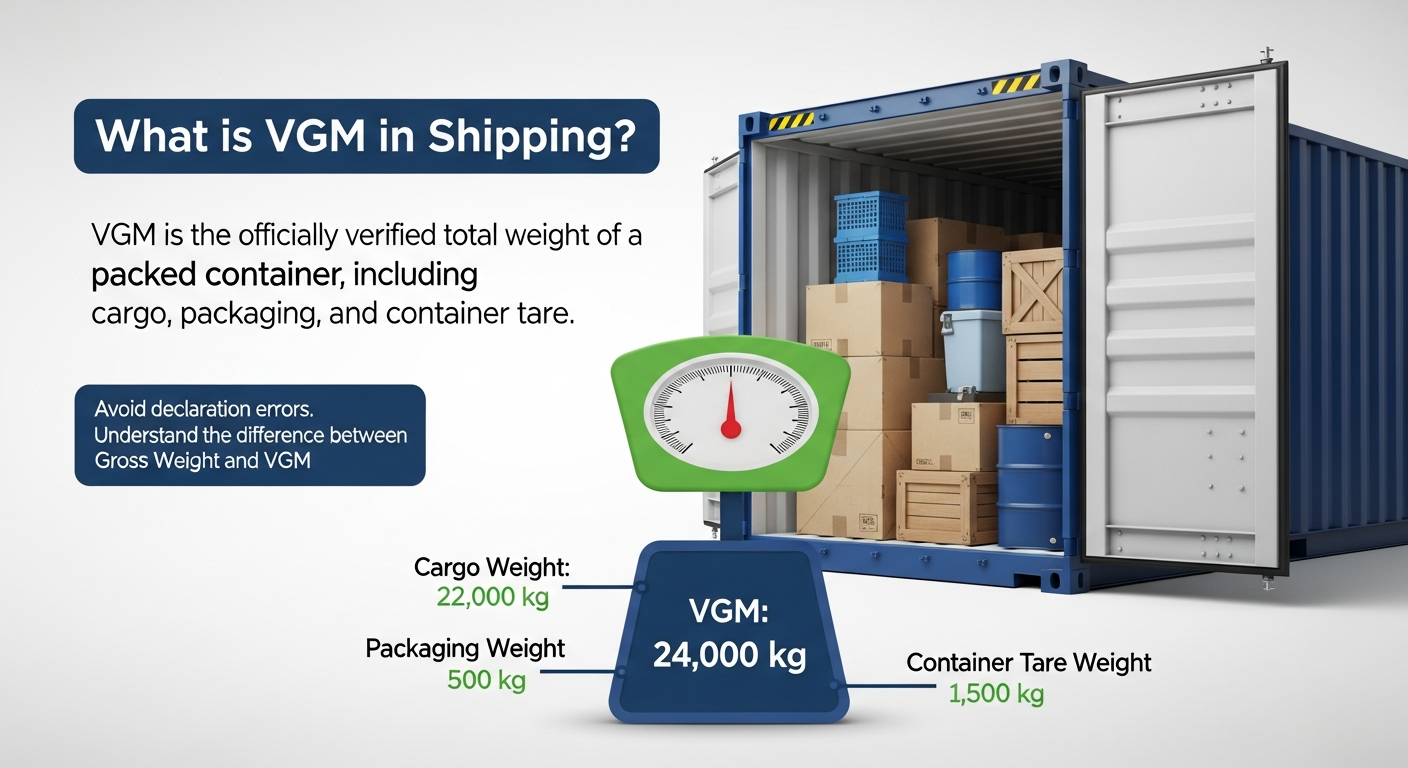
VGM is the officially verified total weight of a packed container, including cargo, packaging, and container tare.
Definition, SOLAS Rules, and Safety Purpose
VGM is required by the SOLAS Convention (Safety of Life at Sea). It represents the gross cargo weight + all packaging + container tare weight, confirmed through an approved weighing method. Carriers cannot load a container onto a vessel without a valid VGM.
VGM prevents accidents caused by overweight containers—such as stack collapses, vessel imbalance, crane overload, and port damage. Each container must have a verified number submitted before the carrier’s cutoff time. Incorrect or missing VGM leads to automatic rejection.
Export teams verify tare values printed on container doors, calculate total cargo weight, and submit VGM through carrier portals to avoid delays.
Why is VGM required?
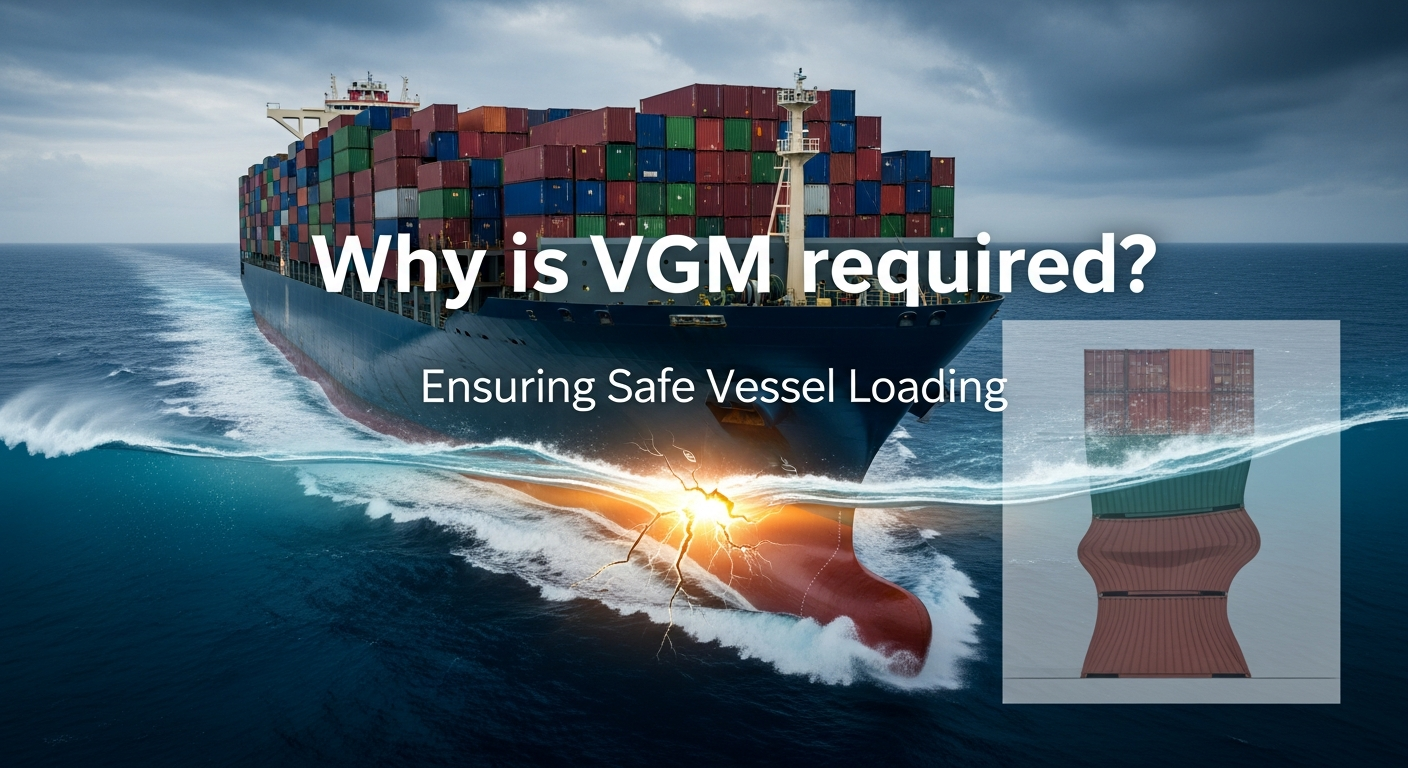
Overloaded containers historically caused accidents at sea and at terminals.
VGM ensures safe vessel loading and prevents overweight or misdeclared containers.
Safety Compliance, Global Regulation, and Terminal Accuracy
VGM is required to:
- Protect ships from unbalanced stacks
- Prevent damage to cranes and port equipment
- Reduce risk of container collapse
- Ensure accurate vessel stowage planning
- Improve weight transparency for customs and carriers
Ports and carriers rely on precise VGM values to determine where containers can be safely placed on board. A single overweight container can disrupt the entire stowage plan.
With strict global enforcement, VGM is now a mandatory step for any FCL shipment from China, Southeast Asia, Europe, the Middle East, or the US.
How is VGM calculated?
VGM can be calculated using two approved methods.
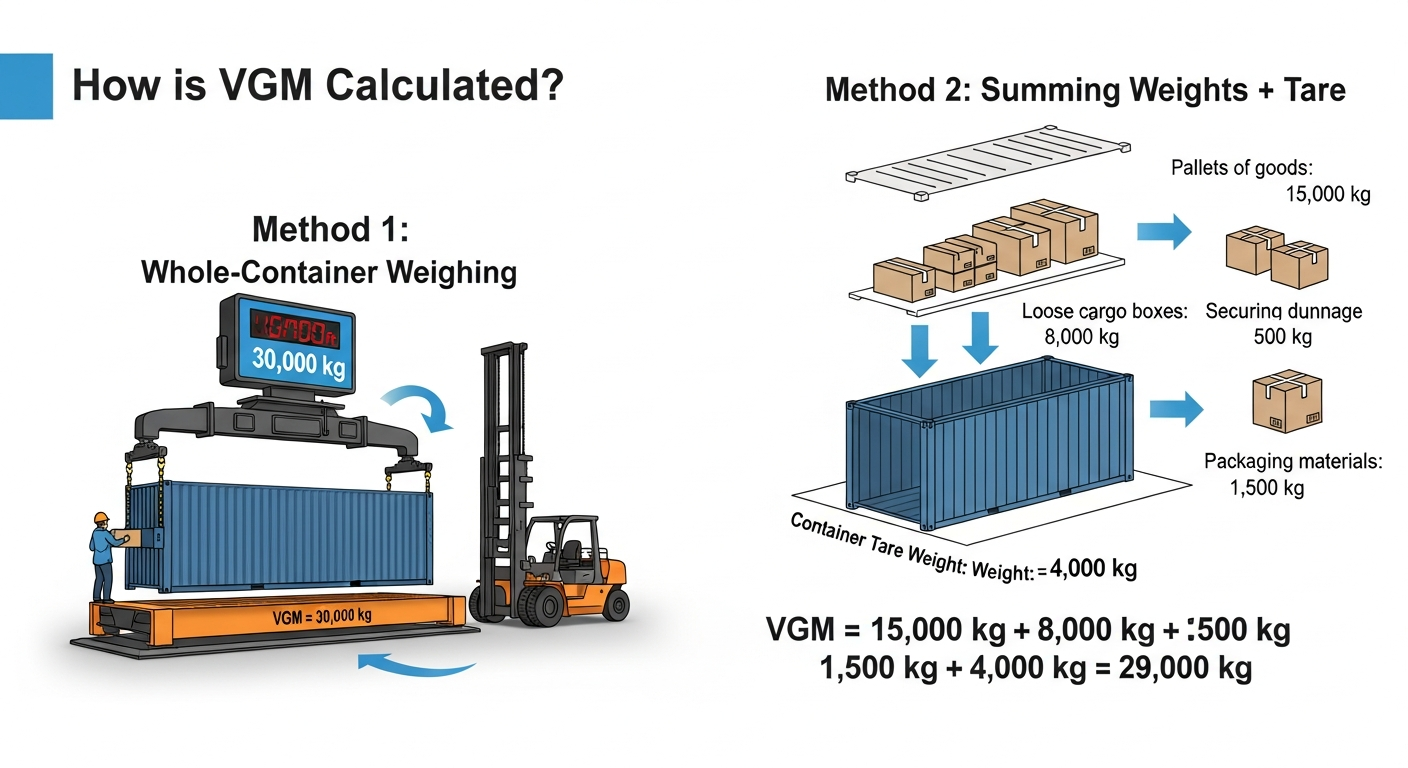
VGM is determined through whole-container weighing or by summing all cargo and packaging weights plus tare.
Method 1 & Method 2, Accuracy Rules, and Common Practice
Method 1: Weigh the packed container
Use a certified scale to weigh the entire loaded container.
Method 2: Add up all components
VGM = Cargo net weight + packaging + pallets + dunnage + container tare.
This is the most common method for factory and warehouse operations. Tare weight is printed on the container door. Warehouse teams weigh cartons or pallets individually to ensure accuracy.
All VGM submissions must match carrier requirements. Incorrect calculations can lead to rejections at the terminal or extra fees for re-weighing.
Who is responsible for submitting VGM?
Responsibility often causes confusion for importers and factories.
The shipper listed on the bill of lading is legally responsible for VGM submission.
Shipper Role, Forwarder Support, and Documentation
The shipper—often the exporter or freight forwarder—must verify the container weight and provide the VGM to the carrier. Forwarders frequently assist by coordinating weighing, verifying documents, and submitting VGM through carrier systems.
Typical VGM submission channels:
- Carrier online portals
- EDI systems
- Email to carrier operations
- Terminal gate submission (less common)
A forwarder ensures accuracy by checking supplier packing lists, consolidating multi-supplier data, and verifying carton weights before export.
What happens if VGM is not submitted?
Missing VGM causes automatic shipment delays and may generate additional fees.
Without VGM, the container will not be loaded onto the vessel.
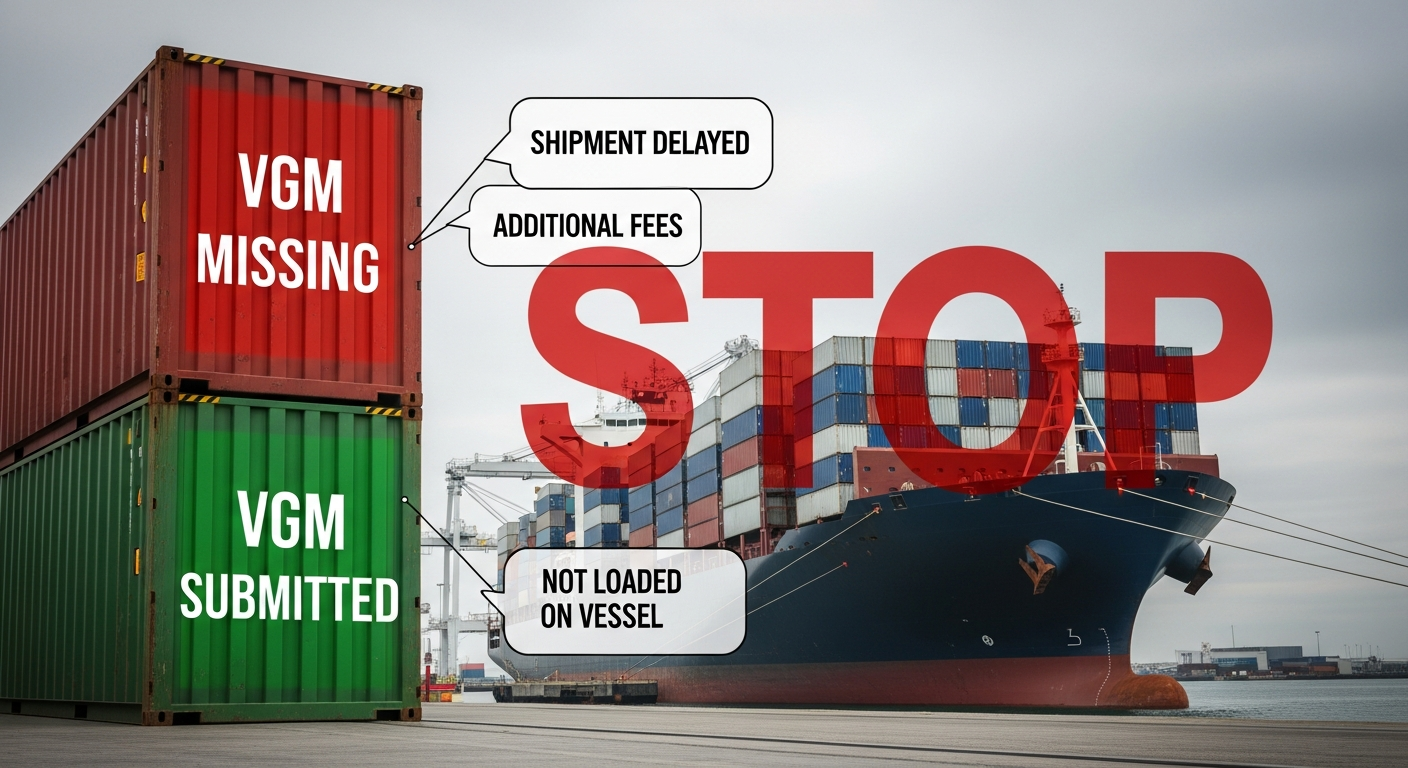
Loading Rejection, Rollover Risk, and Cost Impact
If VGM is not provided on time:
- The container is rejected at the terminal
- The shipment misses the scheduled vessel
- The container may incur storage and demurrage
- The carrier may charge VGM penalties or re-weighing fees
- Delivery timelines are pushed back
Rollover delays are common during peak seasons. Early VGM submission provides schedule security and avoids expensive last-minute rebooking.
What documents are used when submitting VGM?
Accurate documents ensure seamless VGM filing and customs compliance.
VGM requires packing lists, weight sheets, and container details.
Document Alignment and Verification
Required information includes:
- Container number
- Seal number
- Tare weight
- Gross cargo weight
- Calculated VGM
- Authorized signatory details
- Shipper name and BL reference
Warehouses verify weight through calibrated scales and reconcile all data with invoices and packing lists. Consistency across documents prevents delays and customs inquiries.
How does VGM affect multi-supplier or consolidation shipments?
Consolidation increases the risk of weight inaccuracies if not controlled carefully.
VGM requires verified combined weight from all suppliers before container sealing.
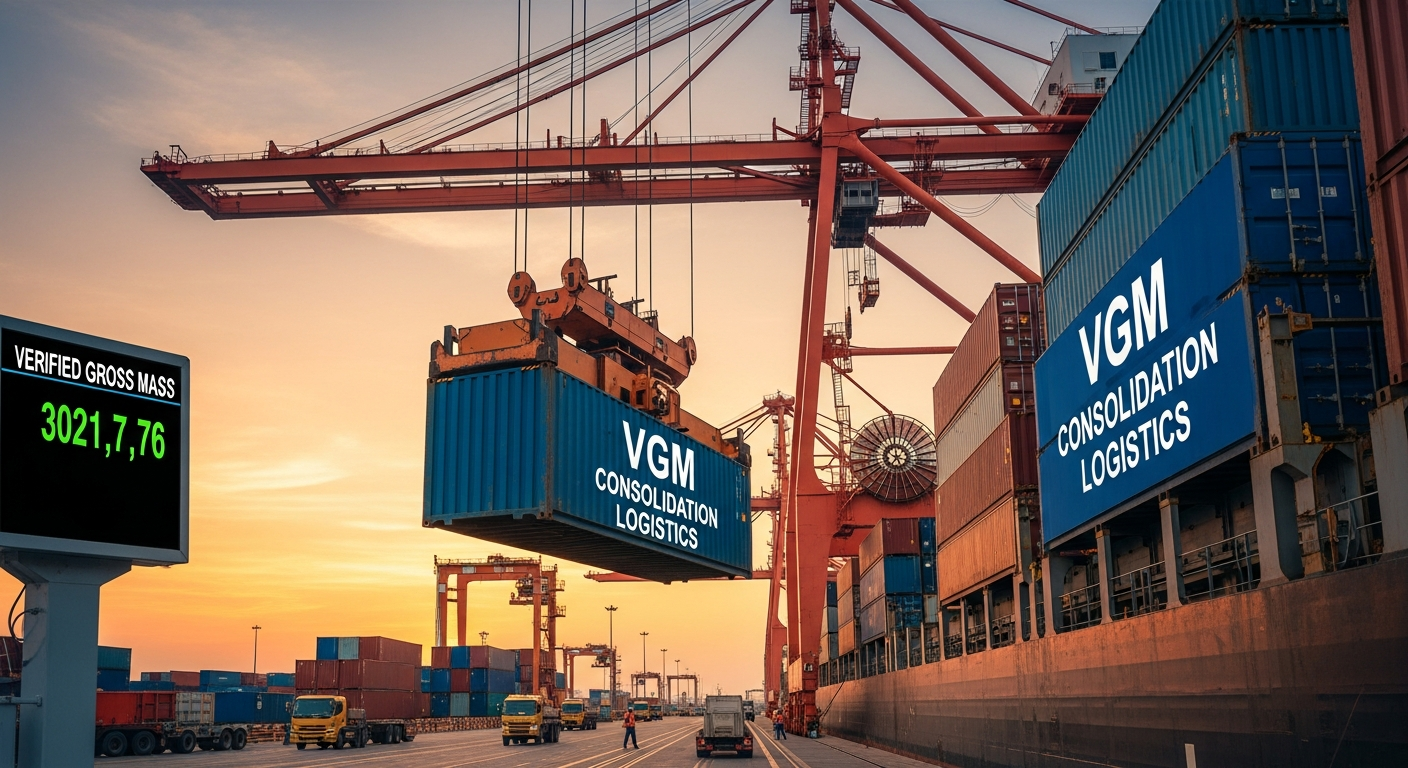
Supplier Coordination, Warehouse Weighing, and Export Preparation
For multi-supplier shipments:
- Warehouses weigh each supplier's cartons
- Tare weight for pallets and dunnage is added
- Total weight is checked against container limits
- VGM is calculated only after final sealing
- Export documentation is aligned across all suppliers
Strong consolidation ensures compliant weight declarations and prevents overweight issues that often occur when combining goods from many factories.
How does VGM link to container safety and port operations?
Correct VGM keeps vessel stowage safe and maintains terminal efficiency.
VGM supports balanced loading and prevents operational hazards.
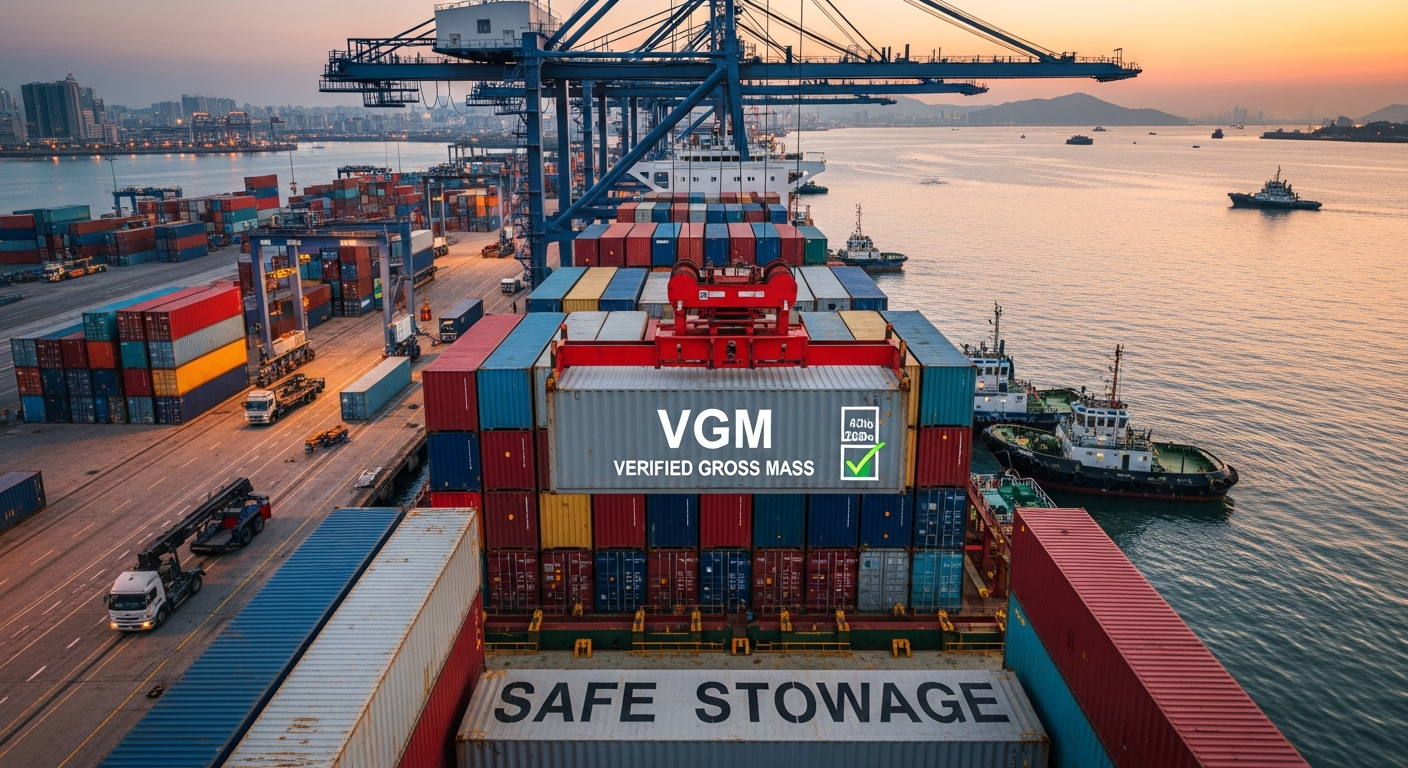
Vessel Stability, Crane Limits, and Port Workflow
Accurate VGM helps carriers:
- Determine stowage positions
- Balance container stacks
- Prevent crane overload
- Ensure vessel stability at sea
- Reduce risk of container loss in rough weather
Ports rely on VGM to plan yard stacking, crane operations, and yard movements. Incorrect VGM disrupts these processes and creates safety hazards.
Conclusion
VGM is a mandatory weight verification required under SOLAS to ensure safe container loading. It includes cargo, packaging, and container tare. Accurate VGM prevents overweight issues, avoids vessel loading rejection, and protects supply-chain timelines. With careful warehouse weighing, proper documentation, and reliable freight coordination, VGM submission becomes a simple but essential step for stable and compliant global shipping operations.
 English
  Chinese