
“In transit” indicates that a shipment has departed its previous facility and is moving through a carrier’s logistics network toward the next processing point or final destination. The parcel may be in transport, awaiting the next scan, or queued within a sorting hub.
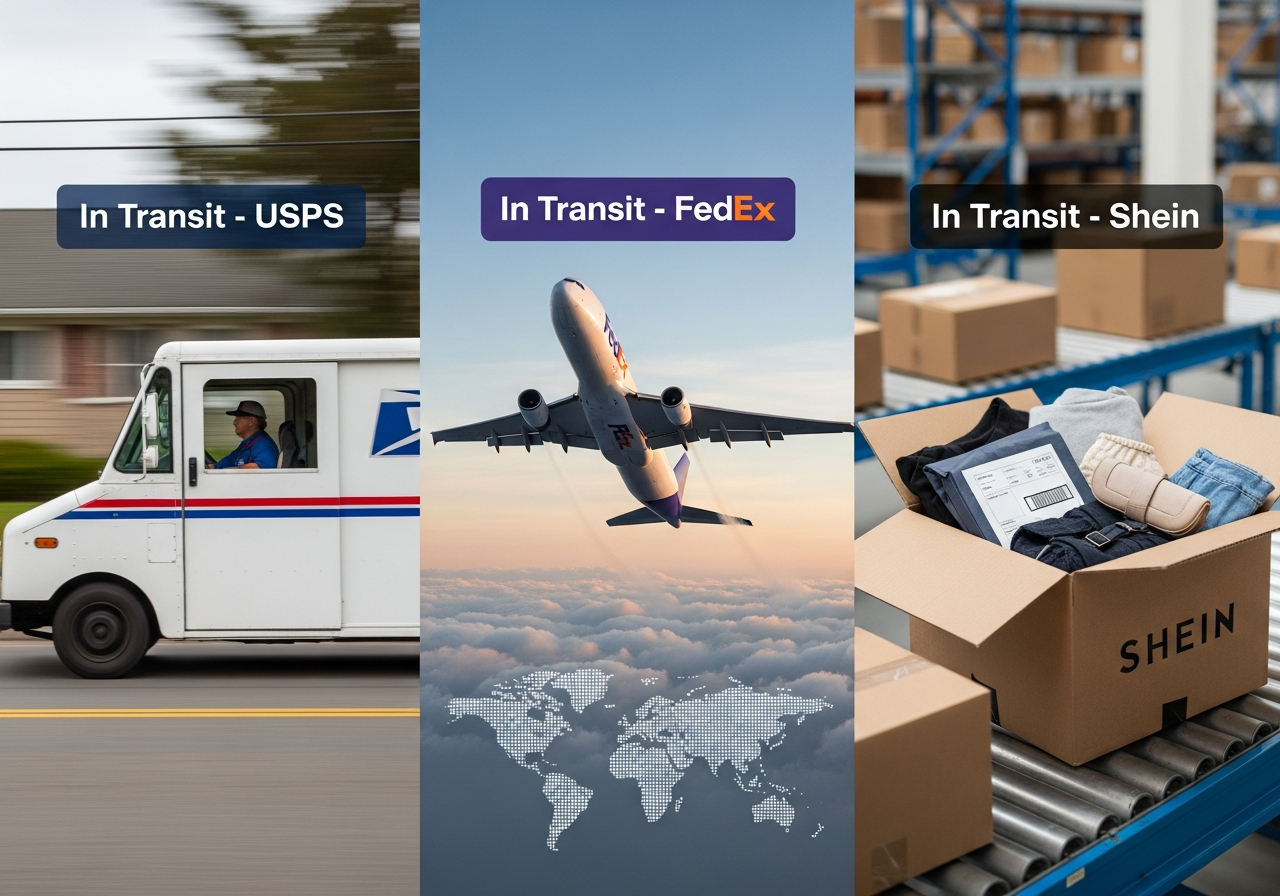
“In transit” often causes confusion because tracking updates may pause for hours—or even days—depending on the carrier, distance, and customs procedures. The status, however, usually confirms that the shipment is progressing as planned.
What does “In Transit” mean for USPS?

USPS uses “In Transit” to signal that a package is traveling between sorting centers or moving toward the local post office for final delivery.
USPS “In Transit” stages
| Status | Explanation |
|---|---|
| In Transit to Next Facility | Package is on the road or air route |
| Departed USPS Facility | Left a processing hub |
| Arrived at USPS Regional Facility | Reached a major sorting center |
| In Transit, Arriving Late | Delay detected but movement continues |
Scans may pause while trucks move overnight or during periods of high mail volume. This does not usually indicate a problem.
What does “In Transit” mean for FedEx?
FedEx uses the term to indicate that a shipment is actively moving through the FedEx transportation chain—between hubs, on aircraft, in transit trucks, or awaiting the next sorting operation.
FedEx “In Transit” stages
| Stage | Description |
|---|---|
| In Transit | General movement within the network |
| At Destination Sort Facility | Arrived at the last major hub |
| In FedEx Vehicle for Delivery | Out for delivery |
| Operational Delay | Weather, route changes, or network congestion |
FedEx offers frequent scans, but long gaps can occur during air transport or international processing.
What does “In Transit” mean for Shein orders?
Shein shipments often show longer periods of “In Transit” due to bulk export methods and consolidated international shipping.
Shein logistics stages
| Status | Meaning |
|---|---|
| International Shipping | Package is waiting for export or on a flight |
| In Transit | Moving between global hubs |
| Arrived at Local Facility | Customs cleared and handed to local courier |
| Out for Delivery | Final-mile carrier handling delivery |
Because Shein ships in batches, individual parcels may not scan again until reaching the destination country.
Why do tracking updates stay “In Transit” for several days?
A package may remain “In Transit” for extended periods due to long-distance travel, limited scan points, weather factors, customs checks, or courier network volume.
Common reasons for delayed scans
- Long transport segments (road or air)
- National holidays or peak shopping seasons
- Customs inspections for international parcels
- Routing adjustments in carrier networks
- High-volume backlogs at sorting hubs
A paused update does not automatically imply a lost package; most shipments progress normally once reaching the next scan location.
Typical “In Transit” timeframes
| Carrier / Platform | Normal Duration |
|---|---|
| USPS | 2–5 days |
| FedEx Ground | 1–5 days |
| FedEx Express | 1–3 days |
| Shein International | 5–12 days |
International or long-distance shipments may exceed these estimates depending on customs processing and transportation capacity.
What to do if “In Transit” lasts longer than expected
If a shipment exceeds the estimated delivery window, the carrier’s support team can investigate using the tracking number. For international items, checking for customs paperwork issues through the seller or platform may also help.
Conclusion
“In Transit” is a standard tracking status used by USPS, FedEx, Shein, and other carriers to show that a package is moving within the logistics network. Although tracking pauses may occur during transportation or customs processing, the status generally indicates normal progress. Understanding how each carrier handles transit updates helps set accurate delivery expectations and reduces unnecessary concern during the shipping journey.
 English
  Chinese