
Choosing between FCL and LCL affects freight cost, timing, risk level, and overall supply-chain stability.
FCL suits larger shipments needing protection and predictable schedules, while LCL supports smaller volumes with flexible budgets.

Clear understanding of both methods helps importers plan inventory, control landed cost, and coordinate shipments from multiple Chinese suppliers efficiently.
What is the core difference between FCL and LCL?
Different cargo volumes create different operational pressures during international transport.
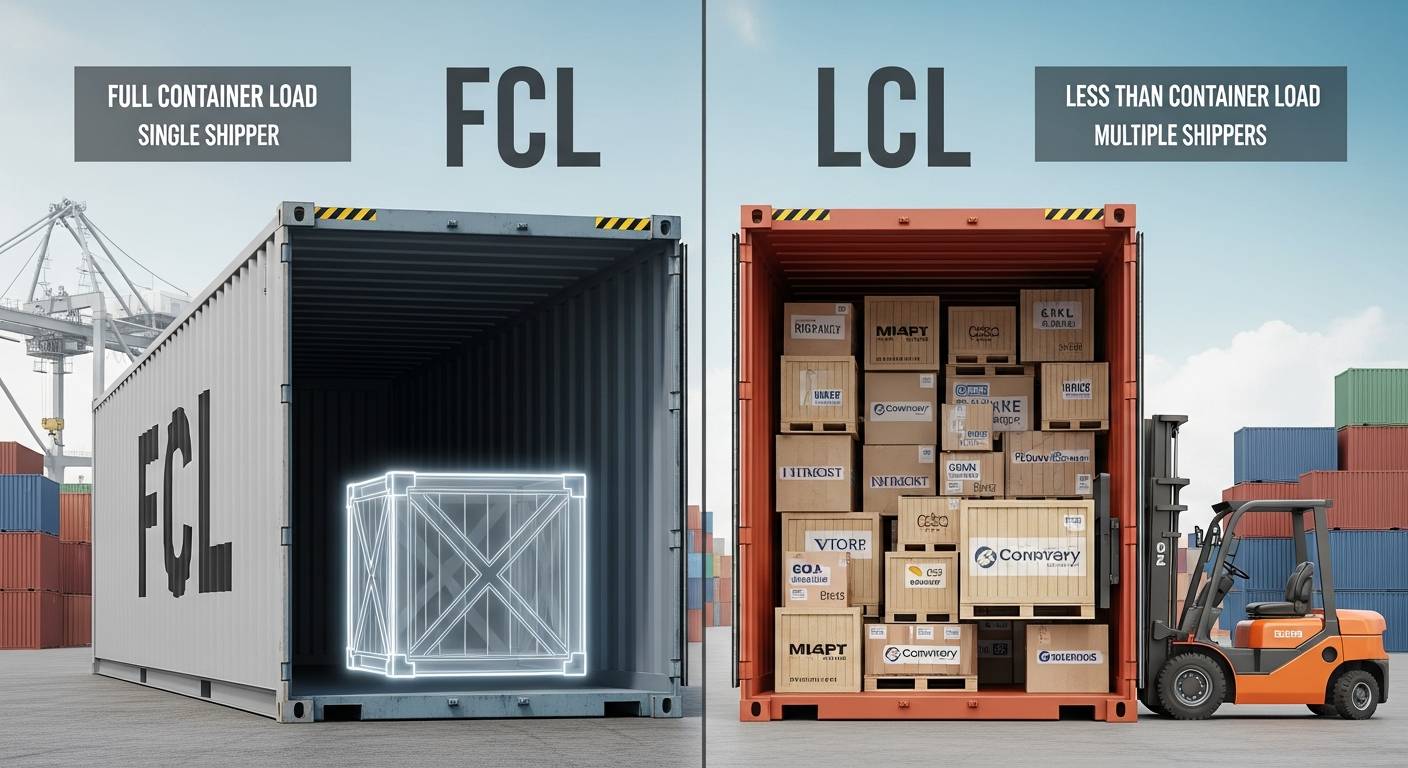
FCL uses an entire container for one shipper, while LCL combines cargo from multiple shippers into a shared container.
Container Usage, Handling Process, and Supply-Chain Impact
FCL loads goods directly into a dedicated 20GP, 40GP, or 40HQ container. After sealing, the container stays untouched until arriving at the destination terminal. This simple flow reduces handling points, lowers damage risk, and supports stable schedules, especially for time-sensitive cargo.
LCL passes through consolidation warehouses. Cartons from different suppliers are checked, sorted, palletized, and loaded together. After arrival, the container is de-vanned and each shipment separates again. This process allows small shipments—1–15 CBM—to move at lower cost but adds more handling steps and possible delays.
Both methods rely on accurate documentation, carton labeling, and supplier coordination. When warehouses manage inbound checks, HS-code alignment, and sensitive cargo handling, overall visibility remains predictable regardless of volume.
When is FCL the better option?
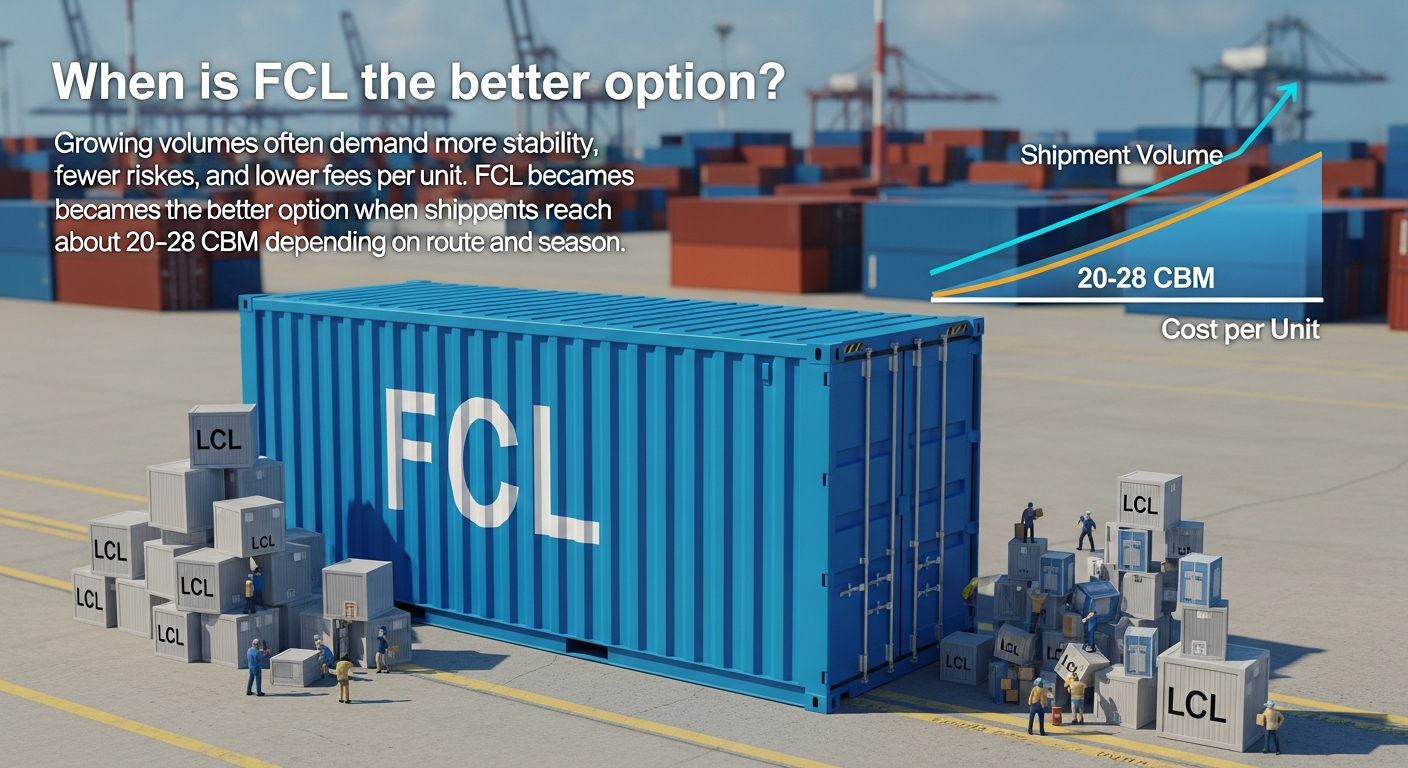
Growing volumes often demand more stability, fewer risks, and lower fees per unit.
FCL becomes the better option when shipments reach about 20–28 CBM depending on route and season.
Volume Thresholds, Cost Benefits, and Handling Safety
FCL pricing stays fixed regardless of the amount of cargo inside the container. Once volume approaches the cost crossover point, FCL eliminates destination charges such as de-vanning, pallet rebuilding, and LCL warehouse fees. This leads to more predictable landed cost for mid- to high-volume importers.
A sealed container protects cartons from handling damage or contamination. Importers of electronics, automotive parts, cosmetics, heavy items, or premium goods often choose FCL to reduce touchpoints and improve quality consistency. During peak seasons, FCL also secures better schedule stability and lower risk of rollovers when forwarders reserve vessel space.
Warehousing teams perform palletization, labeling, and loading checks before sealing the container. These procedures prevent customs issues and ensure smooth unloading at major ports such as Los Angeles, Sydney, Dubai, or Hamburg.
When is LCL the smarter choice?
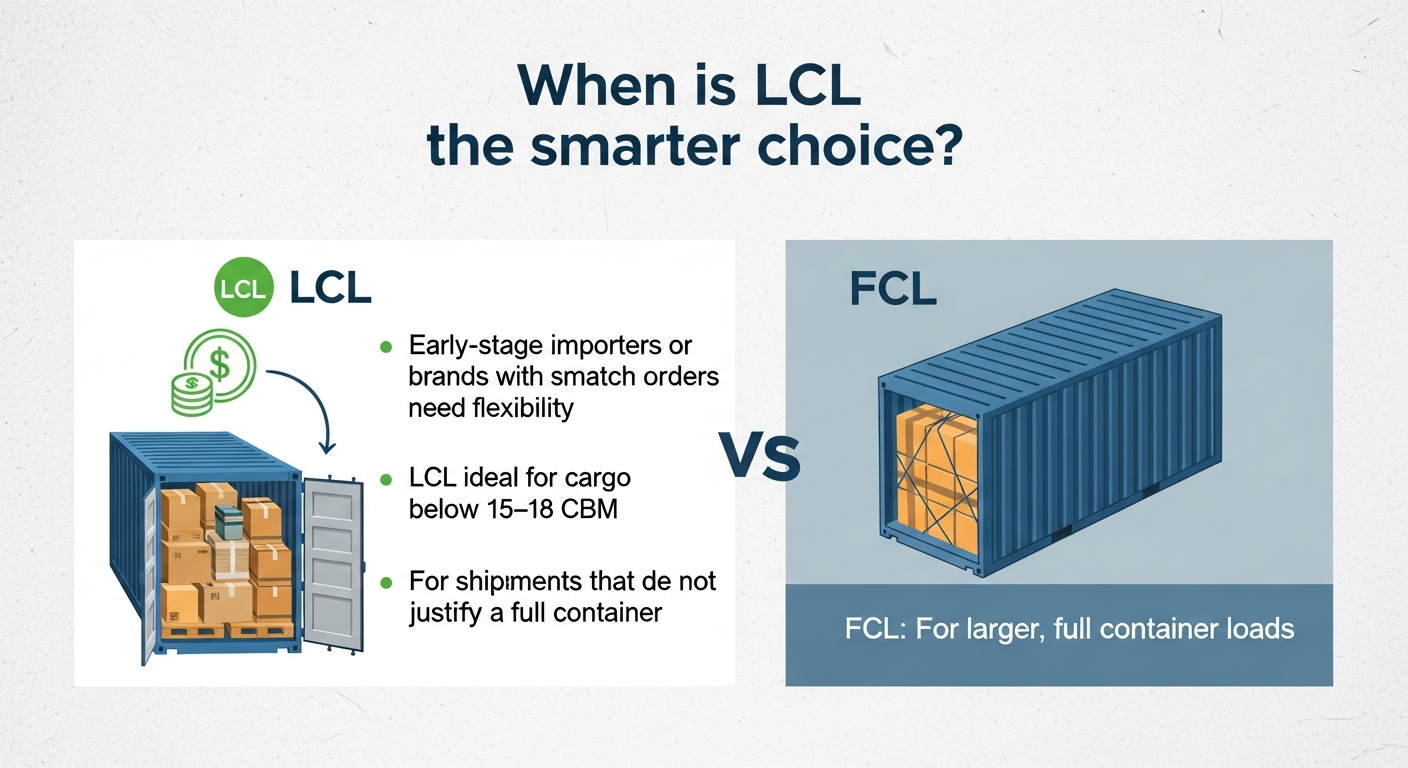
Early-stage importers or brands with small batch orders need flexibility.
LCL is ideal for cargo below 15–18 CBM or for shipments that do not justify a full container.
Cost Structure, Shipment Frequency, and Inventory Control
LCL uses CBM-based pricing, making it economical for small volumes. Importers use it to test new products, respond to seasonal demand, or reduce warehouse pressure by shipping smaller but more frequent batches. This protects cash flow and lowers inventory risk.
However, LCL includes additional destination charges—warehouse handling, pallet fees, and de-vanning—which must be considered when calculating landed cost. Skilled logistics teams optimize carton dimensions and packing density to keep CBM values low and prevent unnecessary fees.
Consolidation warehouses play a key role. Supplier goods arrive at different times, and warehouse teams count cartons, check labels, take photos, and merge cargo into one outbound shipment. This coordination solves fragmented supplier management for importers sourcing from 5–20 factories across China.
Which method offers better protection for the cargo?
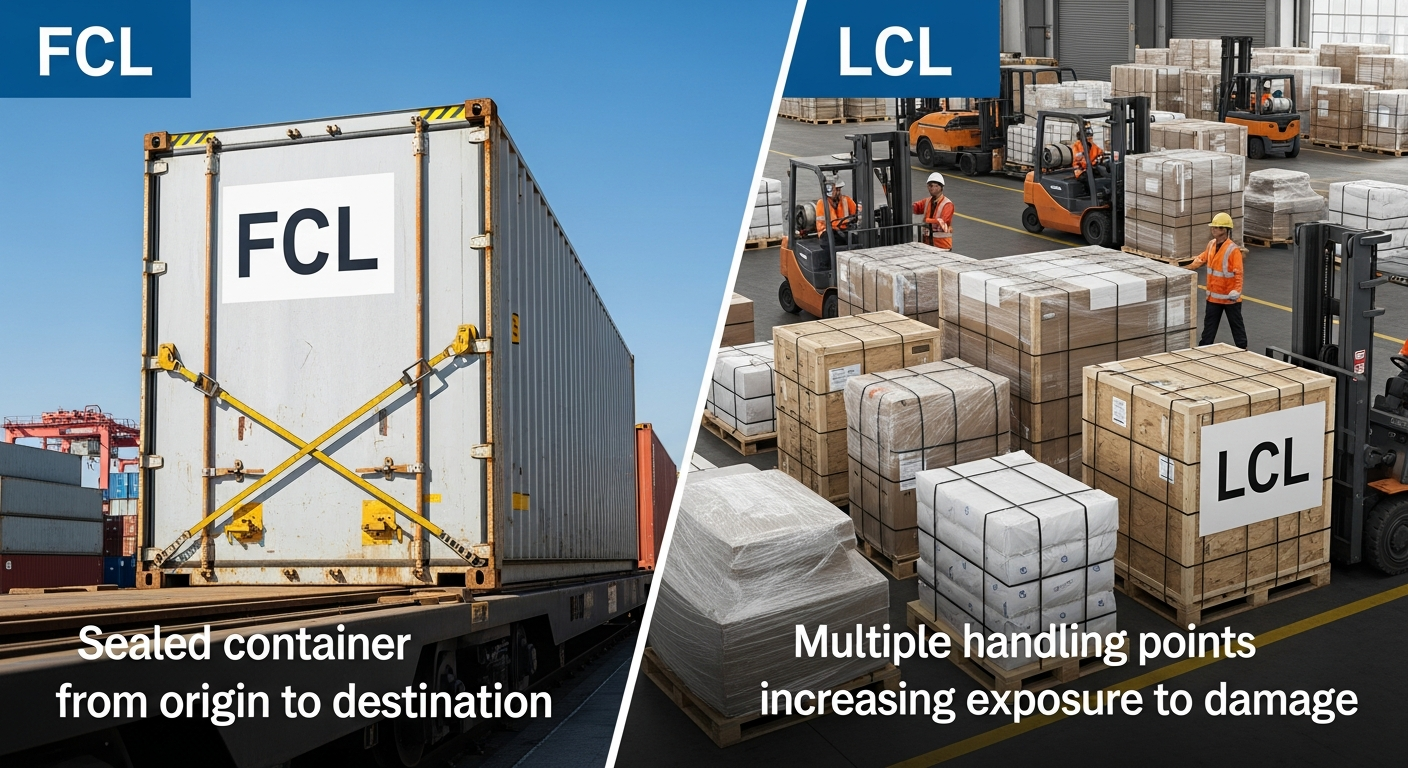
Goods that face multiple handling points have higher exposure to damage.
FCL offers stronger protection because the container stays sealed from origin to destination.
Handling Risk, Packaging Requirements, and Quality Outcomes
FCL containers are loaded once and unloaded once. With fewer touchpoints, the risk of carton crushing, label loss, or moisture exposure drops significantly. High-value items or fragile products benefit from this controlled environment.
LCL cartons move through several steps—receiving, palletizing, container loading, de-vanning, sorting. Every step adds potential damage risk. Proper packing becomes essential: double-wall cartons, stretch wrap, corner protectors, and moisture-barrier solutions.
Experienced logistics networks use strict SOPs, photo records, and warehouse checks to reduce risk for both FCL and LCL shipments. When sensitive cargo such as batteries, powders, or branded goods is involved, compliance-focused handling ensures safe loading and smooth customs clearance.
How do multi-supplier shipments influence the choice?
Importers working with several Chinese factories face complex coordination challenges.
FCL supports large combined volumes, while LCL is ideal when total supplier cargo is still small.

Consolidation Efficiency, Document Alignment, and Timing
For businesses sourcing from many suppliers, consolidation is essential.
LCL consolidation works well when total cargo is small. Goods flow into a central warehouse, where teams verify counts, check packaging, and combine items into one shipment.
FCL consolidation becomes more efficient when combined volume grows. All SKUs move into one sealed container, reducing handling, cutting origin fees, and improving customs predictability.
Document consistency matters. HS codes, invoices, packing lists, and carton descriptions must align across all suppliers. Logistics teams manage verification to avoid customs delays at origin or destination. This structured workflow gives importers steady visibility even when dealing with weekly or monthly shipments.
What timing differences should be considered?
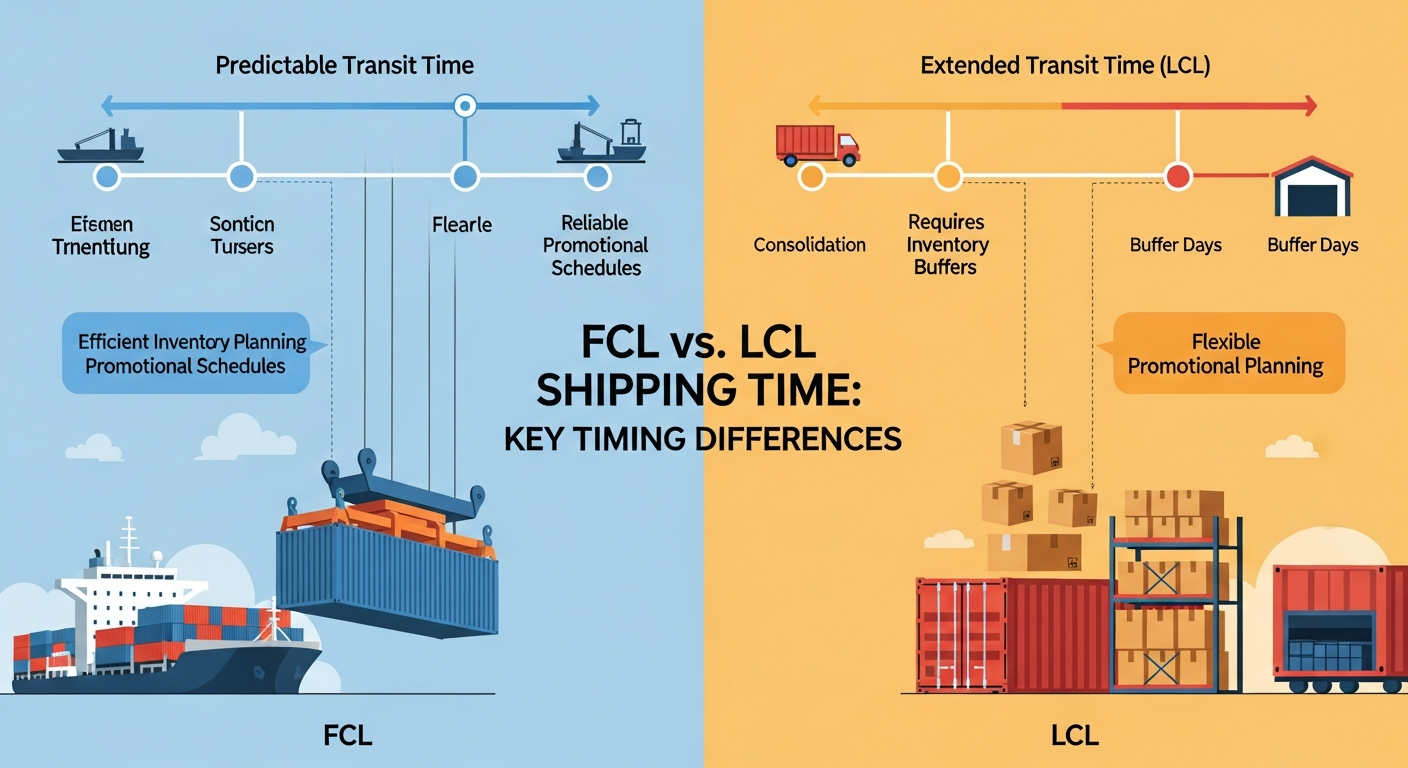
Transit time directly affects inventory planning and promotional schedules.
FCL offers more predictable timing, while LCL includes extra steps that add buffer days.
Cut-Offs, Consol Schedules, and Seasonal Influence
FCL follows fixed vessel schedules. Once loaded, containers move directly through ports, keeping transit times stable. Importers selling fast-moving products prefer FCL for its lower time variance.
LCL depends on consolidation schedules. Warehouses wait for enough volume to fill the shared container, adding 3–7 days at origin. Destination de-vanning may add another 2–4 days. Seasonal peaks extend both periods.
Strong coordination between suppliers, warehouses, and carriers reduces timing surprises. Accurate tracking—gate-in, departure, arrival, release—helps importers prepare warehouse labor, schedule trucking, and plan inventory.
Conclusion
Choosing between FCL and LCL depends on shipment volume, risk tolerance, timing needs, and budget strategy. FCL provides stability, protection, and long-term cost efficiency for larger loads. LCL delivers flexibility and lower upfront costs for smaller batches. With proper consolidation, reliable documentation control, and strong logistics coordination, both methods support a stable and scalable import operation from origin to final delivery.
 Chinese
  English