
Global order fulfillment from a China warehouse follows a structured flow: inbound receiving, storage, pick–pack, quality checks, export processing, international transit, and final delivery. Stable systems and accurate documentation keep orders moving with predictable timelines.
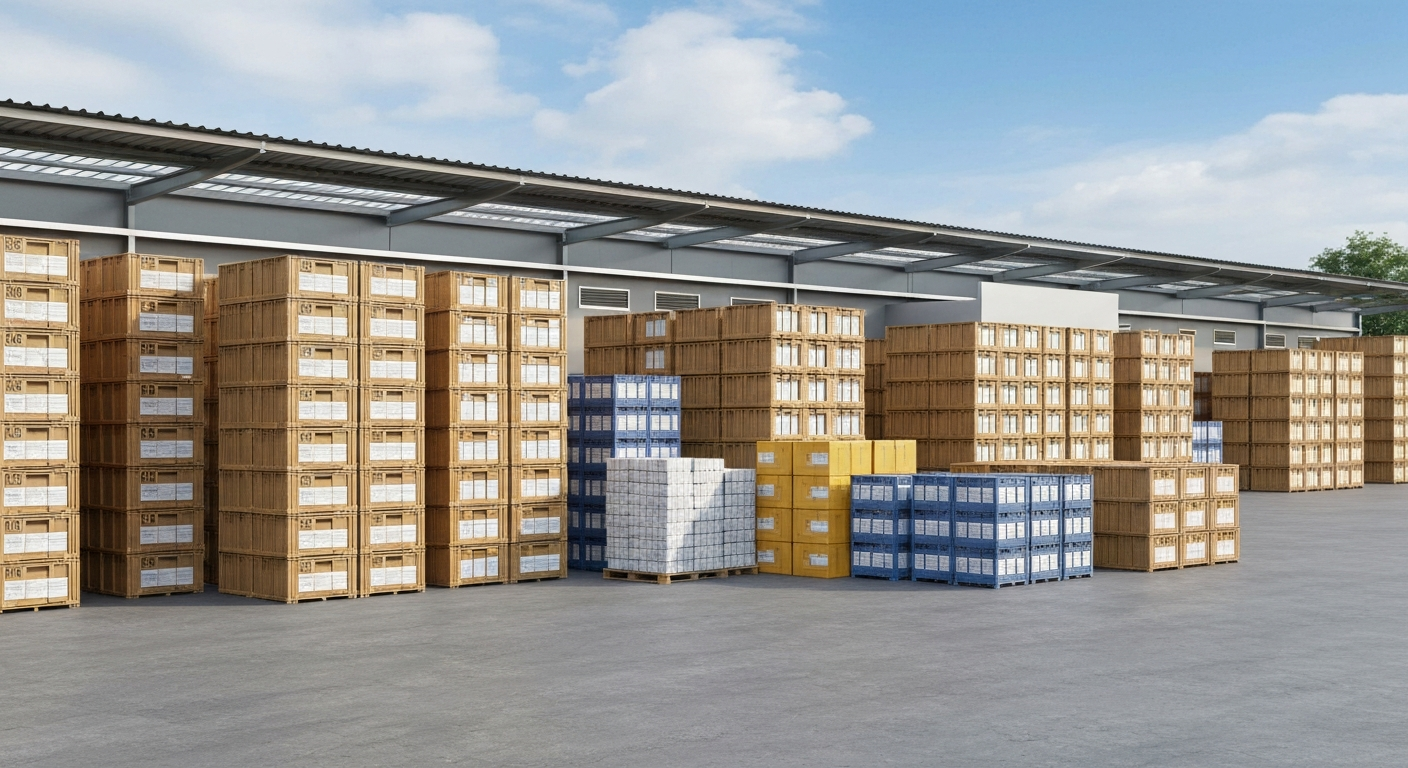
A clear view of this workflow supports consistent supply, faster replenishment, and smoother delivery to worldwide customers. The sections below outline key stages and solutions that maintain efficient cross-border operations.
How does inbound receiving work in a China warehouse?
Shipments from multiple suppliers arrive in batches, each requiring verification, counting, and barcode registration.
Inbound receiving typically takes 1–3 days depending on volume and inspection needs.

What happens during inbound receiving
Inbound receiving ensures each SKU enters the warehouse correctly. Staff confirm quantities, verify packaging, perform visual checks, and assign storage locations. Variations between supplier batches—such as mixed labels, inconsistent carton sizes, or unclear item descriptions—often slow down the process. Missing barcodes or inaccurate packing lists can trigger re-sorting.
To avoid these delays, many operations use standardized inbound rules: unified labeling, supplier-side barcode checks, and shared documentation formats. Consolidated supplier deliveries further reduce misalignments and help streamline restocking. When all inbound steps follow stable procedures, the warehouse maintains faster turnover and minimizes storage errors.
How does pick–pack fulfillment operate?
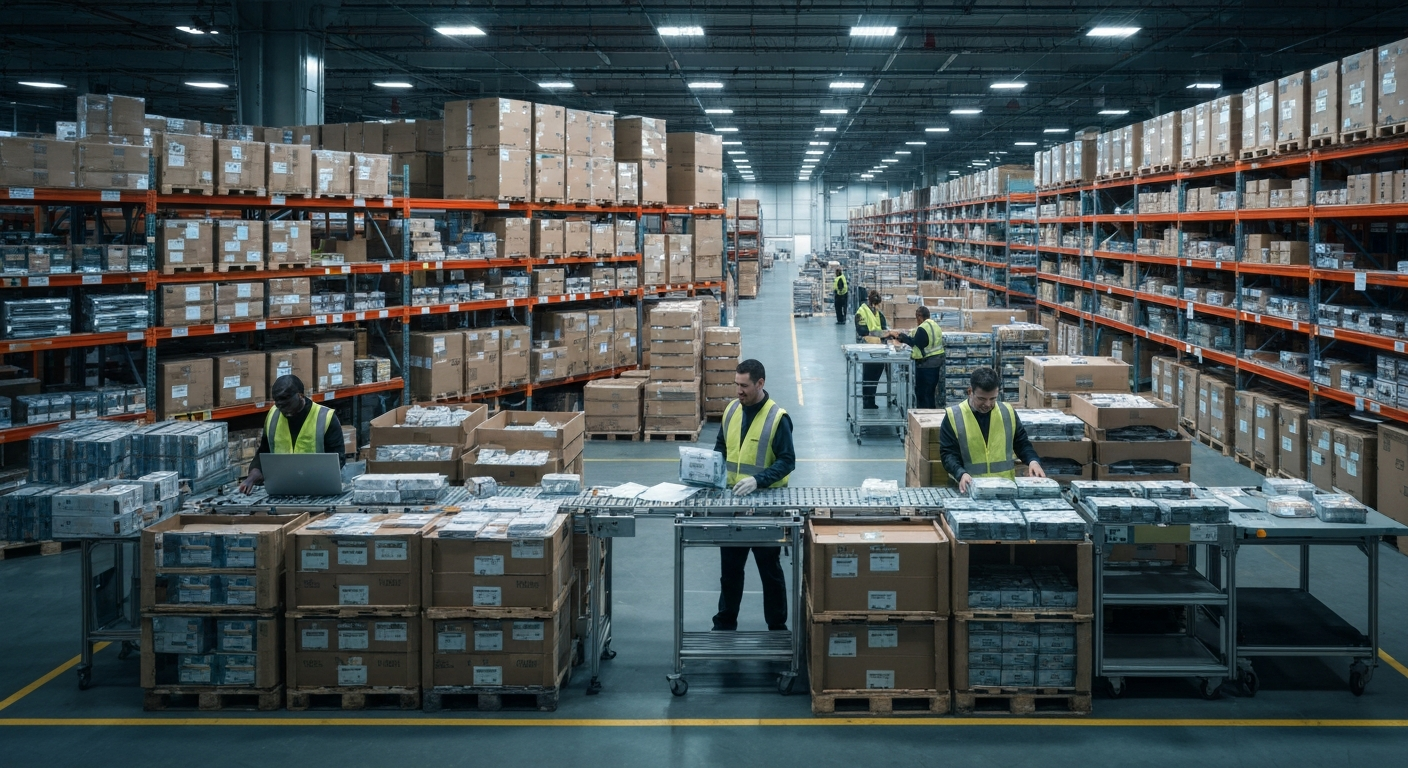
Pick–pack is the core of daily outbound activity. Accuracy at this stage directly affects delivery speed and customer satisfaction.
Pick–pack normally takes less than 24 hours for standard-volume orders.
How pick–pack functions
Warehouse staff retrieve products using digital picking paths that prioritize efficiency and reduce human error. Items move to the packing zone for QC checks, protective wrapping, labeling, and consolidation. Incorrect SKUs, damaged packaging, or mismatched variants are common blockers that require extra inspection.
Advanced systems—such as SKU scanning, batch picking, and automated label printing—help maintain precision. Packing standards defined by carriers improve success during export screening. When pick–pack procedures stay consistent, outbound streams remain steady and avoid rework at later shipping stages.
How are export procedures handled in China?
Before goods leave the country, they must pass export documentation, carrier acceptance, and security screening.
Export processing generally takes 1–3 days depending on carrier route and compliance requirements.

Why export processing matters
Export hubs perform multiple checks: verifying declarations, confirming product descriptions, validating HS codes, and ensuring packaging meets air transport standards. Sensitive categories—electronics, batteries, liquids, powders, or branded items—require additional compliance documents. Missing paperwork or unclear descriptions often triggers export holds or repacking.
Consistent export preparation reduces these issues. Clear labeling, accurate HS coding, and proper packaging help carriers approve shipments quickly. Consolidation from various suppliers also allows unified documentation, improving customs alignment and reducing screening time. This keeps cargo moving toward international transit without unnecessary stops.
How long does international shipping take from China?
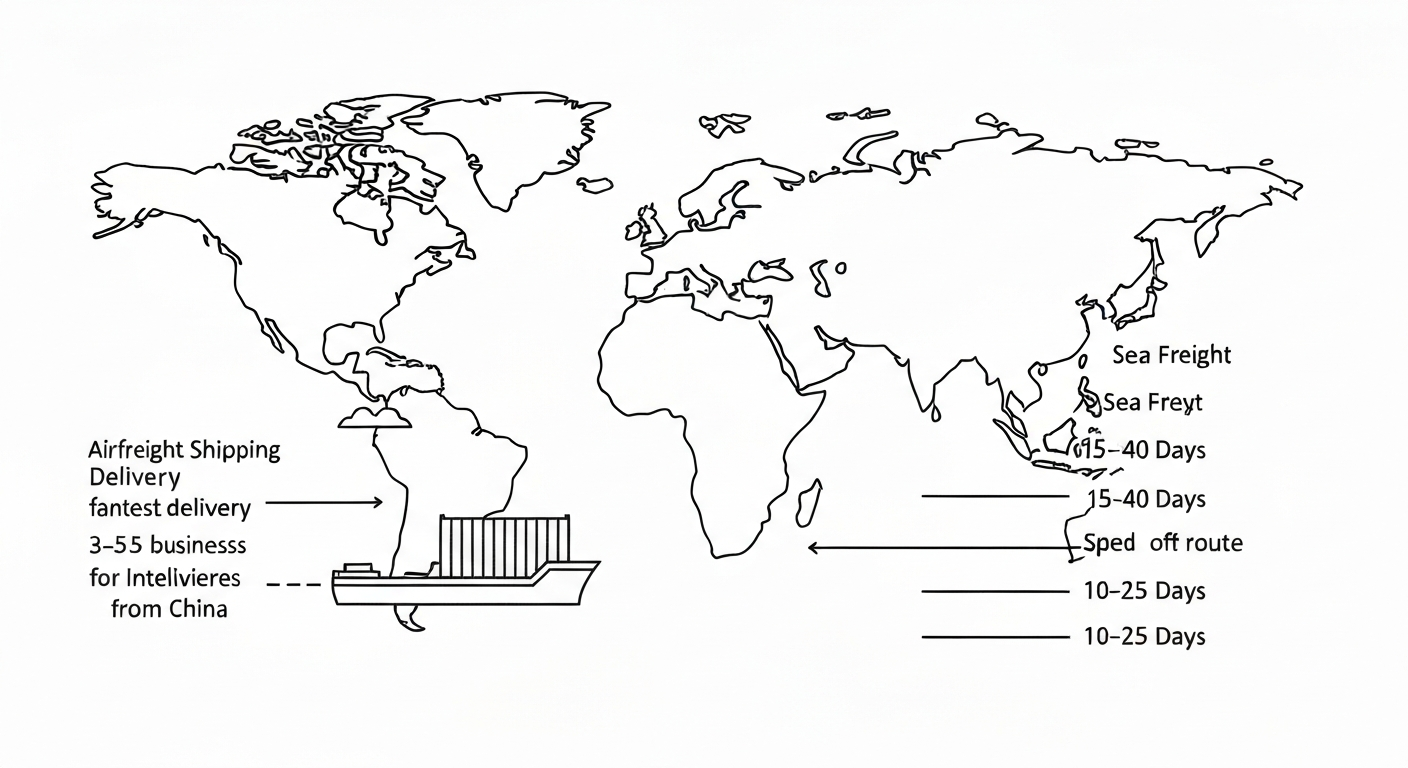
Transit time depends on the chosen method: express, airfreight, sea freight, or rail.
Most express shipments take 3–10 days, airfreight 5–12 days, sea freight 15–40 days, and rail 15–25 days.
Factors influencing transit
Express carriers rely on direct flights and advanced sorting systems. Airfreight uses cargo aircraft with scheduled departures. Sea freight moves in containers through major ports like Shenzhen, Ningbo, and Shanghai, while rail links China with Europe through inland terminals.
Transit speed varies with airline capacity, port congestion, weather, customs inspection, and routing seasons. Sensitive goods or high-value cargo may undergo additional checks at transfer hubs. High-traffic periods, such as Q4, often extend travel time across all transport modes.
Strong partnerships with carriers, predictable booking schedules, and stable route planning help maintain consistent transit times. Consolidated shipments and smart allocation across air–sea–rail channels also reduce peak-season pressure.
How is last-mile delivery coordinated internationally?
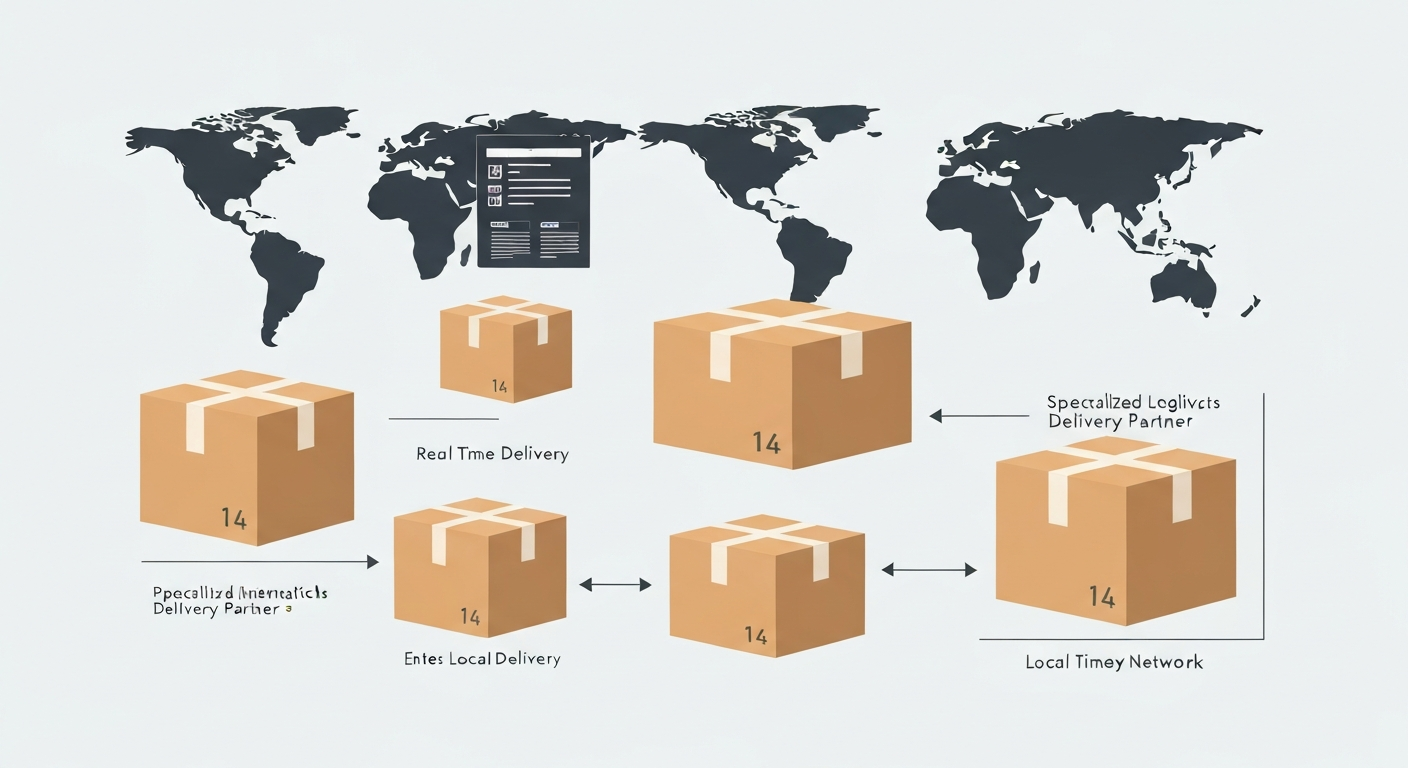
Once cargo reaches the destination country, it moves through customs and then enters the local delivery network.
Last-mile delivery typically takes 2–7 days depending on carrier workload and regional density.
How last-mile systems operate
Domestic carriers sort packages by postal code, then send them to regional hubs. Rural or remote areas require longer routing, while major cities receive faster cycles. Delivery performance depends heavily on correct consignee data—address errors, missing apartment numbers, or incomplete phone details cause many avoidable holds.
Customs also affects last-mile movement. Duties, taxes, or compliance reviews can pause the parcel before domestic carriers receive it. High-value shipments may require signatures or ID checks.
Clean documentation, accurate address formatting, and pre-verified consignee details reduce last-mile delays. Consistent transit updates help maintain visibility and support smoother coordination until the parcel reaches the final destination.
Conclusion
Global order fulfillment from a China warehouse follows a well-defined chain: inbound receiving, storage, pick–pack, export clearance, international transport, and last-mile delivery. Stable operations, clean documentation, and reliable shipping channels reduce delays at every stage. Consolidated supplier handling, accurate labeling, and consistent export preparation keep timelines predictable even during peak seasons. With smooth coordination from warehouse to final delivery, global shipments maintain steady progress, ensuring reliable supply flow and stronger performance across cross-border operations.
 Chinese
  English