
Shipping with DHL involves preparing the parcel, entering shipment details, choosing a service, printing labels, and handing the package to DHL. Clear preparation ensures fast processing and smooth delivery.
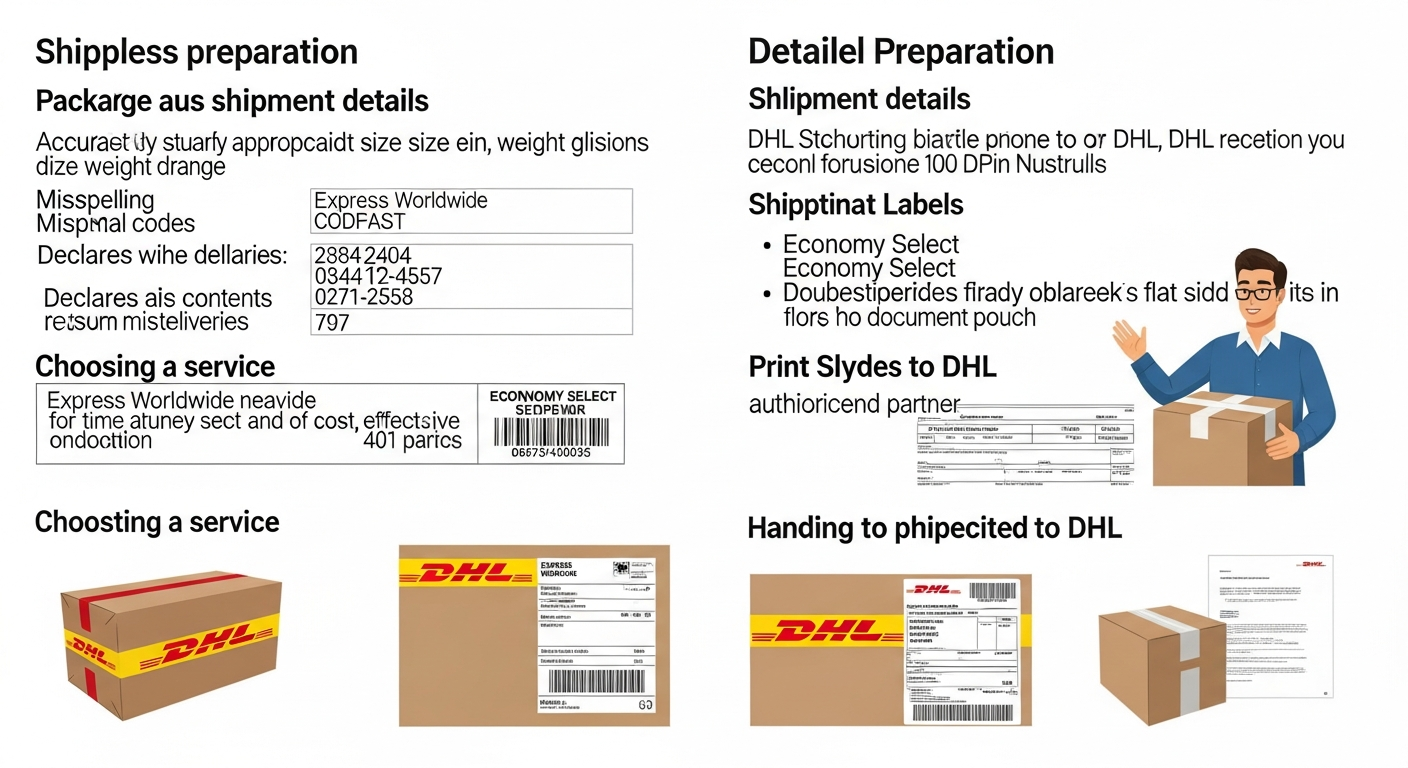
A structured workflow reduces mistakes, avoids processing delays, and keeps the parcel moving steadily through DHL’s global network.
What preparation is required before creating a DHL shipment?
Correct packaging, measurements, and item details are essential to avoid scanning issues.
Preparation requires accurate weight, dimensions, item description, and strong packaging.
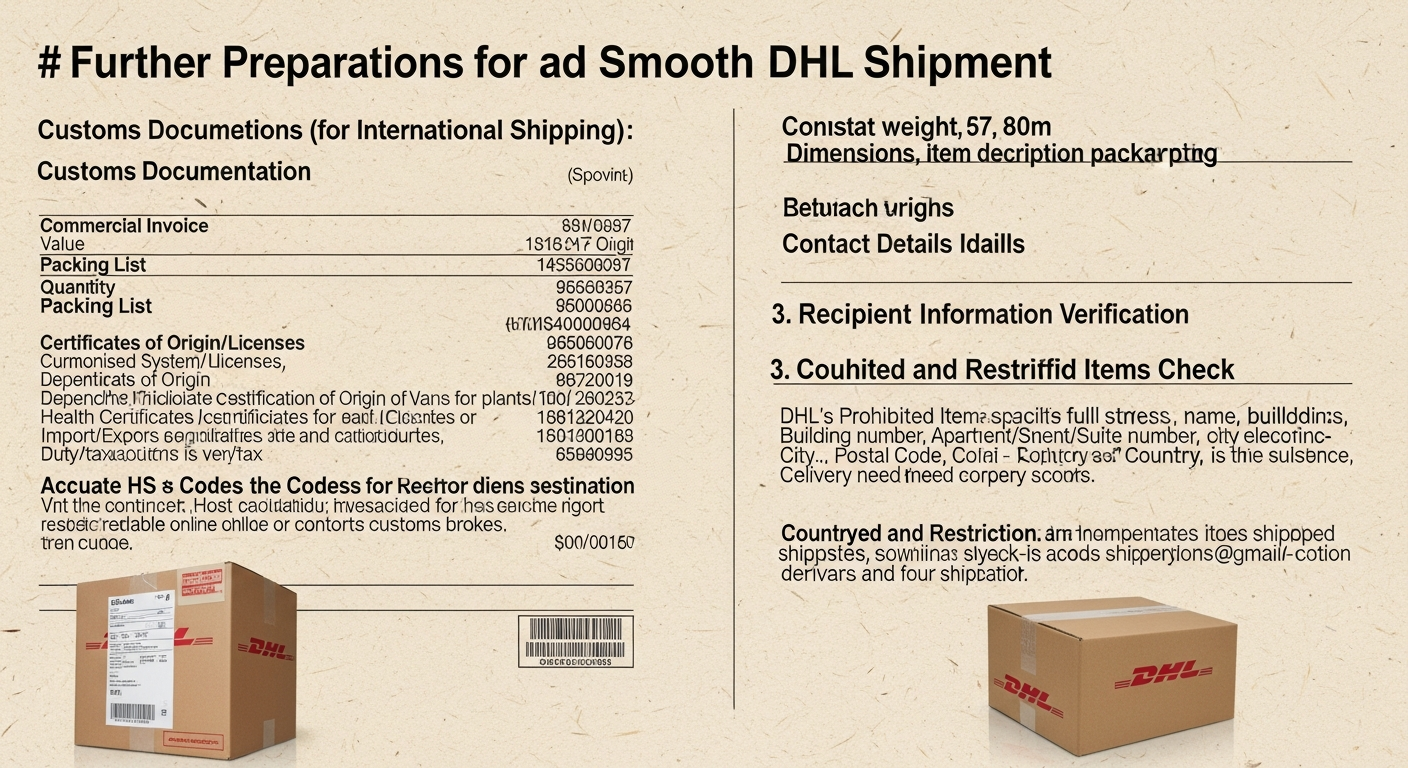
Why early preparation matters
DHL uses automated sorting systems, so accurate data ensures the parcel enters the correct route. Strong cartons, internal cushioning, and clear labels protect items during rapid handling at hubs and air terminals. Sensitive goods—such as electronics, batteries, and liquids—must follow DHL’s special documentation rules.
With complete information and compliant packaging, the parcel is ready for export steps without re-scanning or repacking delays.
How to create a DHL shipment online?
DHL’s online tools allow users to enter shipment details, choose services, and generate labels.
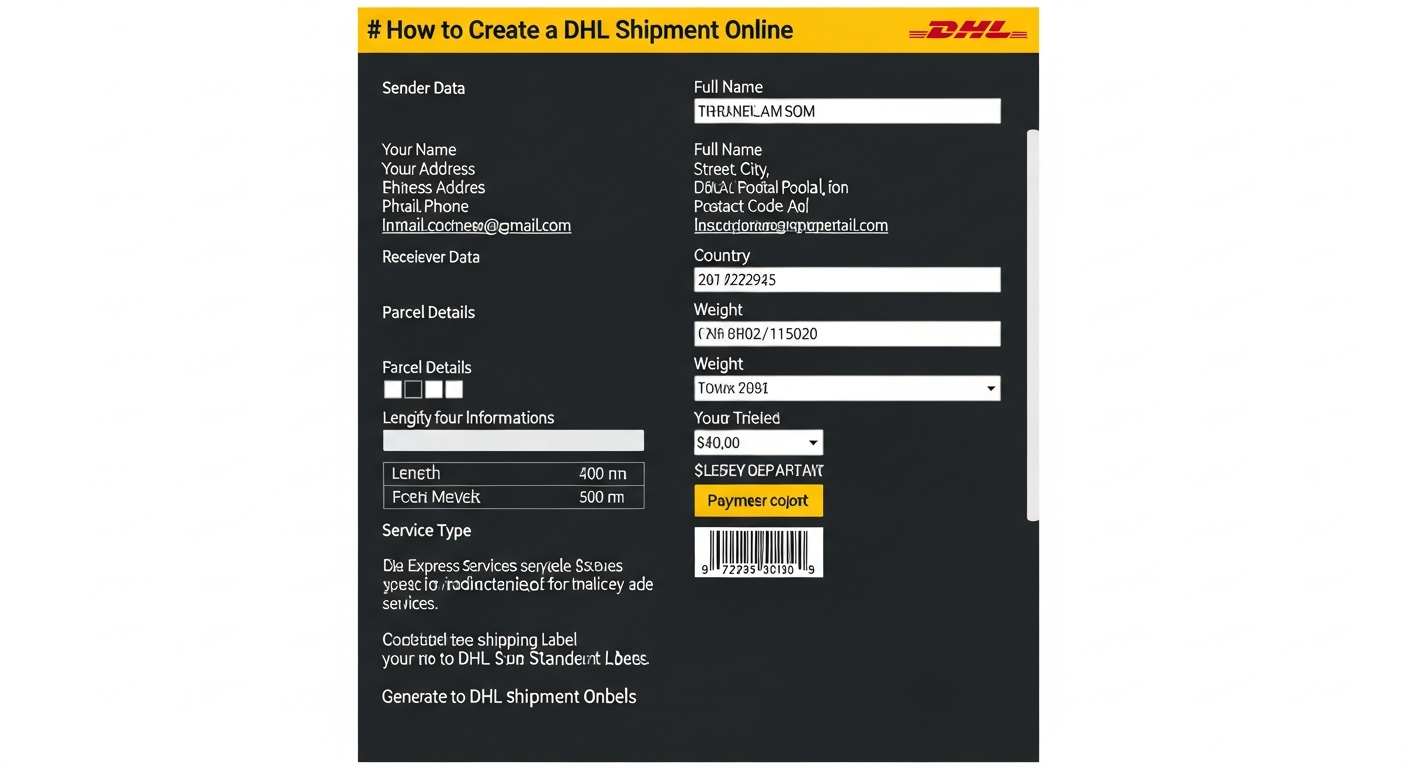
A shipment is created by entering sender data, receiver data, parcel size, and service type.
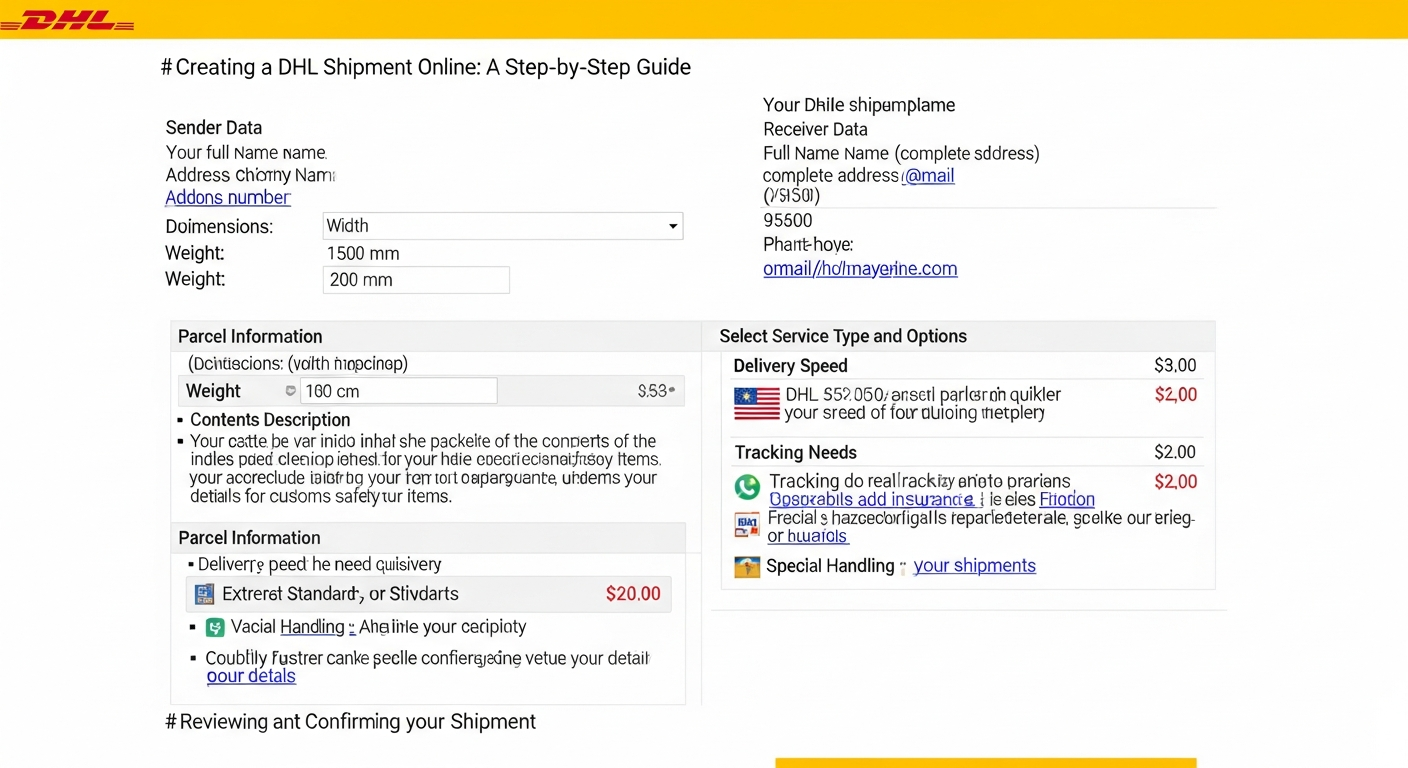
How the online setup works
DHL’s website or shipping platform requests:
- Sender address
- Receiver address
- Parcel weight and dimensions
- Item description
- Declared value
- Service selection (Express Worldwide, Economy Select, etc.)
Once the form is completed, DHL calculates the shipping cost and estimated transit time. Creating the shipment online ensures the parcel is registered in the system before pickup or drop-off. Accurate details help DHL prepare routing instructions and customs data early.
How to choose the right DHL service?
Choice depends on delivery speed, destination, and cargo type.
DHL Express Worldwide offers the fastest global delivery; other services fit regional or economy routes.
Why service selection matters
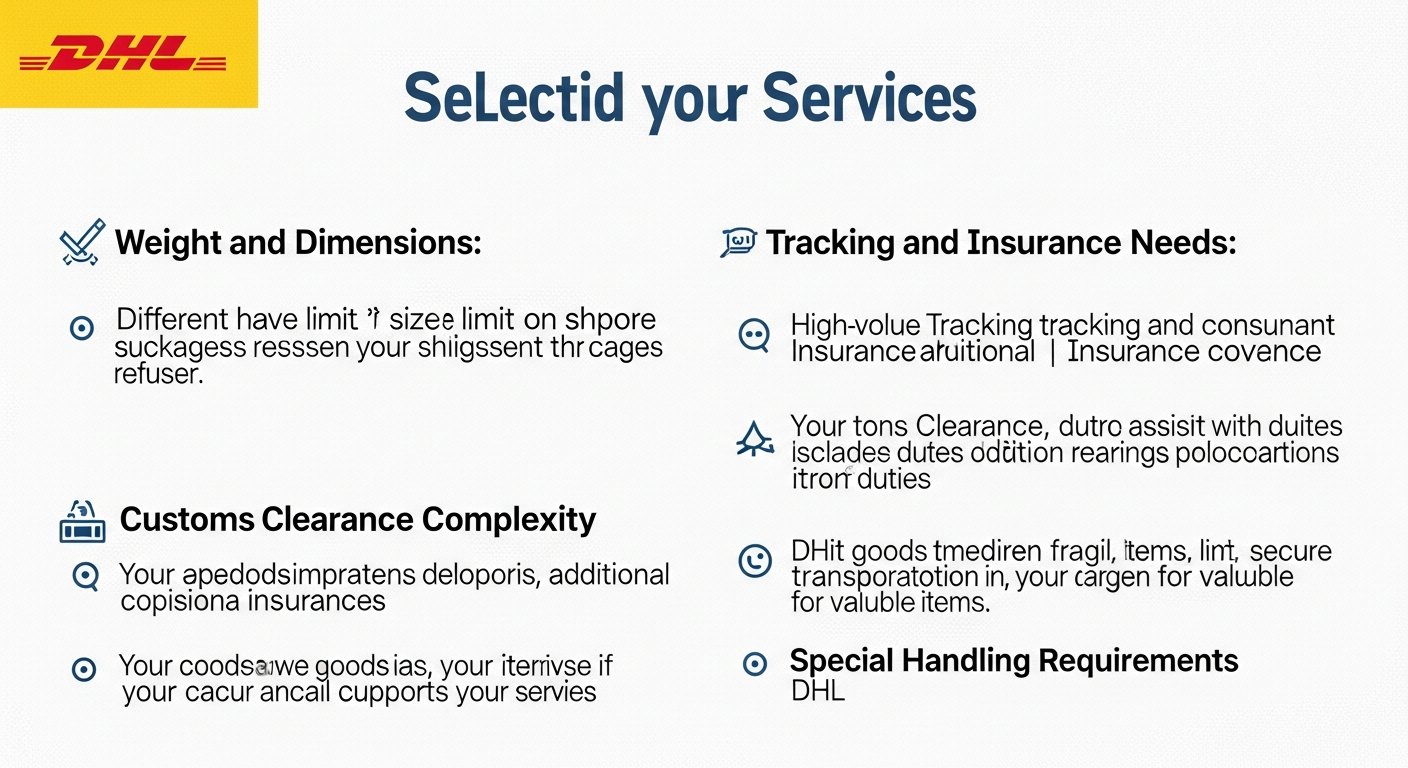
Different DHL services offer different speeds, weight limits, and regional coverage. Express lines use priority air transport and faster customs handling. Economy services take longer but offer cost advantages for less urgent shipments.
Selecting the correct service ensures predictable timelines, stable costs, and proper routing through DHL’s network. Service choice also influences customs processing speed and last-mile performance.
How to print DHL labels and attach documents?
Shipping labels and customs documents must be printed clearly and attached securely.
Labels must be placed flat on the parcel, with commercial invoices attached in a document pouch.
Why correct labeling is important
DHL’s scanners read labels at high speed. Smudged, folded, or poorly attached labels can cause routing errors. Commercial invoices, item lists, and permits must be placed in a transparent pouch for customs inspection. Clear documentation prevents delays during export or import checks.
Ensuring the label is visible and scannable at every angle keeps the shipment moving through each hub without manual intervention.
How to hand over the package to DHL?
DHL allows either pickup or drop-off at a nearby service point.
The parcel can be handed to a DHL courier or dropped at an authorized DHL location.

How handover works
For pickups, DHL couriers scan the label and verify the package. For drop-offs, staff register the parcel and send it to the nearest DHL hub. In both cases, the first tracking scan confirms the shipment has officially entered the DHL network.
Timely handover helps the parcel catch available flights or transfer trucks, improving overall delivery speed.
What happens after the shipment enters DHL’s network?
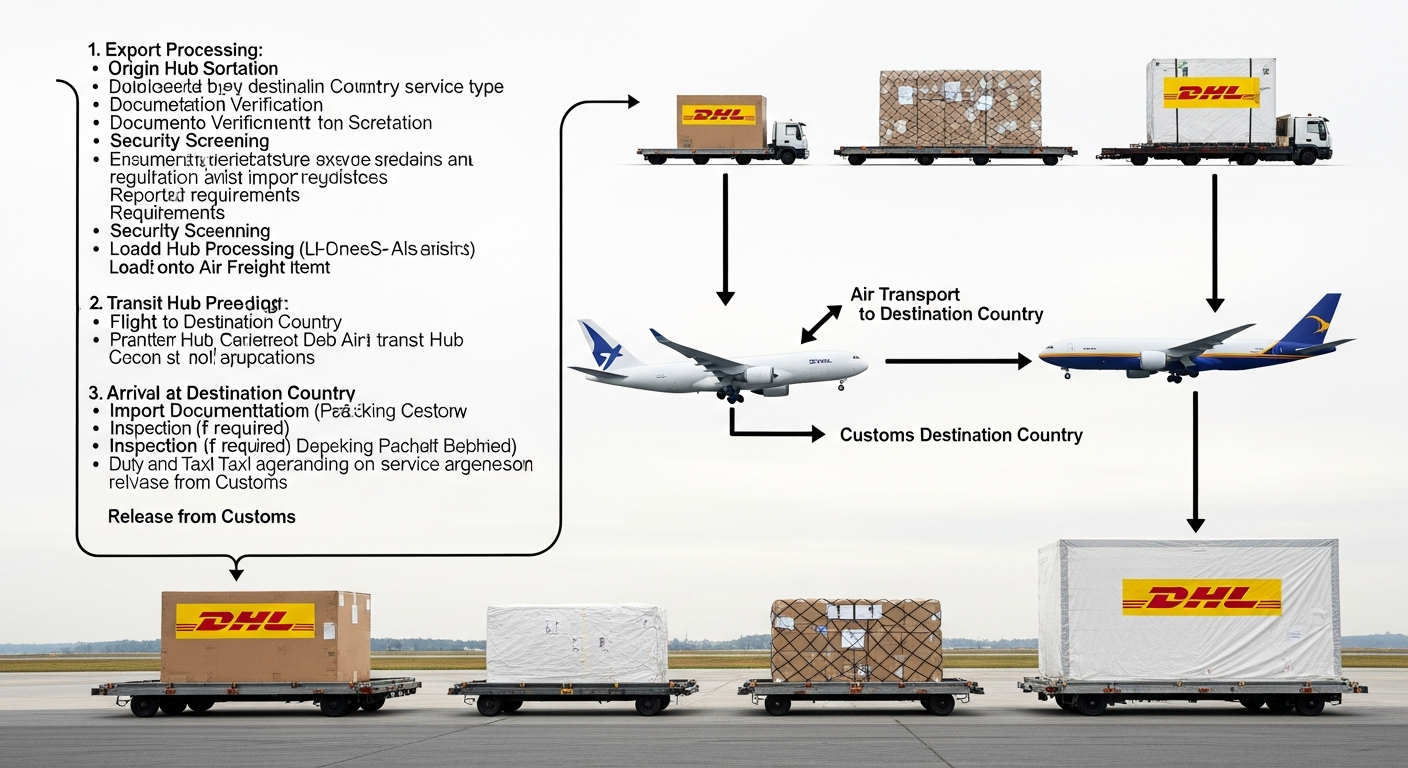
The parcel moves through export processing, air transport, customs, and final delivery.
Tracking updates show every movement until the shipment arrives at its destination.
How DHL handles the parcel
Once scanned into the system, DHL sorts the parcel at the nearest hub and sends it to the appropriate export gateway. After flight departure, tracking updates confirm arrival at the destination country and progress through customs.
Clear documents, accurate HS codes, and correct values ensure smooth customs processing. After clearance, DHL delivers the parcel through its last-mile network.
Conclusion
Shipping a package with DHL is a simple process when each step—preparation, online creation, service selection, labeling, and handover—is completed carefully. Accurate data and strong packaging support fast handling across DHL facilities, while correct documentation keeps customs checks short and predictable. By following a clear workflow, parcels move smoothly from pickup to final delivery, ensuring reliable transit and consistent global shipping performance.
 Chinese
  English