
Shipment tracking gives importers real-time visibility across every stage of transport.
Shipments can be tracked using tracking numbers, container numbers, HBL/MBL details, or carrier references through online tracking tools.
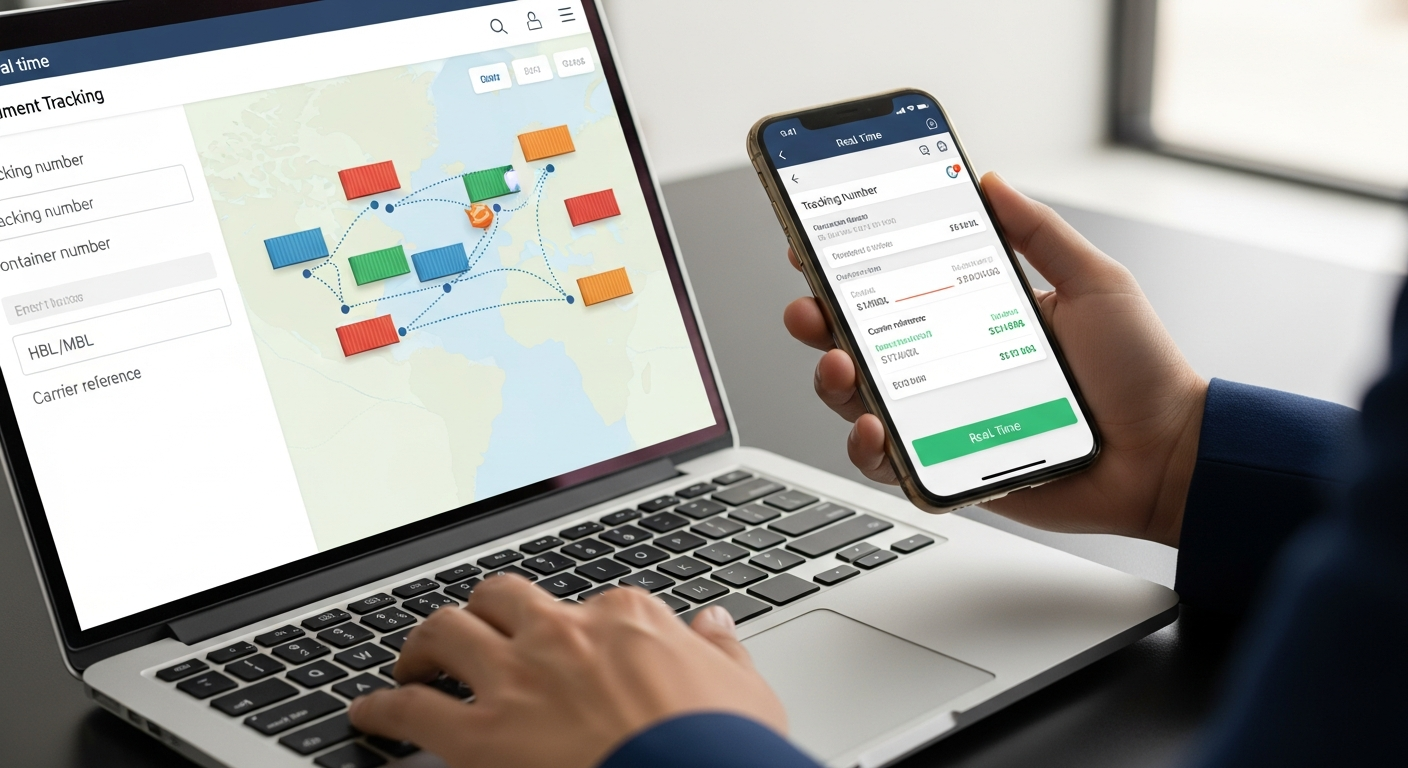
Clear tracking improves planning, reduces uncertainty, and helps importers manage warehouse preparation and delivery schedules.
What information is needed to track a shipment?
Missing shipment data often prevents tracking platforms from showing accurate progress.
Tracking requires a tracking number, container number, BL number, or booking reference.
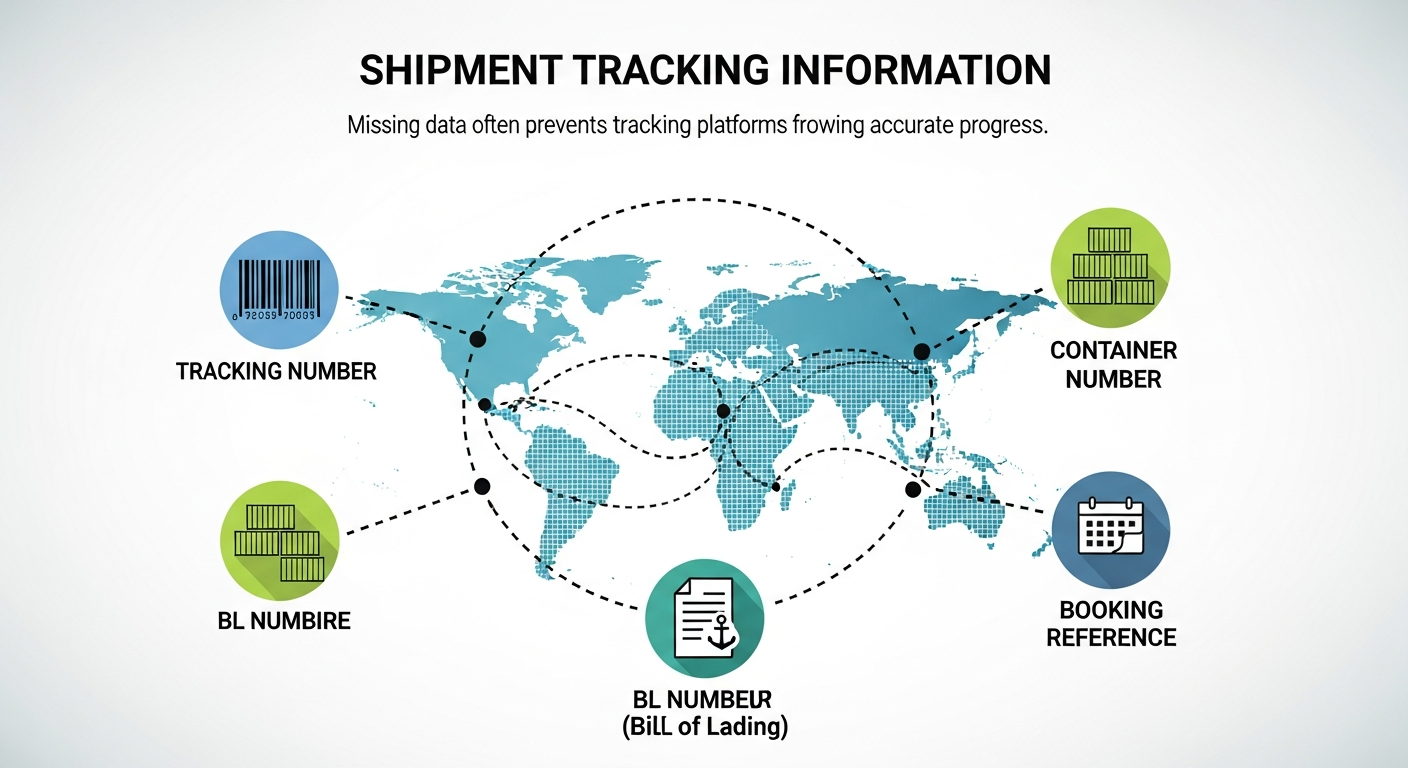
Tracking Identifiers, Data Flow, and System Accuracy
For ocean freight, the container number or bill of lading (HBL/MBL) links the shipment to the carrier schedule. For air freight, the AWB number provides airport-to-airport milestones. For express couriers like DHL, UPS, or FedEx, the tracking number displays door-to-door status.
All tracking data flows from terminals, carriers, and warehouses into integrated online systems. Each major milestone—gate-in, loading, departure, arrival, customs release, warehouse scanning—appears once confirmed.
Strong logistics coordination ensures suppliers provide correct data early, preventing mismatched IDs that cause tracking gaps. Warehouse staff also verify label accuracy and upload photos to maintain visibility before export.
Where can shipments be tracked online?
Multiple platforms support global tracking depending on the freight mode.
Shipments can be tracked on carrier websites or consolidated multi-carrier tracking tools.
Carrier Portals, Global Platforms, and Update Frequency
Common tracking channels include:
- Ocean carriers: Maersk, MSC, ONE, COSCO, CMA CGM, Evergreen
- Air carriers: Emirates SkyCargo, Qatar Airways, Cathay Cargo, China Airlines
- Express couriers: DHL, UPS, FedEx, TNT
- Multi-carrier tools: Freight tracking aggregators, logistics dashboards, and API-integrated platforms
These systems show statuses such as:
- Cargo received
- Loaded on vessel / flight
- In transit
- Arrived at destination
- Customs processing
- Out for delivery
Forwarding teams monitor discrepancies between systems to provide real-time updates when carrier portals lag behind.
How does tracking differ between ocean, air, and express shipments?
Each mode follows different operational flows, affecting tracking visibility.
Ocean, air, and express shipments update on different schedules with unique milestone patterns.
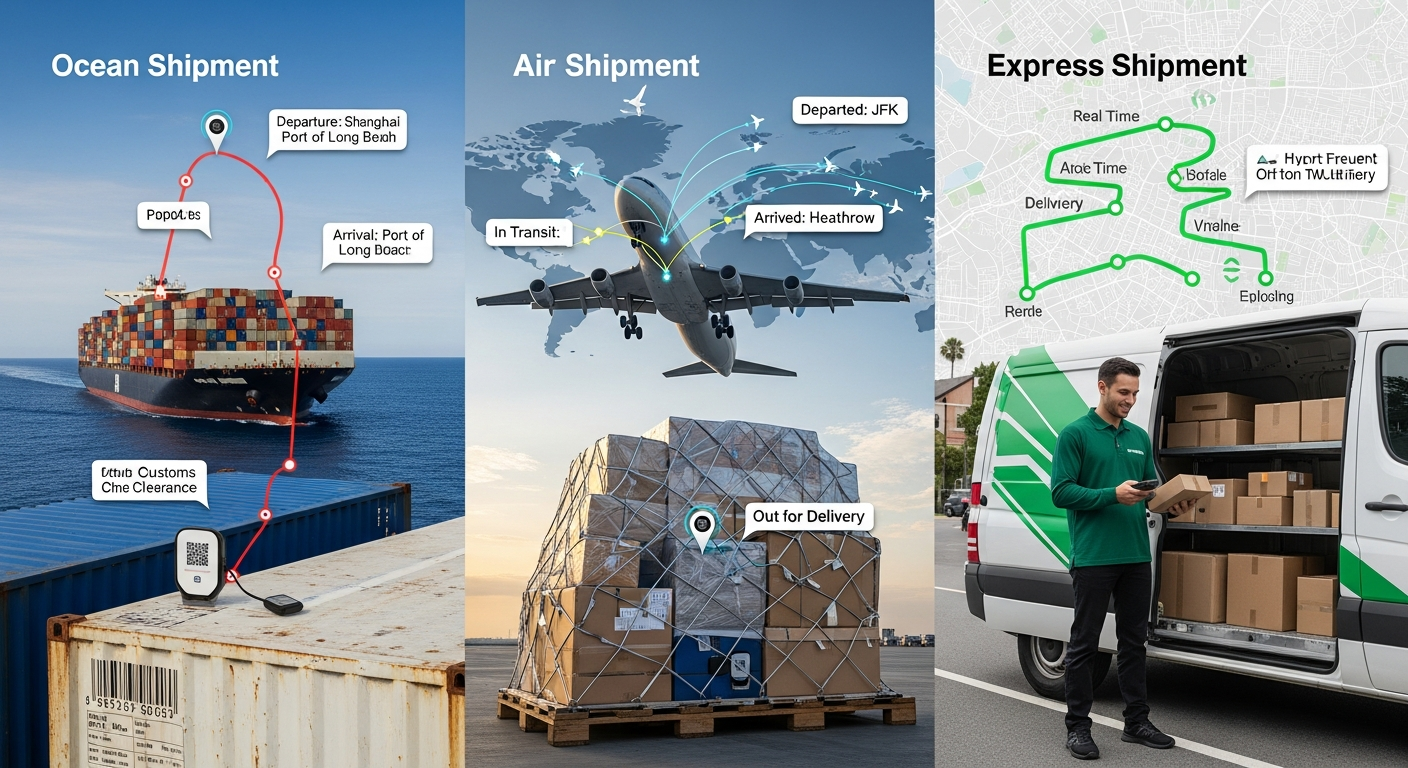
Mode-Specific Milestones and Workflow
Ocean Freight (FCL/LCL)
- Gate-in
- Container loading
- Vessel departure
- Transshipment scans
- Arrival and discharge
- Container release or CFS pick-up
Air Freight
- Cargo received
- Security screening
- Flight departure
- Transit airport updates
- Arrival
- Pickup from airline warehouse
Express Courier (DHL, UPS, FedEx)
- Door pickup
- Export scan
- Transit hub updates
- Out for delivery
- Delivered status
Ocean updates occur at major milestones, so long gaps between vessel departures and arrivals are normal. Air updates are more frequent but depend on airport processing. Express is real-time and provides the most detailed tracking.
Why does shipment tracking stop updating?
Tracking gaps can cause anxiety for importers expecting time-sensitive updates.
Tracking stops updating due to transshipment delays, system sync issues, holidays, or customs inspections.
Normal Gaps, Common Delays, and Troubleshooting
Major causes include:
- Long ocean legs without scanning
- Transshipment ports waiting for connections
- Carrier portals refreshing slowly
- Terminal congestion
- Customs holds or examinations
- Incorrect tracking number input
- Supplier errors in labels or documents
Logistics teams check internal systems and direct carrier contacts to verify real status when online tracking stalls. This prevents confusion and ensures accurate ETAs.
How does shipment tracking support warehouse planning?
Accurate tracking helps warehouses prepare for incoming loads and avoid last-minute disruptions.
Shipment tracking allows for better labor planning, dock scheduling, and inventory forecasting.
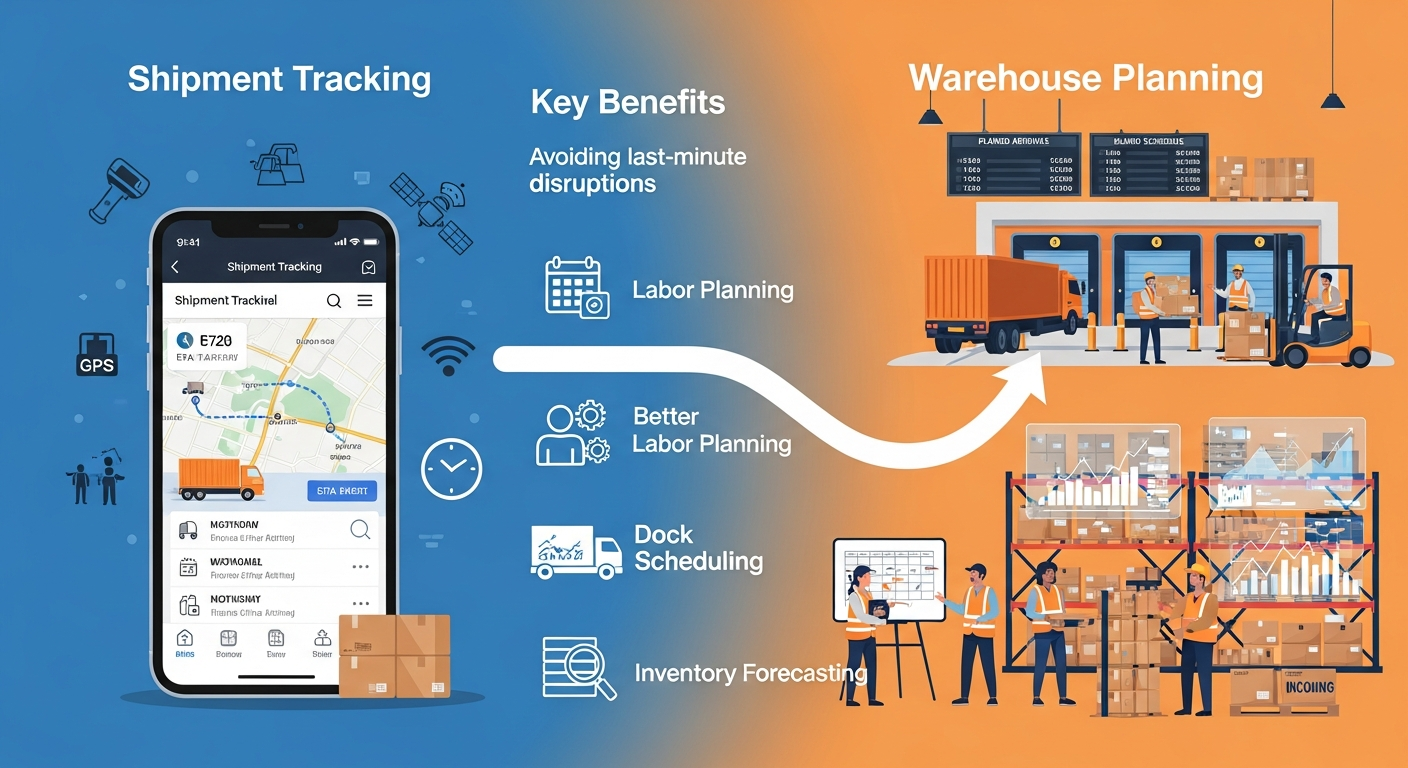
ETAs, Receiving Prep, and Inventory Management
With reliable tracking data, warehouses can:
- Allocate unloading teams
- Arrange pallet jacks or forklifts
- Prepare receiving documents
- Plan shelf or storage space
- Coordinate outbound transfer for cross-docking
Tracking improves demand planning, especially when shipments from multiple Chinese suppliers arrive together. Early updates help avoid congestion and prevent detention charges caused by late container returns.
How does shipment tracking work for LCL and multi-supplier shipments?
Shared and mixed shipments require extra tracking layers.
LCL tracking relies on HBL numbers and warehouse milestones rather than container numbers.
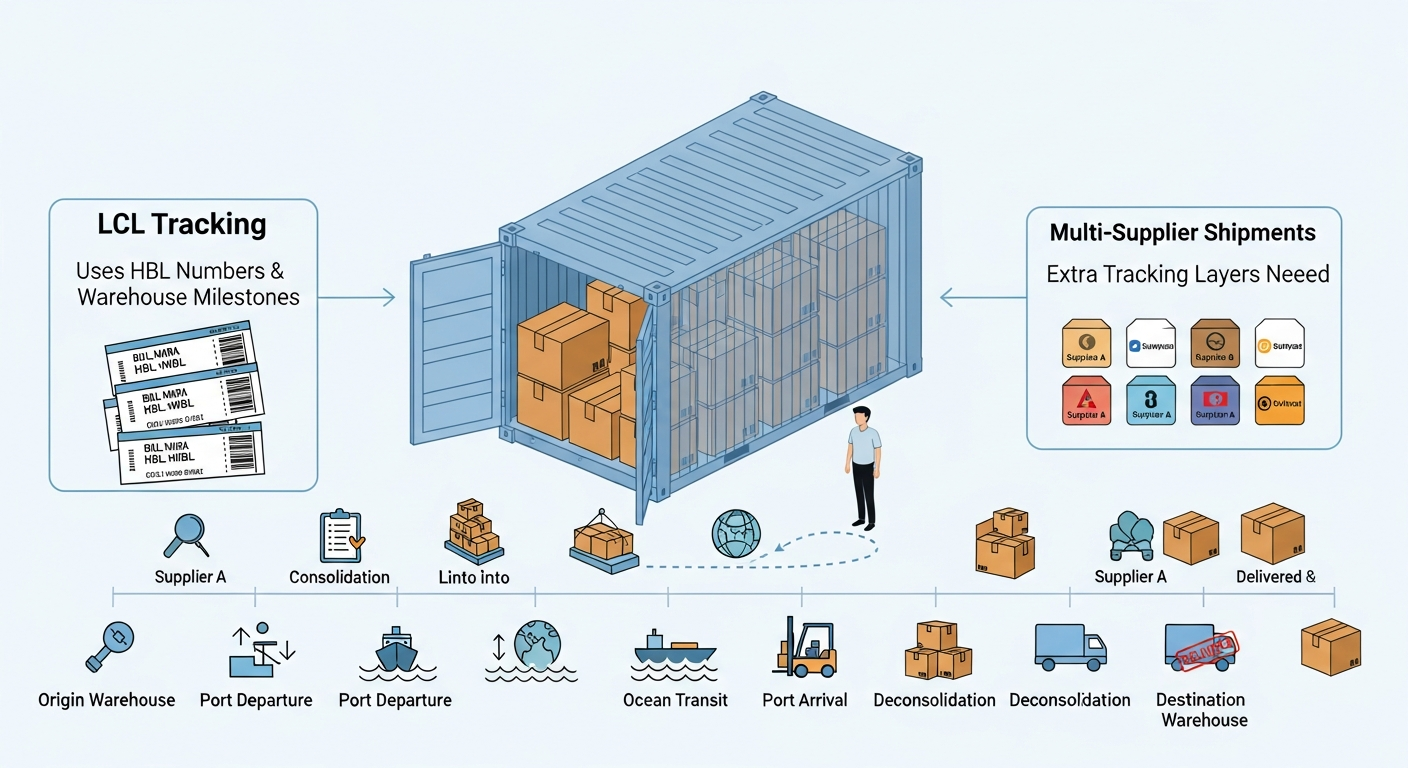
Consolidation Checks, CFS Updates, and Visibility
For LCL shipments, the key milestone is CFS receiving, where warehouses scan cartons and verify labels. The HBL links a buyer’s cargo to the master consolidation. Updates include consolidation, vessel departure, de-vanning, and pickup availability.
For multi-supplier shipments, tracking includes:
- Supplier pickup or warehouse receiving
- Photo and carton-count verification
- Consolidation before export
- Export declaration
- International transit
- Destination CFS processing
Strong consolidation systems ensure consistent visibility across all suppliers and SKU types.
What documents are needed to ensure accurate tracking?
Incorrect or incomplete documents lead to tracking errors or status mismatches.
Accurate invoices, packing lists, tracking numbers, and BL details ensure smooth tracking updates.
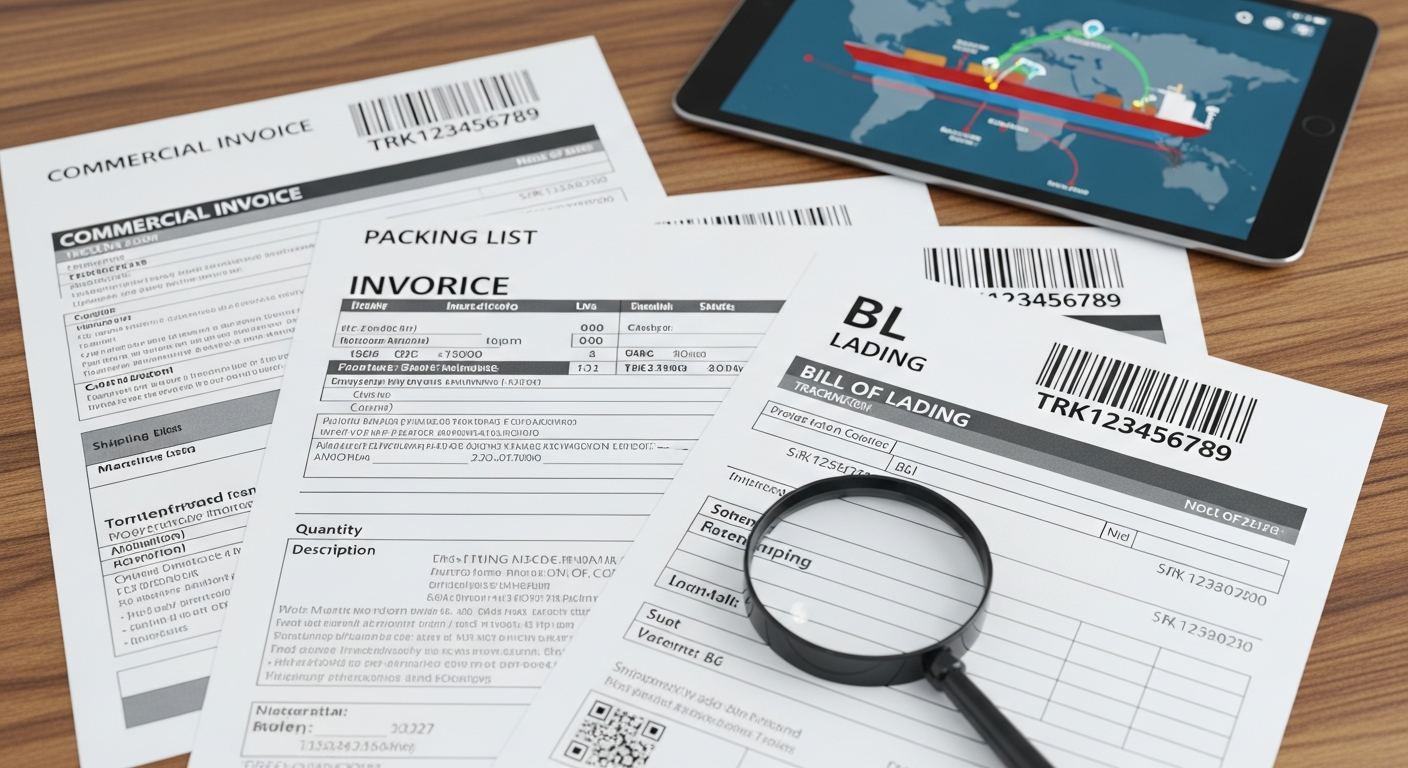
Document Accuracy, Labeling, and System Sync
Key documents include:
- Commercial invoice
- Packing list
- BL / HBL / AWB
- Container or tracking numbers
- Carton labels and SKU lists
Warehouses verify documentation before loading to prevent errors. Correct data ensures tracking systems match real movement, reducing false updates or missing statuses.
Conclusion
Shipment tracking provides essential visibility for importers across ocean, air, express, and inland transport. By using the correct tracking identifiers, monitoring carrier portals, and coordinating through reliable logistics teams, importers stay informed from pickup to final delivery. Proper documentation, strong consolidation practices, and timely communication ensure every shipment moves smoothly and predictably through the global supply chain.
 Chinese
  English