
HS codes are international product classification numbers used by customs to identify goods during import and export.
HS codes standardize product categories globally, ensuring correct duties, compliance, and customs processing.
Understanding HS codes helps importers avoid customs delays, prevent misclassification penalties, and ensure smooth cross-border shipping.
What is an HS code?
Many importers know HS codes exist but do not understand their real impact on customs clearance.
An HS code is a standardized 6-digit product classification used worldwide for customs and trade documentation.
Global Classification, Customs Control, and Trade Use
The Harmonized System (HS), maintained by the World Customs Organization (WCO), categorizes all traded goods. Every product—from electronics to apparel to chemicals—has a specific HS code structure. Countries often extend the code to 8 or 10 digits for more detailed classification, used for duties, restrictions, and compliance checks.
Customs uses HS codes to determine:
- Duty and tax rates
- Import/export permit requirements
- Safety and compliance regulations
- Trade statistics
- Document checks and inspection risk
Accurate HS coding is essential. Incorrect codes can trigger customs holds, fines, or reclassification delays during import clearance.
How is an HS code structured?
Many assume HS codes are random, but each digit has meaning.
HS codes follow a 6-digit global structure: chapter (2 digits), heading (4 digits), and subheading (6 digits).
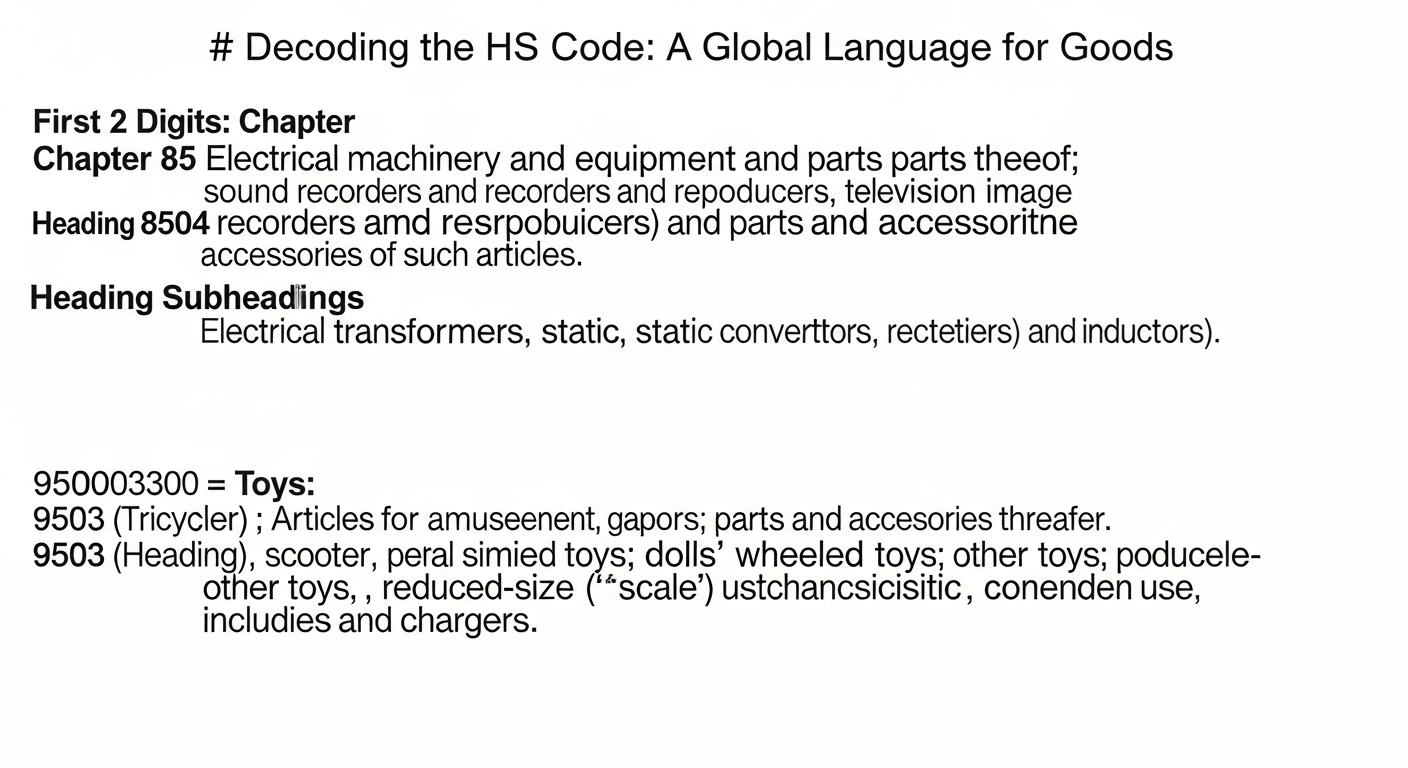
Breakdown, Categories, and Practical Examples
Structure:
- First 2 digits = Chapter (broad product category)
- Next 2 digits = Heading (specific group)
- Next 2 digits = Subheading (detailed item definition)
Example:
- 850440 = Power supply or charger
- 950300 = Toys
- 640299 = Footwear
Importing countries may extend the code:
- US HTS code: 10 digits
- EU TARIC code: 10 digits
- China HS code: 10 digits
Extensions determine duties, FDA/FCC/EPA requirements, or anti-dumping regulations. Precise classification ensures the correct documentation and compliance at destination.
Why are HS codes important in shipping?
Incorrect classification is a frequent cause of customs delays or additional inspections.
HS codes are essential for calculating duties, determining compliance requirements, and ensuring legal import.
Duties, Restrictions, and Customs Workflow
Accurate HS codes affect:
- Import duty rates
- VAT/GST calculations
- Licensing requirements (FDA, FCC, USDA, EPA, etc.)
- Inspection risk levels
- Importer compliance history
- Shipping line manifest accuracy
Correct HS codes help avoid penalties for misdeclaration and reduce the chance of customs targeting a shipment. For multi-supplier shipments, warehouses check HS codes against supplier documents to prevent mismatches during consolidation.
How do you find the correct HS code?
Incorrect HS codes from suppliers can trigger customs holds or additional duties.
HS codes are determined by reviewing product materials, function, and technical specifications.
Classification Steps and Verification
To determine the correct HS code:
- Identify product materials and components
- Determine the product’s primary function
- Review WCO category descriptions
- Refer to the destination country’s tariff schedule
- Check past import documents for consistency
- Consult a customs broker for high-risk products
High-risk product categories—electronics, chemicals, medical devices, batteries, wireless items—require precise classification to avoid regulatory issues.
Consolidation hubs verify HS codes from multiple suppliers to ensure uniform classification before export.
What happens if the wrong HS code is used?
Misclassification causes delays, fees, or customs penalties.
Using the wrong HS code can lead to reclassification, inspections, and extra cost.

Customs Holds, Fines, and Rechecks
Incorrect HS codes may result in:
- Higher-than-expected duties
- Customs holds or examinations
- Shipment reclassification
- Fines or compliance flags
- Release delays during clearance
- Denied entry for restricted goods
Regulated items—such as batteries, cosmetics, chemicals, medical devices, and telecom equipment—are especially sensitive. Customs checks product labels, specifications, and invoices to confirm classification accuracy.
Experienced logistics teams validate HS codes early to protect importers from costly surprises.
How do HS codes connect to documents like invoices and packing lists?
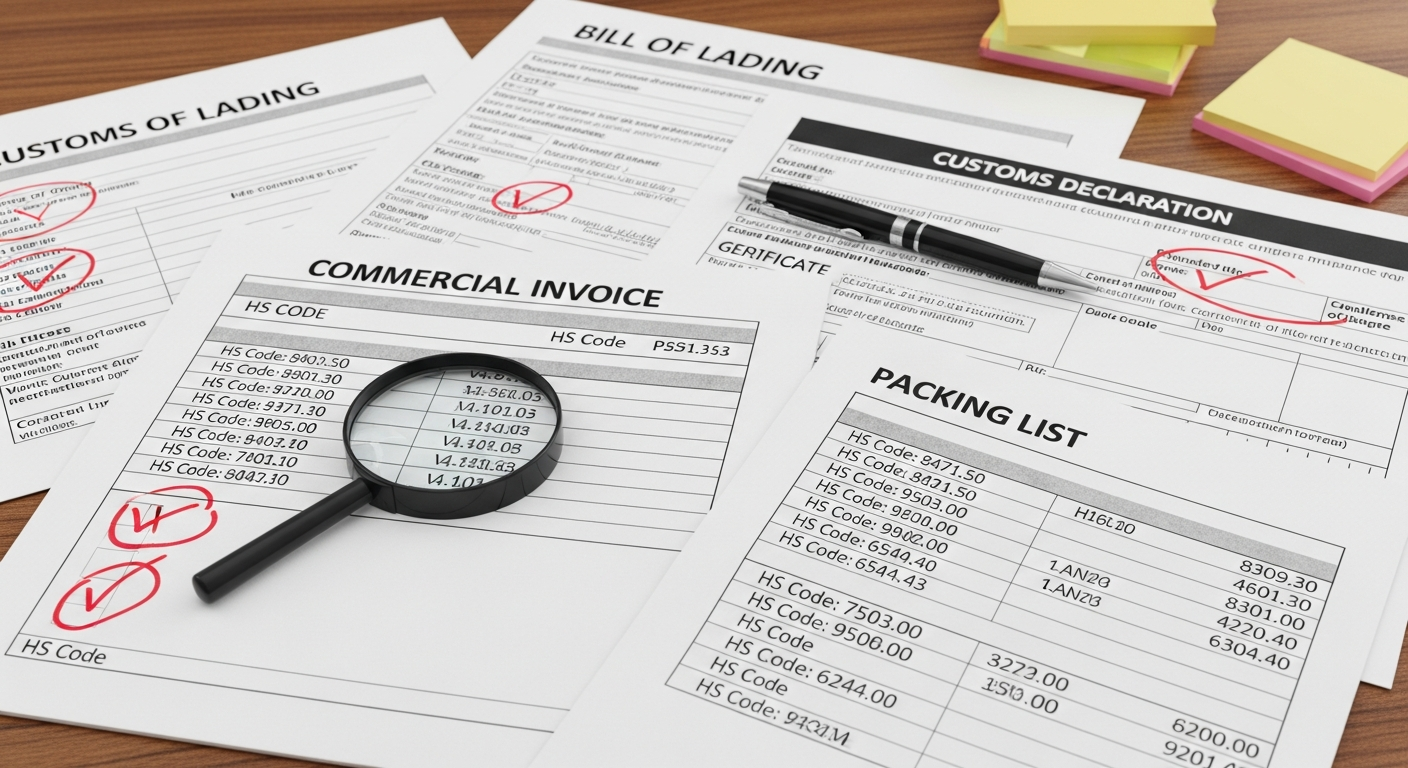
Customs systems rely on matching information across all documentation.
HS codes must appear consistently on invoices, packing lists, and shipping declarations.
Document Alignment and Compliance Review
Key documents requiring accurate HS codes include:
- Commercial invoice
- Packing list
- Bill of lading / air waybill
- Customs declaration (entry summary)
- Certificates for regulated goods
- Importer declaration of classification
Any mismatch between product description, value, and HS code increases the likelihood of customs intervention. When goods come from multiple suppliers, verification ensures all data is aligned before export.
How do HS codes impact multi-supplier or consolidated shipments?
Consolidated shipments require the highest level of HS code accuracy.
HS codes must be unified across all suppliers to prevent customs classification conflicts.
Centralized Verification and Export Control
Consolidation warehouses:
- Check HS codes provided by each supplier
- Ensure descriptions match the actual products
- Correct inconsistent or missing HS codes
- Prepare unified export documents
- Prevent customs delays during entry
HS-code consistency is especially important when importing electronics, batteries, kitchenware, or mixed SKUs. Customs must clearly understand what is inside each carton.
How do HS codes affect shipping costs?
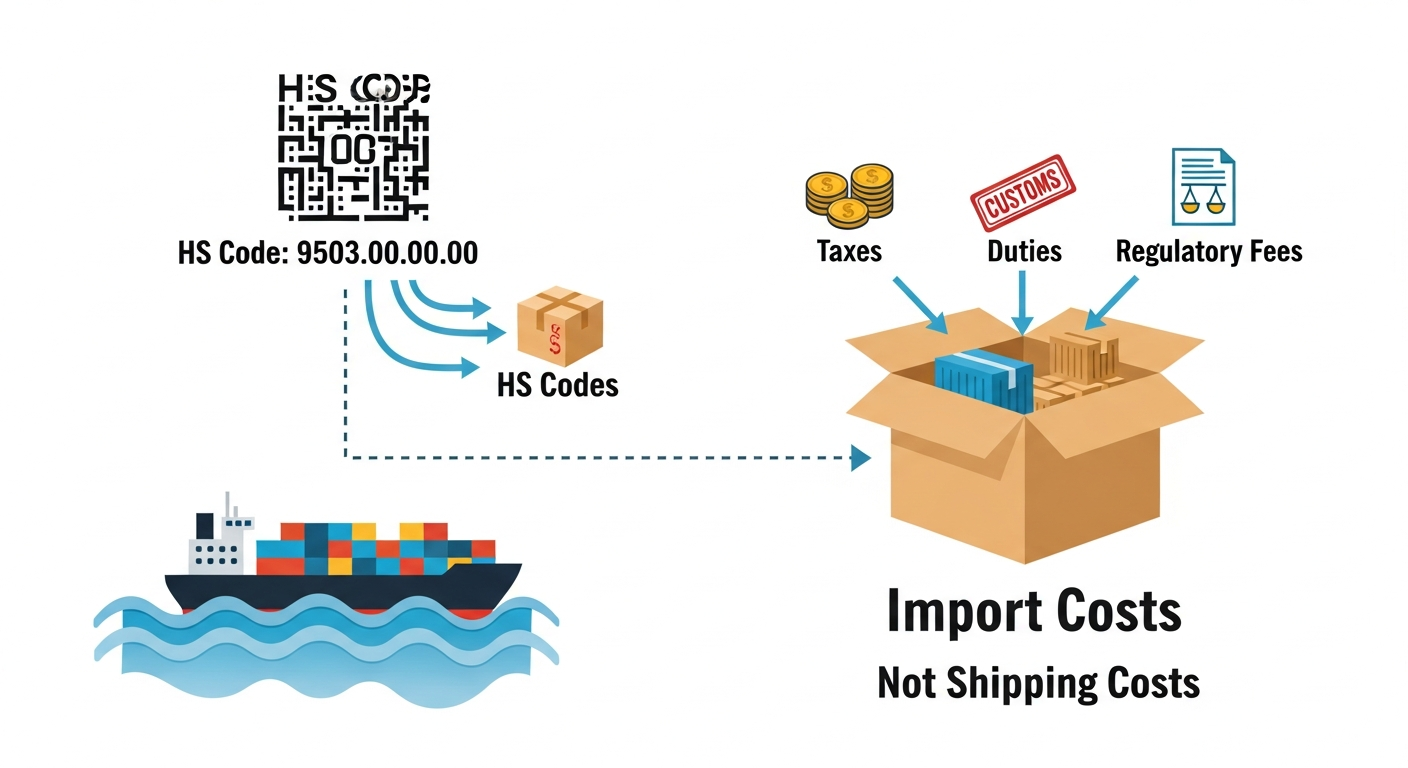
Freight rates are not directly based on HS codes, but total import cost is.
HS codes determine the taxes, duties, and regulatory fees applied during import.
Tariff Impact, Compliance Cost, and Risk Reduction
HS codes influence:
- Import duty percentage
- Anti-dumping or countervailing duties
- Additional taxes (VAT/GST)
- Compliance fees for regulated items
- Inspection fees for high-risk categories
Correct HS coding helps importers estimate total landed cost accurately.
Conclusion
HS codes form the backbone of global trade classification, ensuring accurate customs processing across all shipping modes. When correctly assigned, they determine duties, compliance requirements, and smooth customs clearance. With proper product analysis, documentation alignment, and consistent consolidation practices, HS codes help importers avoid delays, penalties, and misclassification risks—strengthening the entire supply chain from origin to final delivery.
 Chinese
  English