
Intermodal transport moves freight using multiple transportation modes—such as truck, rail, and ship—without handling the cargo inside the container.
Intermodal works by transferring sealed containers between modes, reducing handling risk and improving efficiency across long-distance supply chains.
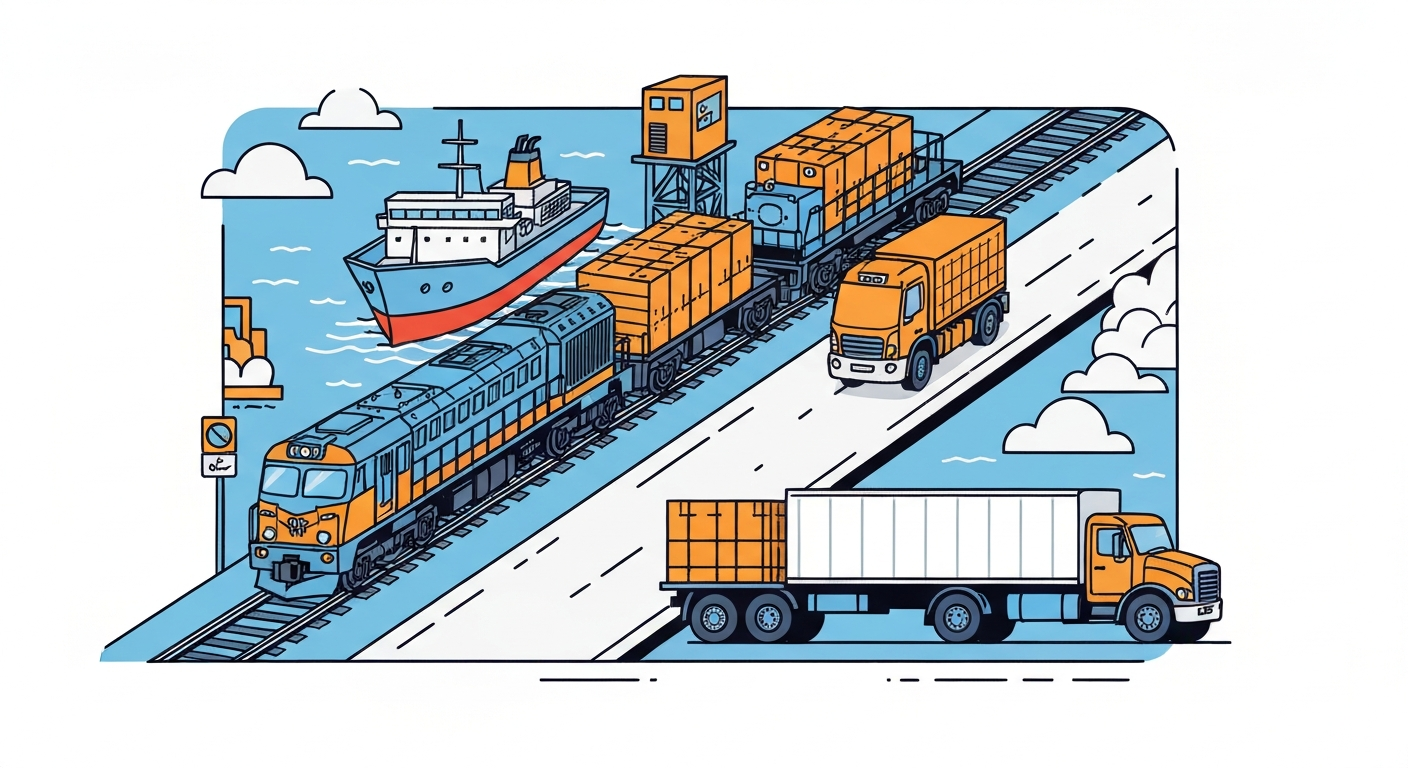
A clear understanding of intermodal systems helps importers plan routes, control cost, and optimize door-to-door deliveries when sourcing from China or other manufacturing hubs.
What is intermodal transport?
Long-distance shipping often becomes complex when freight requires several transport legs.
Intermodal transport uses standardized containers to move cargo across different modes without unloading the goods.

Definition, Container Standards, and Transport Flow
Intermodal transport relies on ISO-standard containers that seamlessly transfer between trucks, trains, and vessels. The container remains sealed during movement, and only the mode of transportation changes. This minimizes cargo handling, reduces damage risk, and supports efficient cross-border shipping.
The intermodal journey typically begins with a truck collecting a container from a supplier or warehouse. The container then moves to a rail terminal or seaport. After long-distance rail or ocean transit, another truck delivers the container to the final warehouse or distribution center.
Standard equipment—chassis, cranes, rail wagons, and port gantry systems—allows smooth transfers without repacking. This system is widely used for FCL cargo, cross-country shipping, and inland delivery to regions far from major ports, such as U.S. Midwest cities or inland EU hubs.
Strong intermodal coordination ensures timely transfers, avoids congestion, and maintains container integrity from origin to destination.
How does intermodal transport differ from multimodal transport?
Many importers confuse the two terms, but each describes a different contract structure.
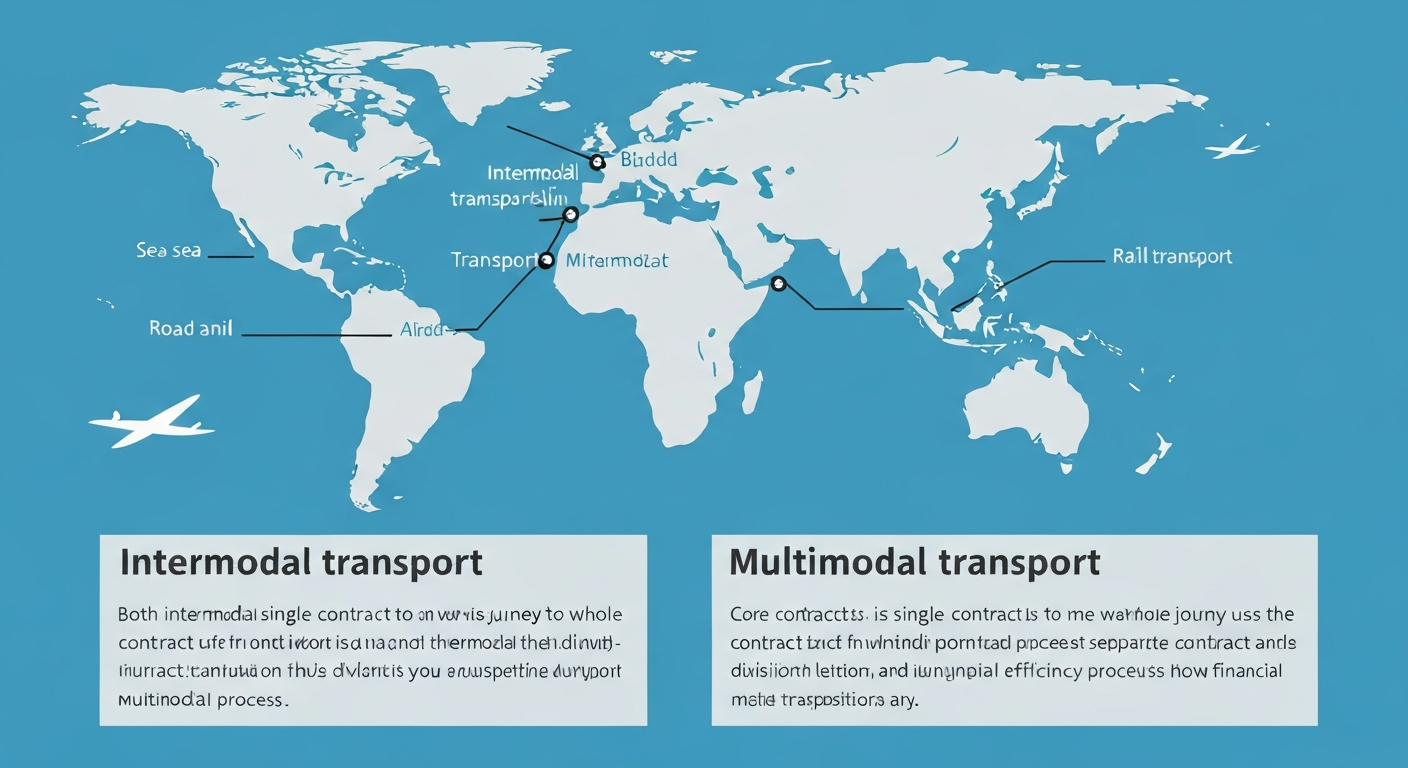
Intermodal uses multiple carriers and contracts; multimodal uses one contract covering the entire route.
Contracting Structure, Carrier Roles, and Pricing
Under intermodal transport, each leg—truck, rail, ocean—may involve separate carriers and contracts. This offers flexibility for buyers who want to choose preferred rail lines, trucking companies, or ports. It also helps optimize cost on specific segments.
Multimodal transport uses a single provider that manages the entire journey under one contract. Although simpler for buyers, multimodal can be less flexible in pricing because everything is bundled.
Intermodal is favored by experienced importers who want more control over scheduling, rail routing, inland drayage, and carrier selection. It works especially well for large vendors moving bulk or containerized freight across long distances.
How does intermodal transport work step-by-step?
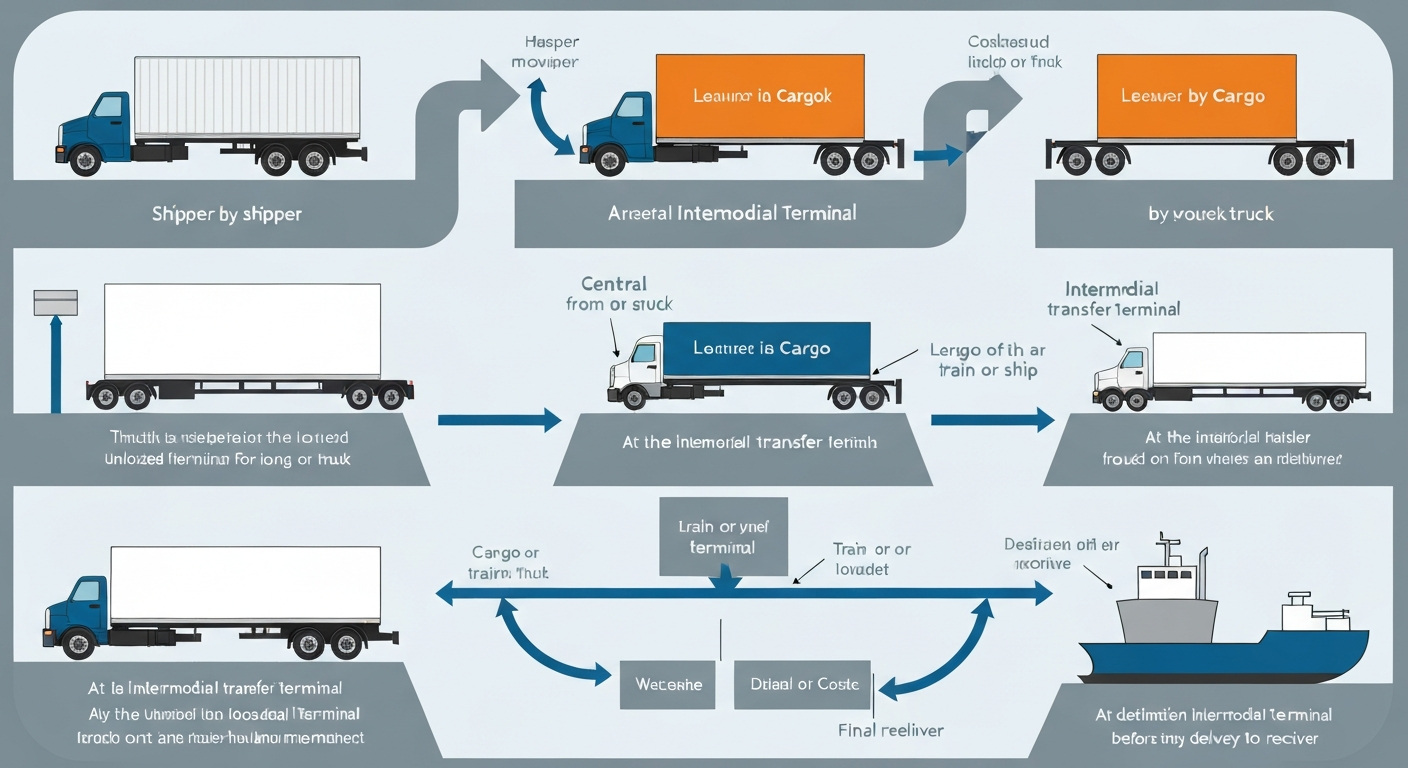
The intermodal process includes pickup, terminal transfer, long-haul movement, and final delivery.
Intermodal works by moving a sealed container across multiple transport systems without unloading the cargo.
Operational Flow, Terminal Handling, and Mode Transfers
A typical intermodal route follows these stages:
-
Origin pickup
A truck collects the empty container from a depot, moves to the supplier’s location, and loads the cargo. -
Drayage to terminal
The loaded container is delivered to a rail ramp or seaport terminal. -
Long-haul transport
- By rail for domestic cross-country shipping
- By ocean for international movement
- By inland waterway for barge-supported routes
-
Arrival and transfer
Upon reaching the destination hub, the container is transferred again—usually from rail or ship back to truck. -
Final delivery
A truck delivers the sealed container to the importer’s warehouse, where unloading takes place.
Each terminal update—gate-in, departure, arrival, and release—appears in tracking systems. Efficient coordination between carriers ensures smooth transitions. In China–USA trade, containers often move from coastal seaports to inland rail hubs such as Chicago, Dallas, or Kansas City before final delivery.
Reliable logistics teams monitor real-time port and rail schedules to prevent delays caused by congestion, missed cutoff times, or equipment shortages.
What are the benefits of intermodal transport for importers?
Importers aim to balance cost, speed, and reliability across global supply chains.
Intermodal reduces handling risk, optimizes cost, and improves long-distance efficiency.
Cost Efficiency, Risk Reduction, and Scalability
Key advantages include:
- Lower cost for long-distance inland moves because rail transport is cheaper per mile than trucking.
- Less handling because the container stays sealed throughout the journey, reducing damage risk.
- Better fuel efficiency and lower emissions compared with long-haul trucking.
- Scalability for recurring shipments, allowing predictable scheduling and stable capacity.
- Improved security due to sealed-container movement across all legs.
For importers using FCL shipping from China, intermodal transport offers cost-effective inland delivery in large markets like the United States, Canada, and Europe. The combination of ocean + rail + truck forms a reliable door-to-door solution without repacking goods along the way.
Well-organized coordination improves timing and eliminates the risk of missed rail connections, ensuring stable and predictable supply-chain performance.
What challenges come with intermodal shipping?
Multiple handoff points mean more opportunities for delays if coordination is weak.
Intermodal challenges include scheduling conflicts, congestion, and equipment shortages.
Timing Risks, Terminal Delays, and Documentation Needs
Common challenges involve:
- Rail-terminal congestion causing missed departures
- Chassis shortages delaying drayage pickup
- Port schedule changes during peak seasons
- Weather disruptions affecting rail networks
- Incorrect paperwork causing customs holds
Missing documentation—wrong HS codes, mismatched weights, inconsistent supplier invoices—can disrupt the entire route. Rail terminals require accurate container data, and ports may refuse loading when information is incomplete.
Professional freight teams manage these risks by verifying documents early, securing drayage appointments, and tracking container status at every stage. Early alerts help importers adjust scheduling, preventing missed rail cutoffs or costly storage fees.
How does intermodal transport support cross-border and inland logistics?
Imports rarely stop at the port—they must reach inland markets efficiently.
Intermodal links ocean freight with inland rail and trucking for a unified supply-chain network.
Inland Access, Route Optimization, and Freight Distribution
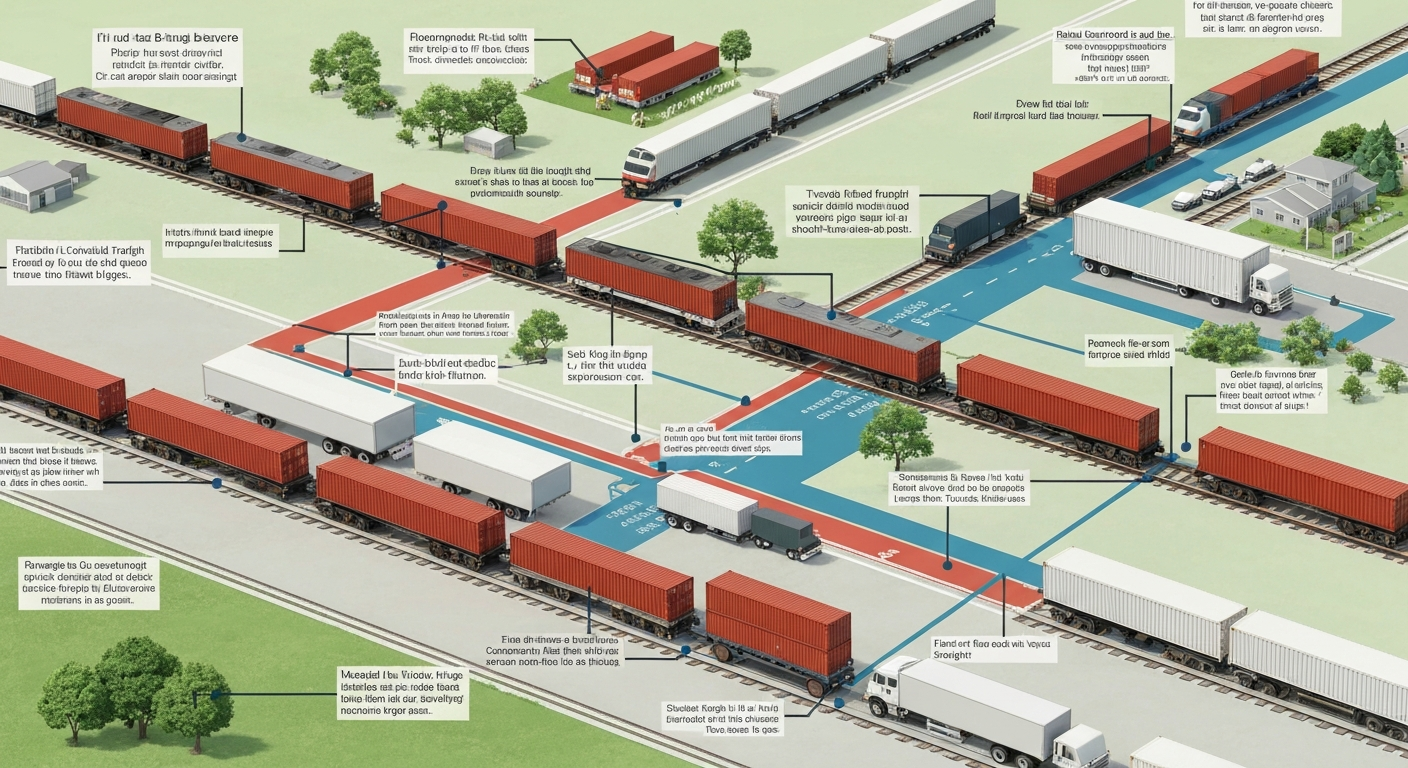
Intermodal systems provide deep inland access. In the U.S., for example, major inland hubs such as Chicago, Memphis, Atlanta, and Dallas rely heavily on rail-connected container flows. This reduces the need for long-distance trucking—which is more expensive—and supports high-volume distribution centers.
In Europe, intermodal hubs connect Rotterdam, Hamburg, and Antwerp to inland markets via rail and barge. This enables smoother cross-border distribution and multi-country supply-chain planning.
For importers consolidating cargo from multiple Chinese suppliers, intermodal options help optimize the entire journey—from origin loading to end-market fulfillment—at predictable costs and stable transit times.
Conclusion
Intermodal transport combines truck, rail, ocean, and sometimes barge services to move sealed containers efficiently across long distances. By reducing handling, optimizing cost, and providing flexible routing options, intermodal becomes a powerful solution for global importers. With accurate documents, coordinated drayage, and careful scheduling, intermodal transport delivers stable, scalable, and cost-effective logistics performance across modern supply chains.
 Chinese
  English