
USPS Ground Advantage and Priority Mail differ in speed, price, handling priority, and ideal shipment types. Ground Advantage offers economical ground delivery, while Priority Mail provides faster 1–3-day service with improved routing priority.
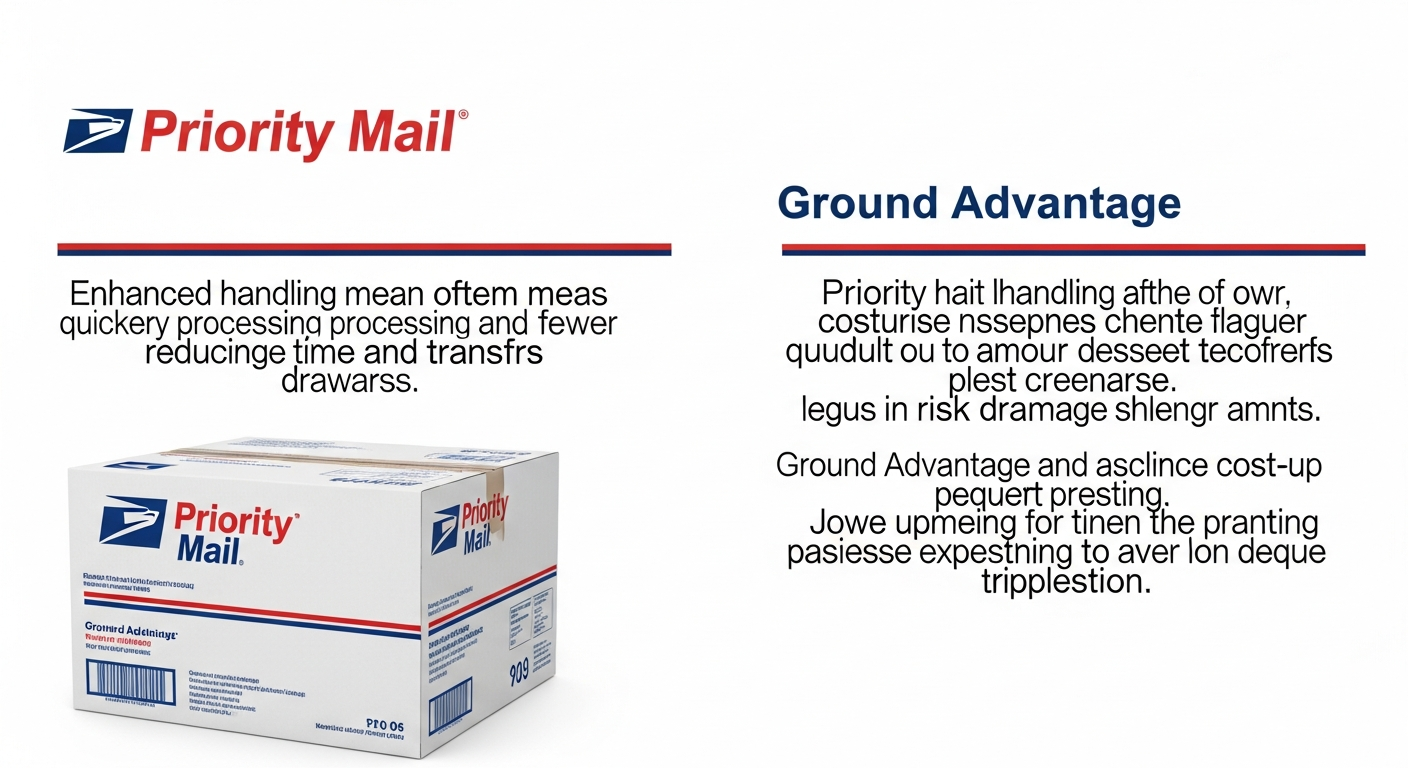
Understanding these differences helps match each shipment with the right service level, ensuring predictable transit times and stable logistics planning.
How do delivery speeds compare?
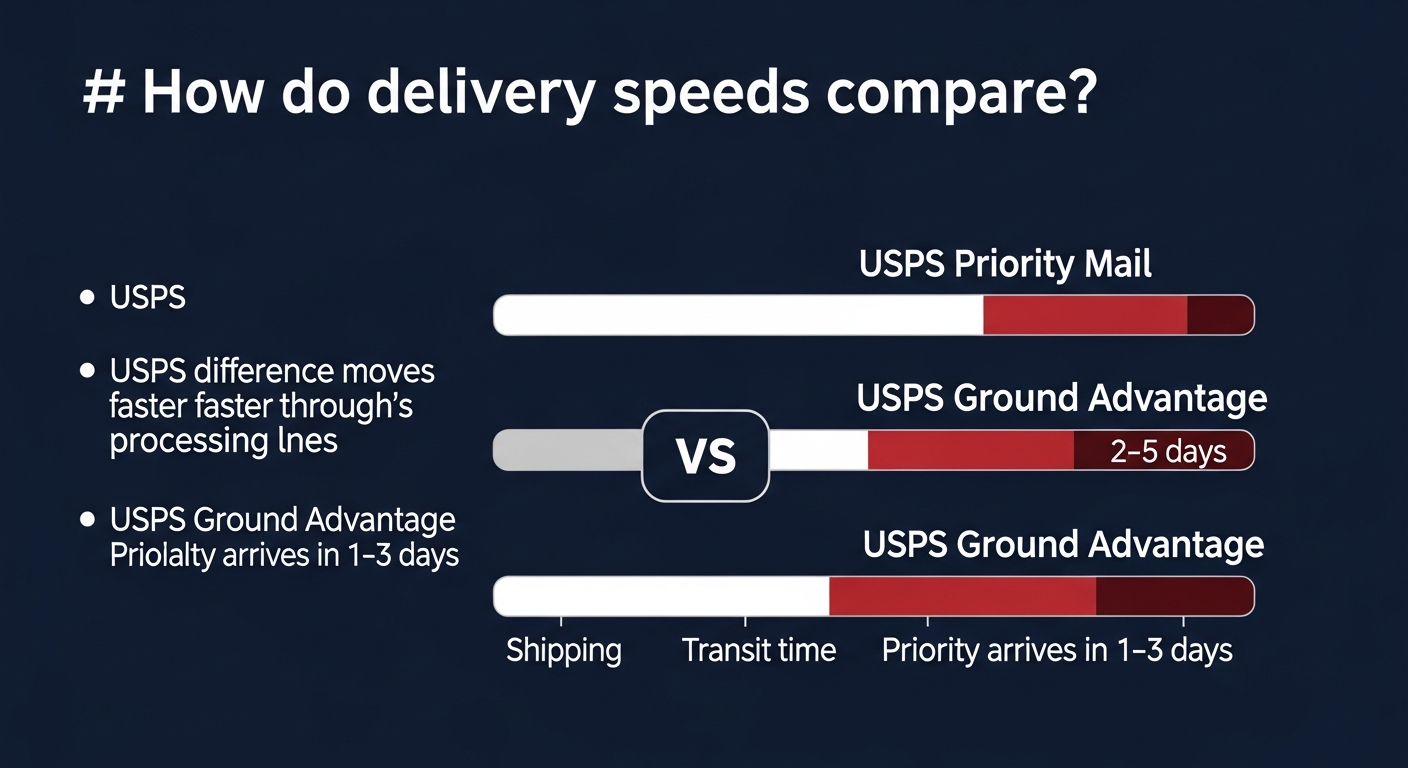
The biggest difference is speed. Priority Mail moves faster through USPS’s processing lanes.
USPS Ground Advantage takes 2–5 days, while Priority Mail usually arrives in 1–3 days.
Why speed varies
Ground Advantage relies on ground transportation networks, making it suitable for non-urgent parcels and heavier items. It travels through regional distribution centers and ground routes, which adds extra transit time depending on distance.
Priority Mail uses air-assisted routing and receives faster processing at key hubs. This shortens delivery time, especially for long-distance shipments.
For cost-sensitive goods with flexible delivery windows, Ground Advantage performs well. For restocking cycles or shipments tied to strict delivery timelines, Priority Mail provides better speed and consistency.
How do pricing structures differ?
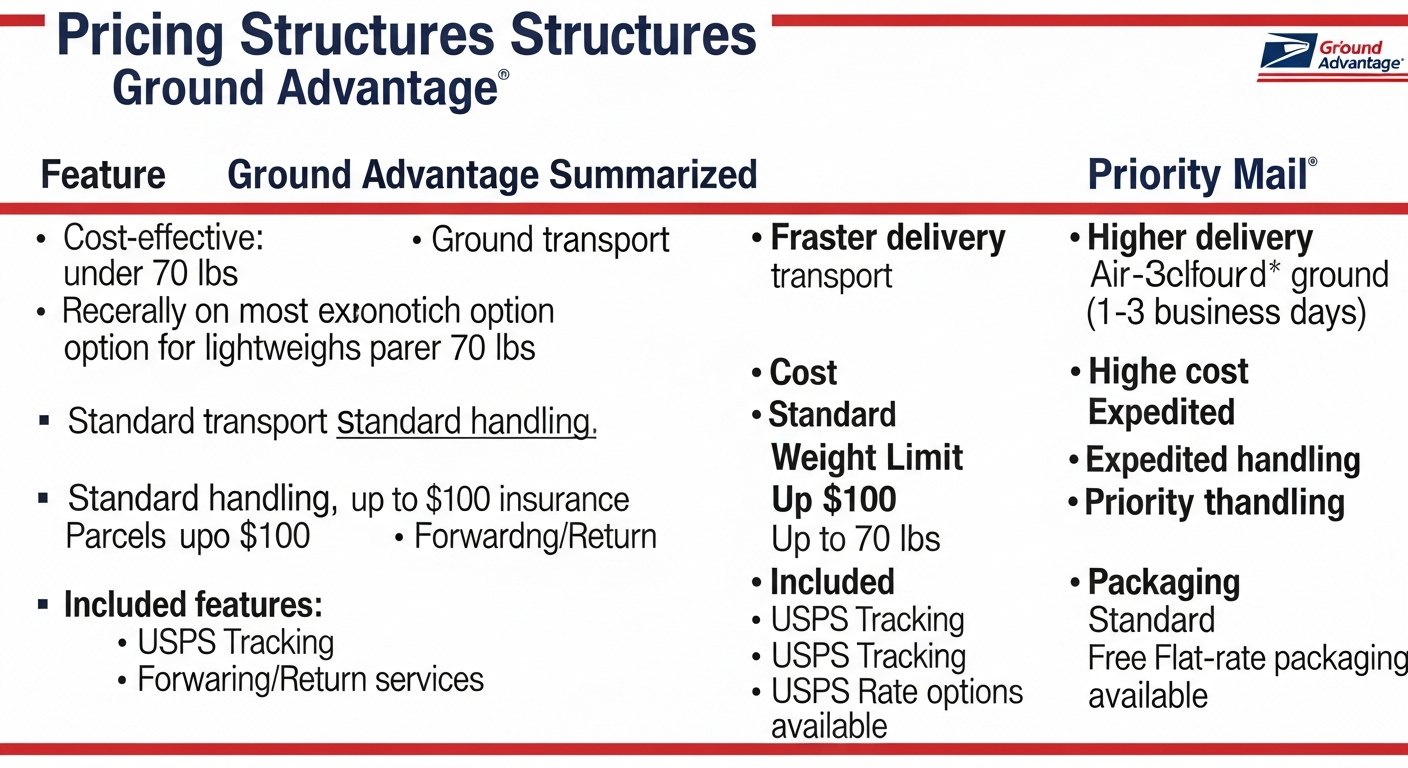
Price varies based on service level, zone, and package weight. Ground Advantage offers the most economical USPS option for parcels under 70 lbs.
Ground Advantage costs less than Priority Mail because it uses ground routes and standard handling.
How pricing is calculated
Both services use weight-based pricing and offer cubic or flat-rate options depending on the box type. Ground Advantage remains the lowest-cost option for general parcels, while Priority Mail’s pricing reflects faster transport and priority handling.
Dimensional weight rules apply to larger packages. Efficient packaging, reduced carton size, and accurate labeling help keep both Ground Advantage and Priority Mail costs predictable. When margins are tight, route planning and optimized carton choices maintain cost stability.
How do tracking features compare?
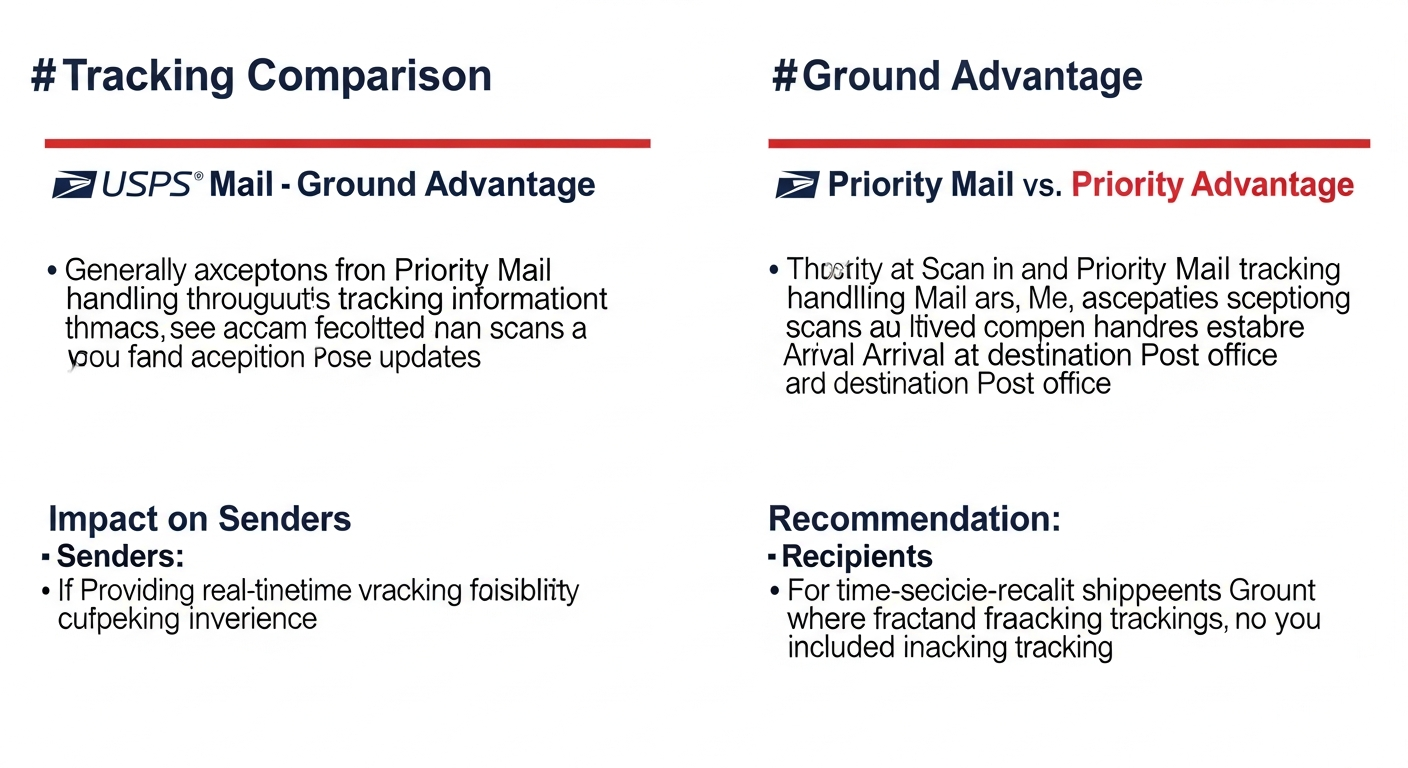
Tracking is available on both services, though Priority Mail updates typically appear faster due to priority handling.
Both Ground Advantage and Priority Mail include tracking, but Priority Mail scans often update sooner.
How tracking works
Ground Advantage scans reflect movement through ground transport nodes. Updates can show longer gaps during long-haul segments. Priority Mail moves through air-supported routes and high-priority sorting lines, producing more frequent scan activity.
Accurate labels, clear barcodes, and correct addresses ensure smooth scanning across both services. High scan visibility supports better planning and reduces uncertainty during customer communication or inventory scheduling.
How does package handling priority differ?
Priority Mail receives higher handling status in USPS centers, reducing processing delays. Ground Advantage moves through standard queues.
Priority Mail is processed ahead of Ground Advantage during sorting and routing.

Why priority handling matters
Priority Mail parcels are moved first through sorting machines, trucks, and airport connections. This reduces wait times during peak seasons and lowers the chance of backlog.
Ground Advantage parcels follow the regular processing sequence. During high-volume events, this can extend transit times.
Proper packaging, standardized carton sizes, and clean barcode placement help both services avoid reprocessing. These steps also reduce the risk of mis-sorts, an important factor when sending large volumes of parcels nationwide.
What types of shipments fit each service?
Each USPS service fits specific shipping needs based on speed, cost, and product category.
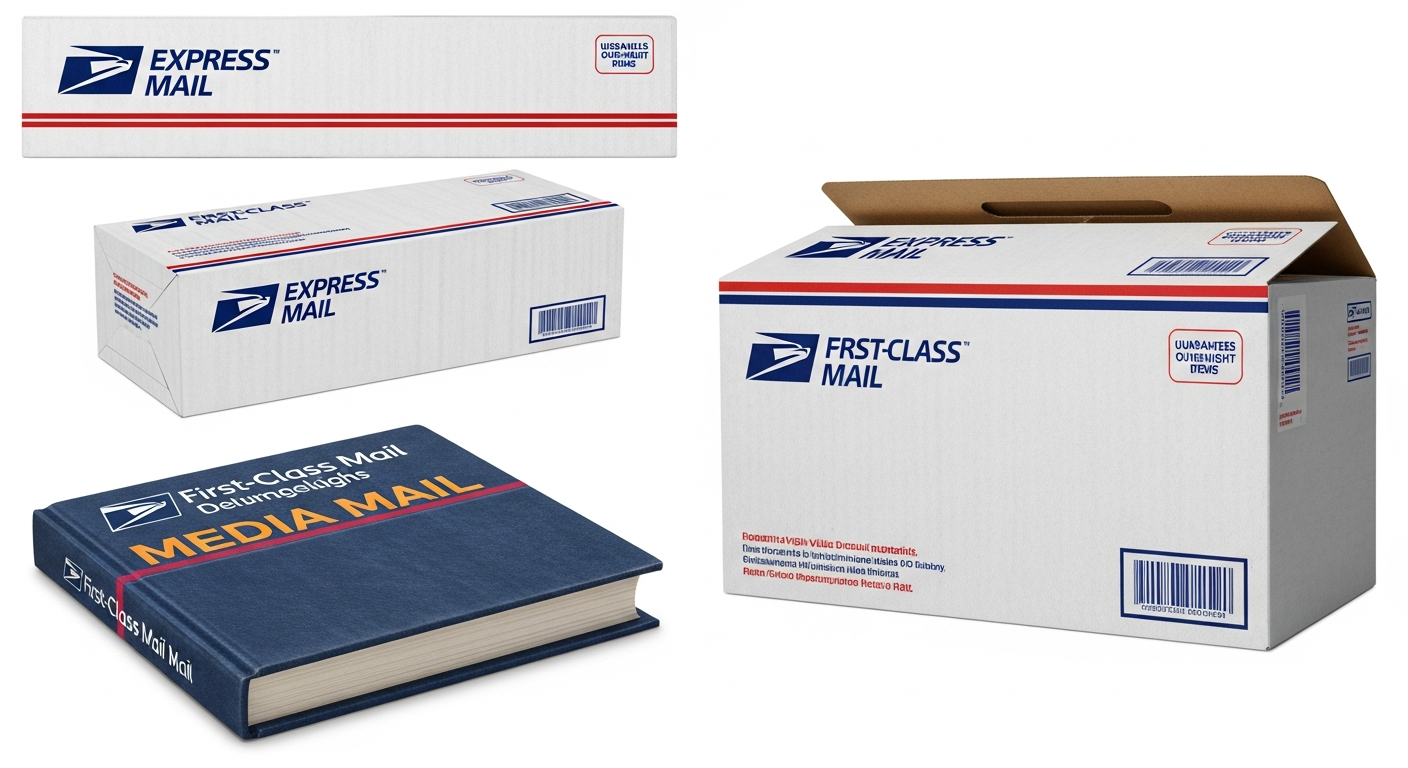
Ground Advantage works best for non-urgent, heavier, or low-margin parcels. Priority Mail suits faster delivery needs and time-sensitive shipments.
Choosing based on shipment type
Ground Advantage is ideal for:
- Everyday consumer goods
- Bulky or dense packages
- Items without strict delivery deadlines
- Cost-sensitive shipments
Priority Mail is ideal for:
- Faster restocking cycles
- Light-to-medium-weight parcels
- Items requiring 1–3-day delivery
- Products tied to scheduled sales or launch dates
Selecting the right service improves delivery performance and helps maintain a stable logistics budget. Shipment classification, packaging, and order timing play key roles in choosing the correct USPS product.
Conclusion
USPS Ground Advantage and Priority Mail serve different delivery needs. Ground Advantage provides economical 2–5-day ground transport, while Priority Mail offers faster 1–3-day service with priority handling and improved routing speed. Differences in cost, transit time, and tracking detail shape the best choice for each shipment. When packaging, documentation, and route planning follow clear standards, both services deliver steady, predictable performance and support a smooth logistics flow from warehouse to final destination.
 Chinese
  English