
Tare, net, and gross weight are essential measurements used in shipping, customs clearance, packaging, and warehouse operations.
Gross weight includes everything, net weight is only the product, and tare weight covers packaging or container weight.
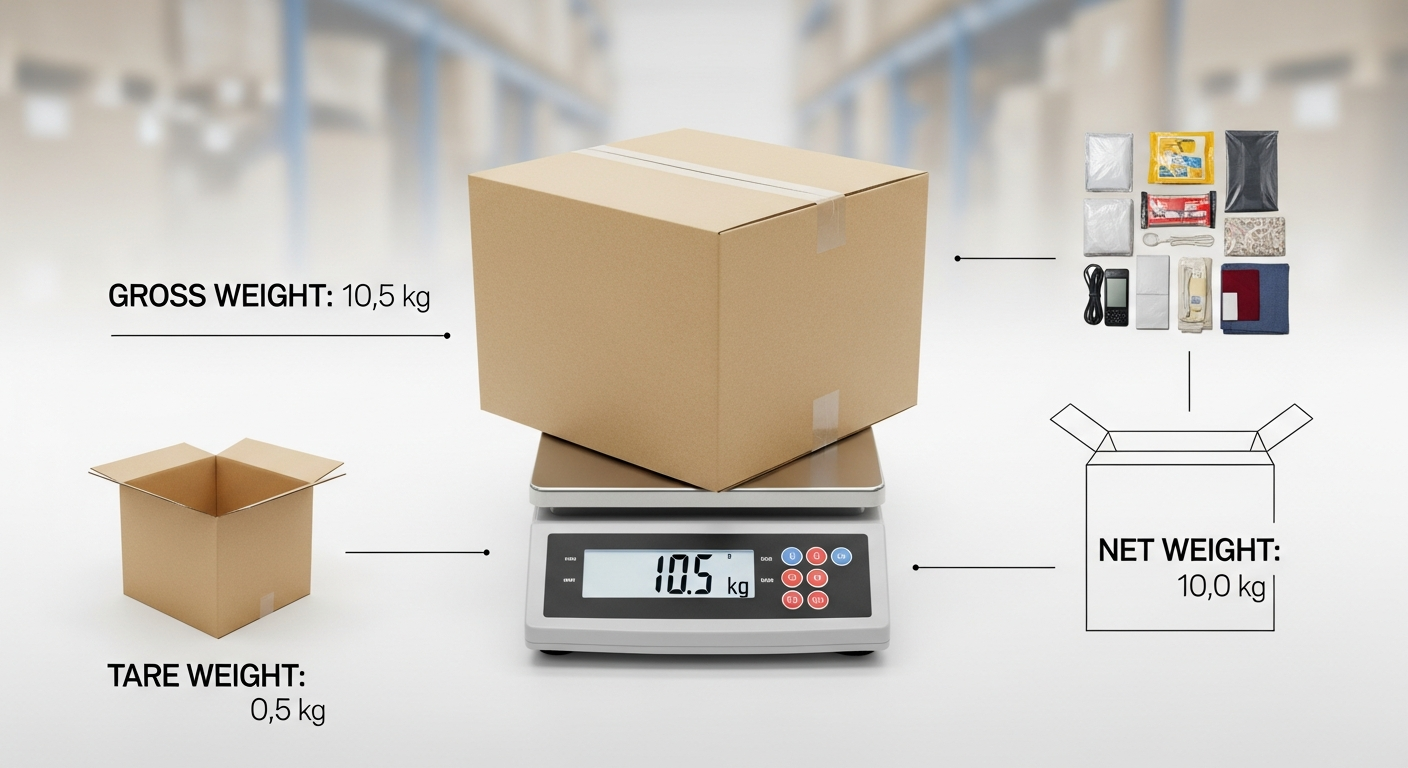
Understanding these terms helps importers avoid customs delays, prevent overweight charges, and keep documentation consistent across global supply chains.
What do tare, net, and gross weight mean?
Weight confusion often leads to incorrect paperwork, higher freight costs, or customs holds.
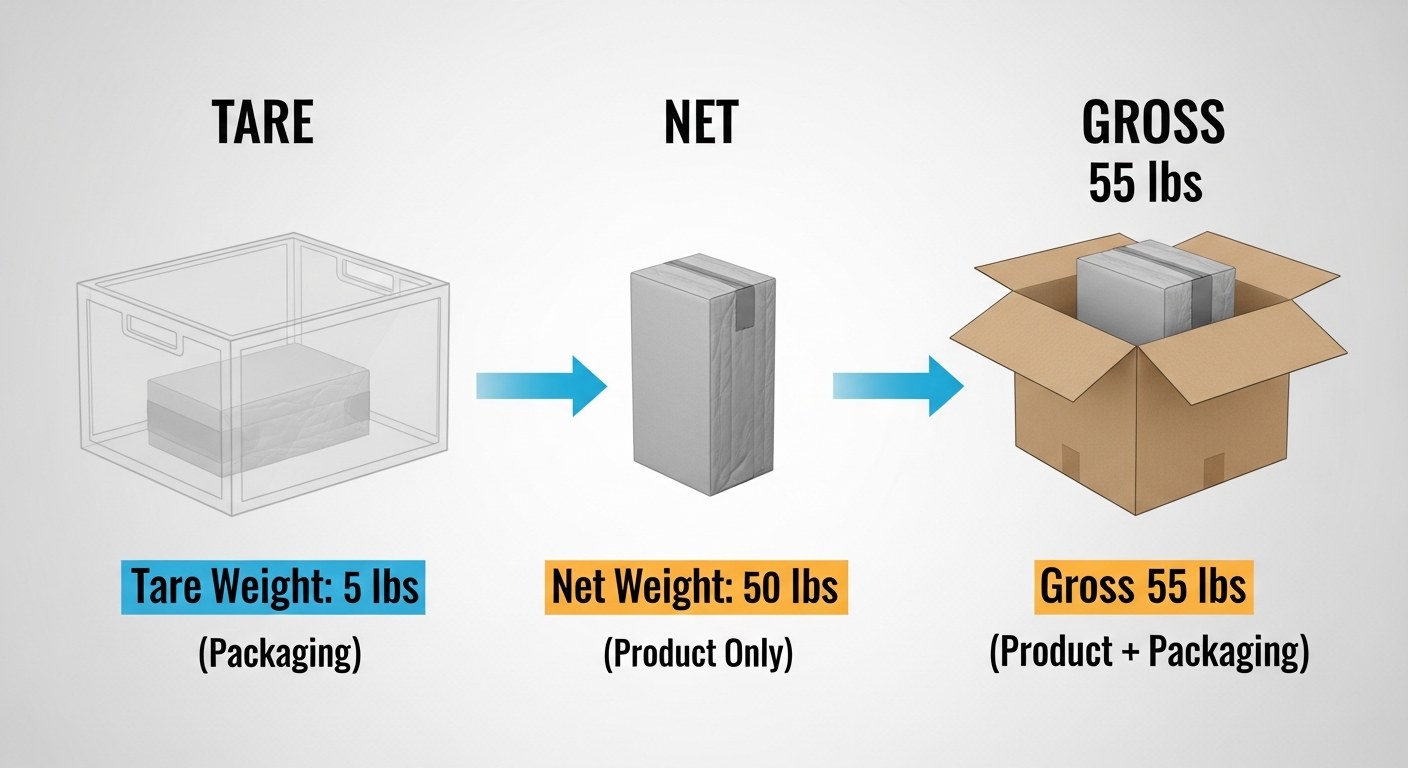
Net weight covers the product only, tare refers to packaging weight, and gross equals product plus packaging.
Definitions, Calculations, and Logistics Use
Net weight is the weight of the product without any packaging.
Tare weight includes packaging materials such as boxes, pallets, straps, and in FCL shipping, the container’s empty weight.
Gross weight equals net + tare. It reflects the total weight declared for transport and customs.
Gross weight appears on bills of lading, customs declarations, warehouse receipts, and shipping labels. For FCL, the VGM (Verified Gross Mass) also relies on accurate gross weight to prevent loading rejections. Incorrect weight submissions cause customs delays or repacking before shipment.
Consolidation warehouses verify weights from multiple suppliers to ensure consistency before export. Accurate alignment prevents issues at ports, terminals, and destination customs.
Why is tare weight important?
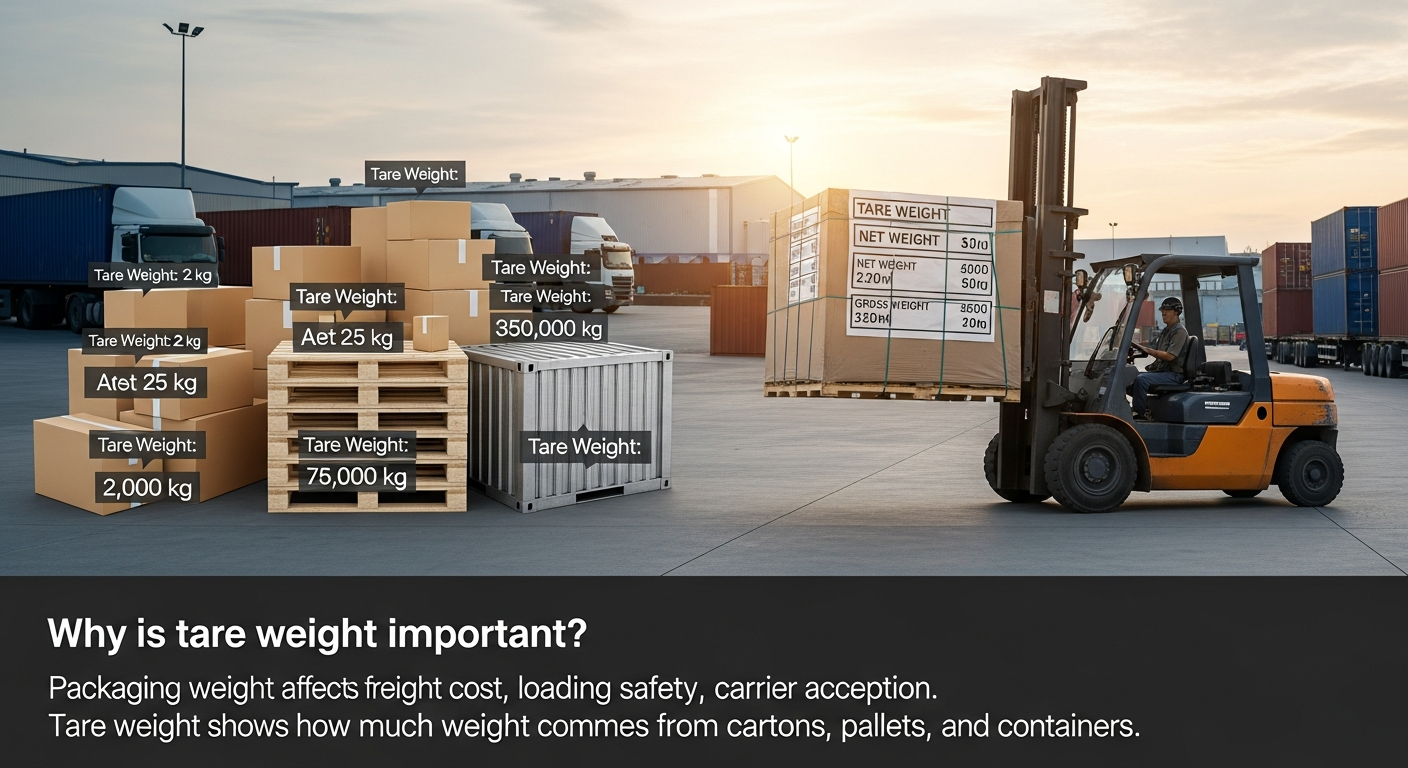
Packaging weight affects freight cost, loading safety, and carrier acceptance.
Tare weight shows how much weight comes from cartons, pallets, and containers.
Packaging Materials, Container Limits, and Freight Safety
Tare includes all external packaging layers. For ocean containers, manufacturers print tare values directly on the container door. Typical figures include:
- 20GP: ~2,000–2,300 kg
- 40GP: ~3,600–3,900 kg
- 40HQ: ~3,800–4,200 kg
Ignoring tare weight can cause overweight containers at port gates, leading to reloading, penalties, or rebooking. Inland drayage also has axle restrictions, especially in the US and Europe. Overweight loads may require special permits or additional charges.
Logistics teams calculate tare early, ensuring containers meet safe loading limits. Warehouses weigh pallets individually to confirm accuracy before sealing.
Why does net weight matter for customs?
Customs agencies use net weight to determine duties, classification, and safety requirements.
Net weight reflects the pure product weight without packaging.
Duty Calculation, Product Classification, and Compliance
Net weight affects:
- Duty payments for commodities
- HS code verification
- Safety documentation such as MSDS or UN reports
- Product listings for regulated items like batteries or chemicals
Incorrect net weights trigger customs audits, especially for sensitive categories. When shipments come from multiple factories, inconsistent net weights cause mismatches during consolidation and customs declaration.
Warehouse checks ensure the net weight matches supplier lists and invoice descriptions before export filing.
Why is gross weight critical for freight charges?
Carriers depend on gross weight for pricing, equipment allocation, and safe loading.
Gross weight represents the total shipment weight including materials and packaging.

Freight Billing, Safety Rules, and Customs Reporting
Ocean carriers enforce VGM rules requiring accurate gross weight before loading. Air freight charges depend on whichever is higher—gross weight or volumetric weight. LCL pricing also uses gross weight and CBM to calculate fees.
Customs declarations must match the exact gross weight submitted to carriers. Any mismatch leads to questions, rechecks, or delays at both origin and destination.
Warehouses ensure alignment by weighing pallets and comparing totals with supplier documents, preventing misdeclared shipments.
What problems occur when weights don’t match?
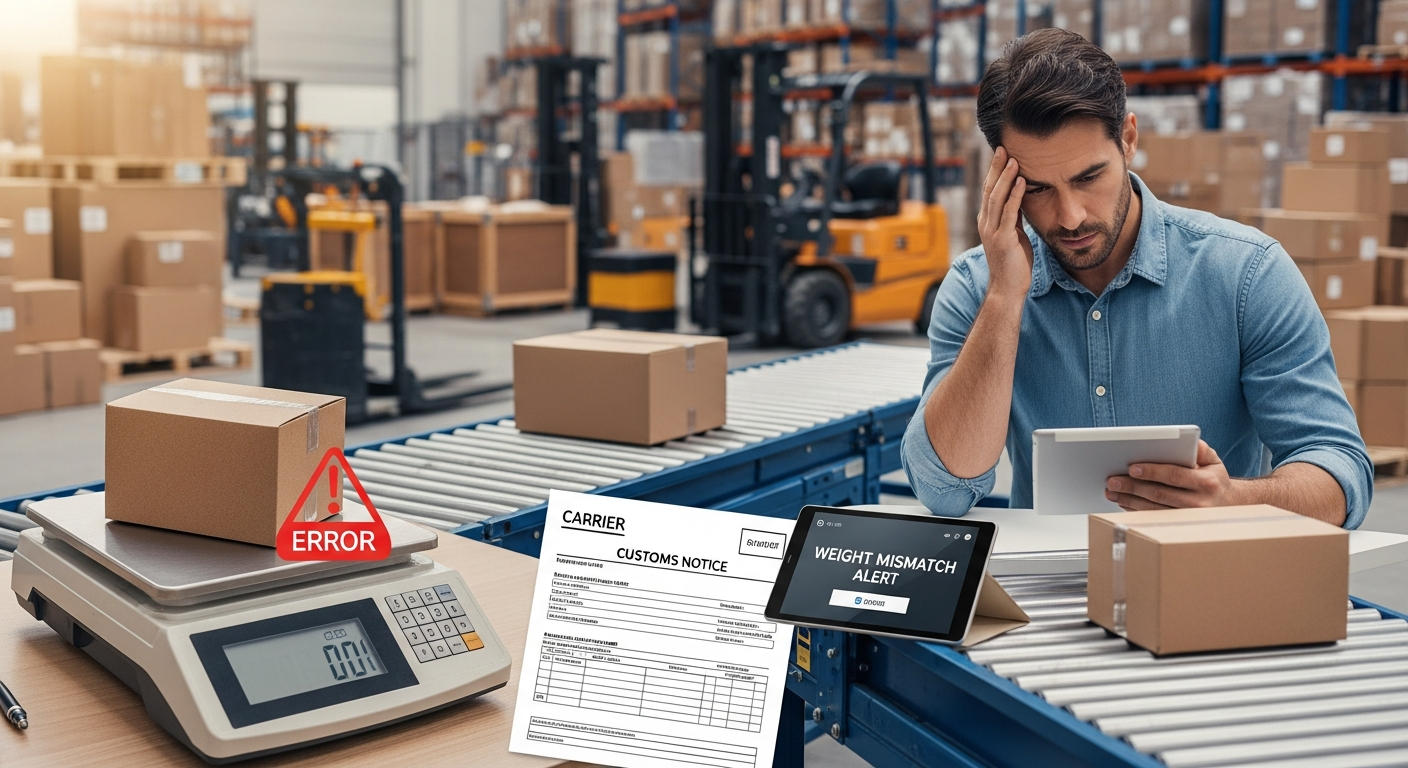
Mismatched weights cause delays, rework, and additional charges.
Incorrect tare, net, or gross values trigger customs holds or carrier penalties.
Documentation Errors, Customs Holds, and Operational Risk
Common issues include:
- Customs rejections due to mismatched values
- VGM failures at the port
- Carriers refusing overweight containers
- LCL terminals recalculating weight and charging extra
- Warehouses repacking goods to meet weight limits
These problems often arise when suppliers guess weights or fail to update packing lists. For multi-supplier shipments, inconsistent formats increase the risk of errors.
Consolidation hubs in China perform weight verification, count checks, and carton inspections to prevent discrepancies and maintain smooth export procedures.
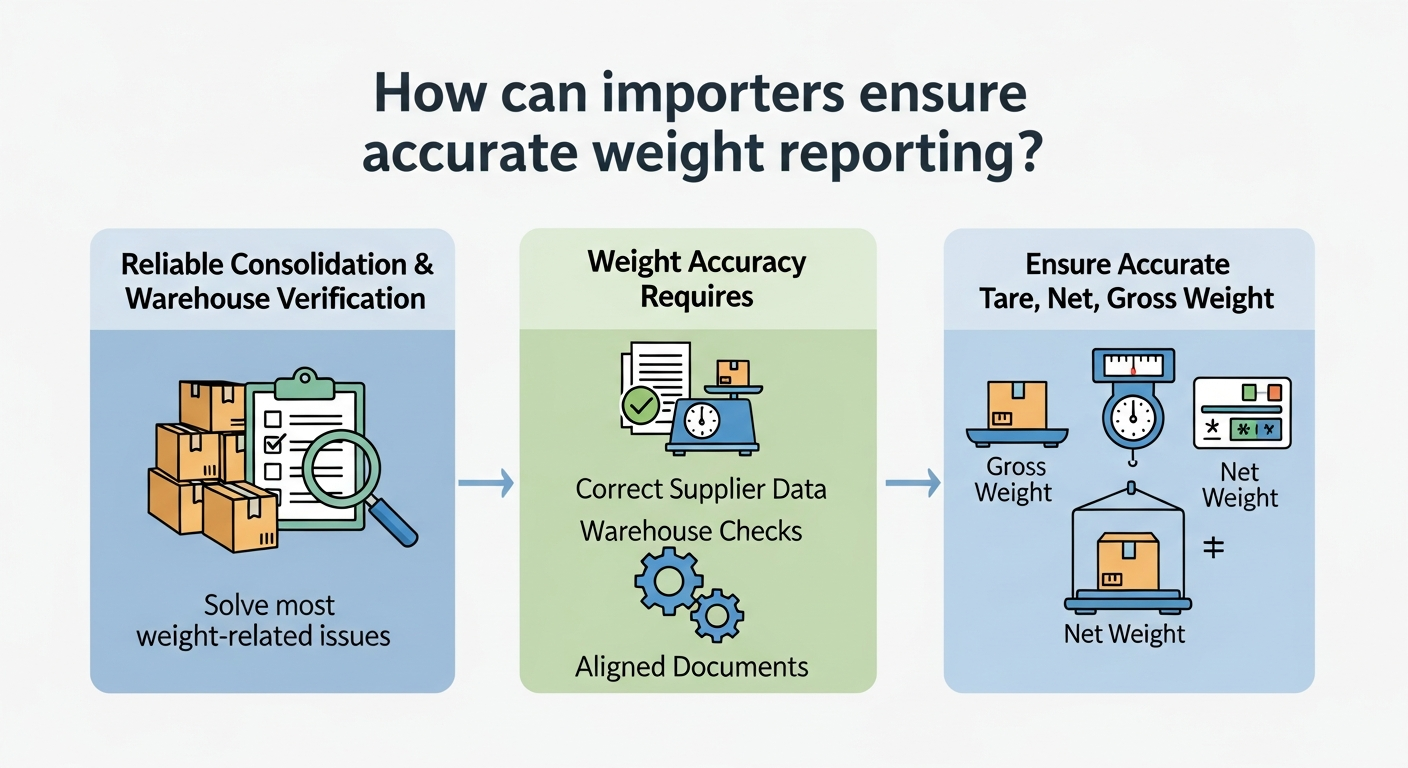
How can importers ensure accurate weight reporting?
Reliable consolidation and warehouse verification solve most weight-related issues.
Weight accuracy requires correct supplier data, warehouse checks, and aligned documents.
Supplier Coordination, Verification, and Document Control
Effective practices include:
- Weighing each pallet or carton at the warehouse
- Standardizing packaging across suppliers
- Double-checking supplier packing lists
- Confirming tare weight for pallets and cartons
- Ensuring invoices and packing lists match customs filings
- Submitting VGM early to avoid port rejections
Strong logistics teams manage these checks, especially for importers consolidating goods from many factories. This ensures documents remain accurate across all shipment stages.
Conclusion
Tare, net, and gross weight form the foundation of accurate logistics planning, customs compliance, and safe cargo handling. When these weights match across invoices, packing lists, and warehouse checks, shipments move smoothly through consolidation, export, transport, and final clearance. Consistent weight accuracy protects importers from delays, penalties, and expensive rework—strengthening the entire global supply chain from origin to delivery.
 Chinese
  English