
A US import/export license is a regulatory authorization required only for specific products, not for most general goods.
Most shipments into and out of the United States do not require a general license—only certain controlled items need special permits from government agencies.
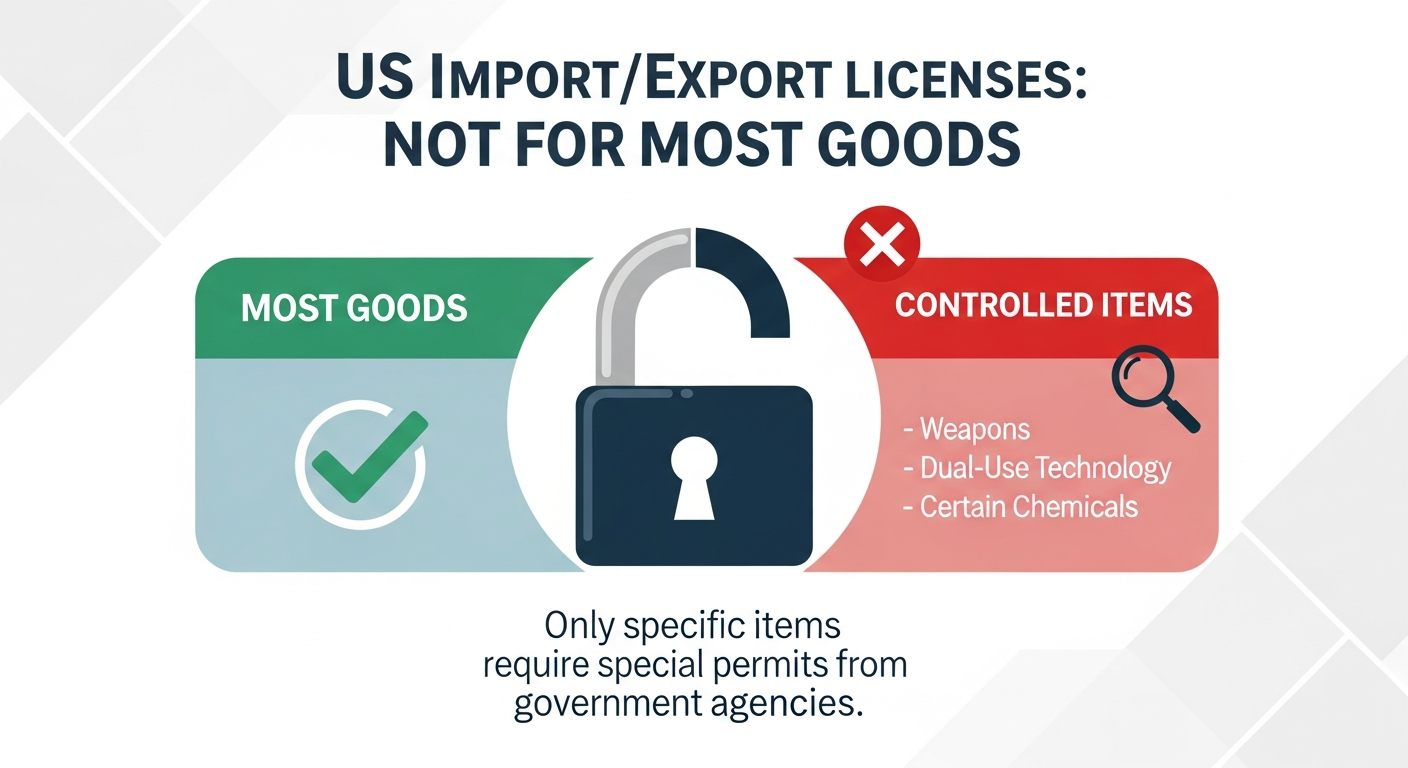
Understanding which products need licenses helps importers avoid customs delays, prevent penalties, and maintain stable supply-chain operations when sourcing from global markets.
What is a US import/export license?
Many first-time importers assume all shipments require a license, which leads to confusion and unnecessary fear.
A US import/export license is a government authorization required only for restricted or regulated products.

Definitions, Scope, and Regulatory Purpose
Unlike many countries, the United States does not require a universal import license. Most consumer products—electronics, home goods, apparel, beauty items, outdoor gear—can be imported without a special permit. Instead, the US uses a product-specific regulatory system.
A license is required only when dealing with controlled goods such as weapons, medical devices, chemicals, pharmaceuticals, radios, or items affecting national security. These permits come from agencies like the FDA, FCC, ATF, EPA, or BIS under the Department of Commerce.
During import or export, customs checks documentation for compliance. If the product falls under restricted categories, a valid license or certification must be presented. Logistics teams help review compliance documents, HS codes, and supplier information to ensure shipments move without interruption.
Do all US imports require a license?
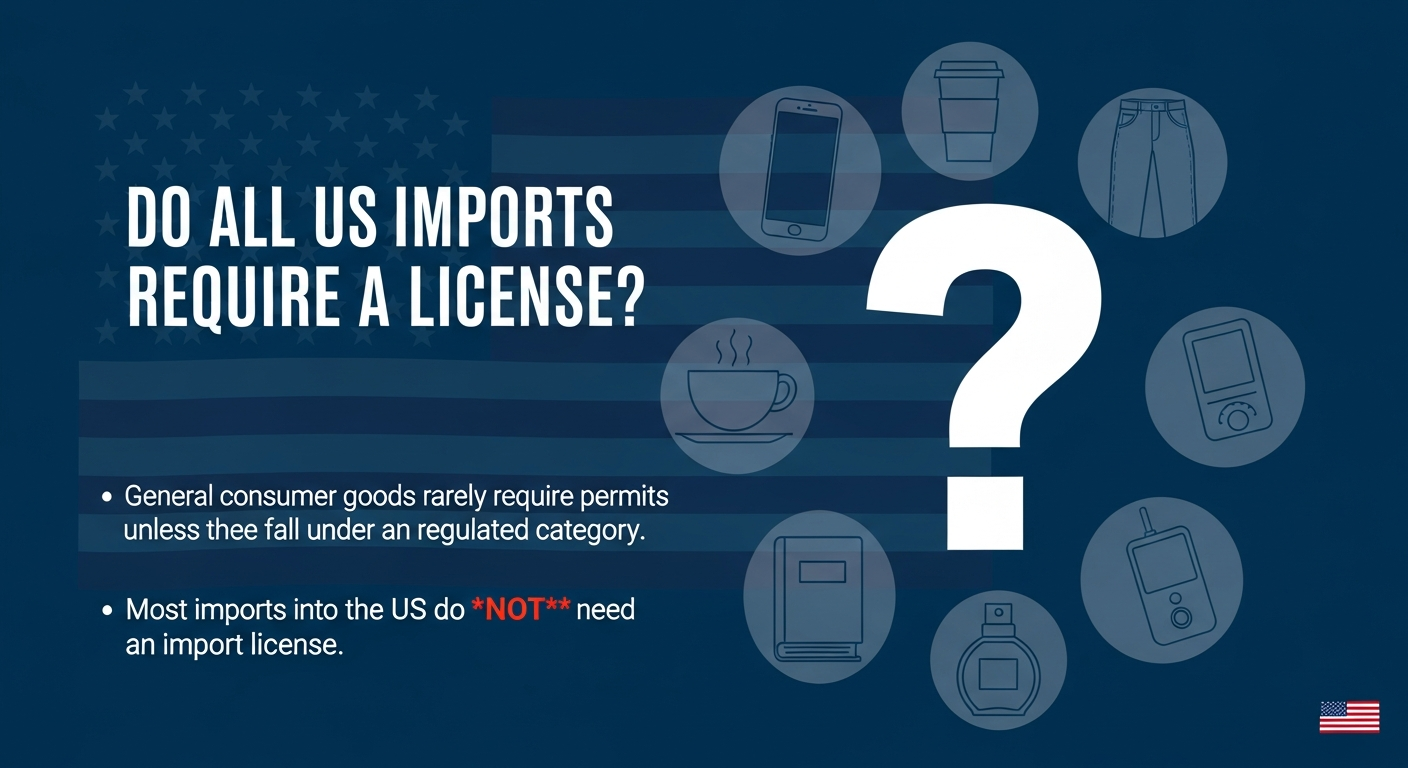
General consumer goods rarely require permits unless they fall under a regulated category.
Most imports into the US do not need an import license.
Typical Requirements, Exemptions, and Practical Examples
Most shipments from China—LED lights, home goods, tools, automotive accessories, non-medical electronics, general apparel, kitchen products—enter the US without a special license.
However, regulated products may require agency approval. Examples include:
- FDA: Foods, cosmetics with restricted ingredients, medical devices
- FCC: Wireless devices, radios, Bluetooth products, telecom equipment
- EPA: Engines, pesticides, chemicals
- ATF: Firearms and ammunition
- BIS (Commerce): Dual-use technology
- USDA: Plants, seeds, agricultural goods
The key is correct HS-code classification. When the HS code triggers regulatory review, customs requests supporting documentation. Reliable logistics partners verify HS codes early, preventing clearance problems that can cause demurrage or detention fees.
When is an export license required?
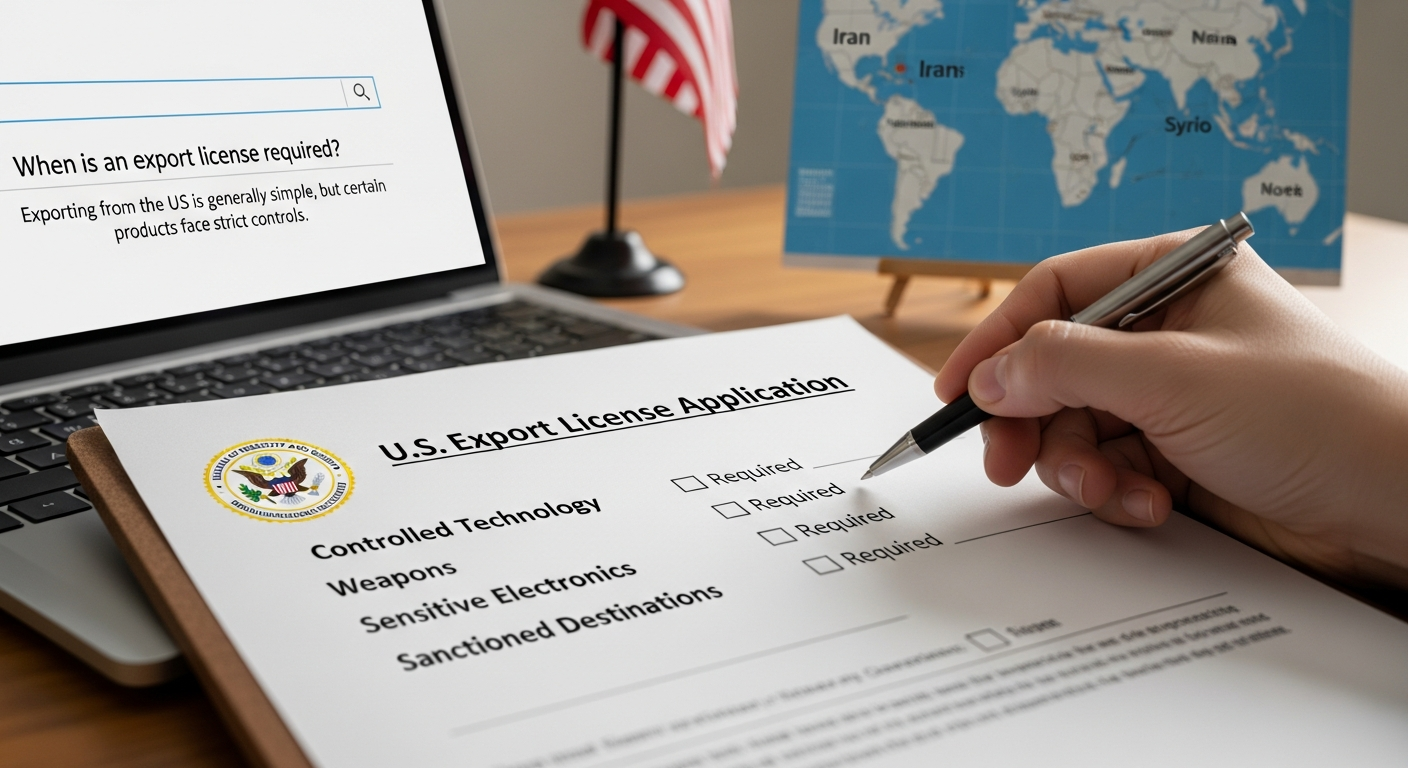
Exporting from the US is generally simple, but certain products face strict controls.
An export license is required only for controlled technology, weapons, sensitive electronics, or sanctioned destinations.
Control Lists, Destination Rules, and Export Screening
The Bureau of Industry and Security (BIS) manages the Export Administration Regulations (EAR). Products listed under the Commerce Control List (CCL) may require an export license depending on destination and end use.
Common controlled items include:
- High-end microchips and semiconductors
- Military-grade or dual-use technology
- Encryption devices
- Aerospace components
- Chemical precursors
Exporters must also screen buyers and destinations to avoid violating sanctions from OFAC or BIS. Logistics teams help check control lists and ensure compliant documentation flows through US customs systems.
For most normal consumer goods, no export license is required unless shipping to restricted destinations.
How do you apply for a US import license?
When regulated goods are involved, documentation becomes the key.
A US import license is obtained directly from the agency responsible for regulating that specific product category.
Application Steps, Agency Procedures, and Processing
Steps depend on the product, but typically include:
- Identify the correct HS code
- Determine the regulating agency (FDA, FCC, EPA, USDA, ATF, etc.)
- Submit required documents such as product specs, testing, certificates
- Apply through the agency’s portal (e.g., FDA registration, FCC authorization)
- Receive approval or clearance number
- Provide documents to customs broker before shipment arrival
Each agency has unique requirements. For example:
- FCC equipment authorization requires lab testing for wireless devices.
- FDA imports require facility registration and product listing for certain goods.
- EPA requires compliance documentation for engines or chemicals.
Correct documentation prevents customs holds, fines, or shipment rejections at US ports.
How do you apply for a US export license?
The US export license application follows a centralized system.
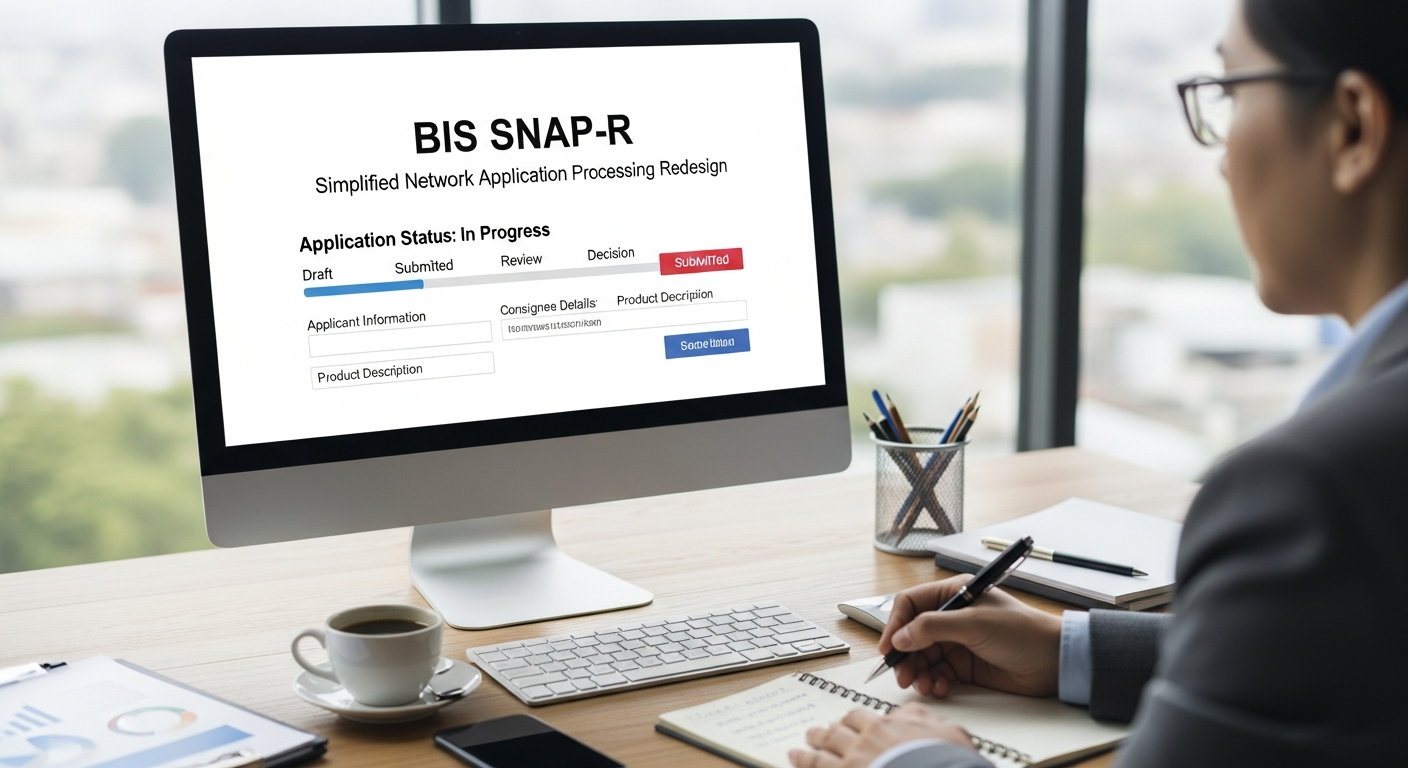
An export license is obtained through the BIS SNAP-R online platform when needed.
SNAP-R Registration, Classification, and Submission
To apply, exporters must:
- Register for a SNAP-R account
- Determine the Export Control Classification Number (ECCN)
- Identify the destination country and end user
- Submit application including product specs and end-use statement
- Wait for review and approval
Exporters must also screen partners using denied-party lists. For most regular consumer products, the ECCN falls under EAR99, meaning no export license is required unless shipping to embargoed countries.
Customs brokers and logistics teams guide classification, review documentation, and ensure compliant export movement.
What documents are required for US imports and exports?
Accurate paperwork determines whether shipments clear customs smoothly.
The US requires basic shipping documents plus additional certificates for controlled goods.
Standard Documents and Compliance Files
Key documents include:
- Commercial invoice
- Packing list
- HS code list
- Bill of lading / air waybill
- Product certificates (FCC, FDA, EPA, etc.)
- Importer of Record (IOR) information
- Customs bond (for imports)
- Export declaration (EEI) for high-value exports
For controlled items, additional permits or lab testing reports are mandatory.
When goods come from multiple suppliers, consolidation warehouses verify documents, align descriptions, and ensure consistency across shipments—critical for avoiding customs delays.
Delays occur when documents fail to match customs expectations.
Avoiding delays requires early classification, regulatory checks, and complete documentation before shipping.
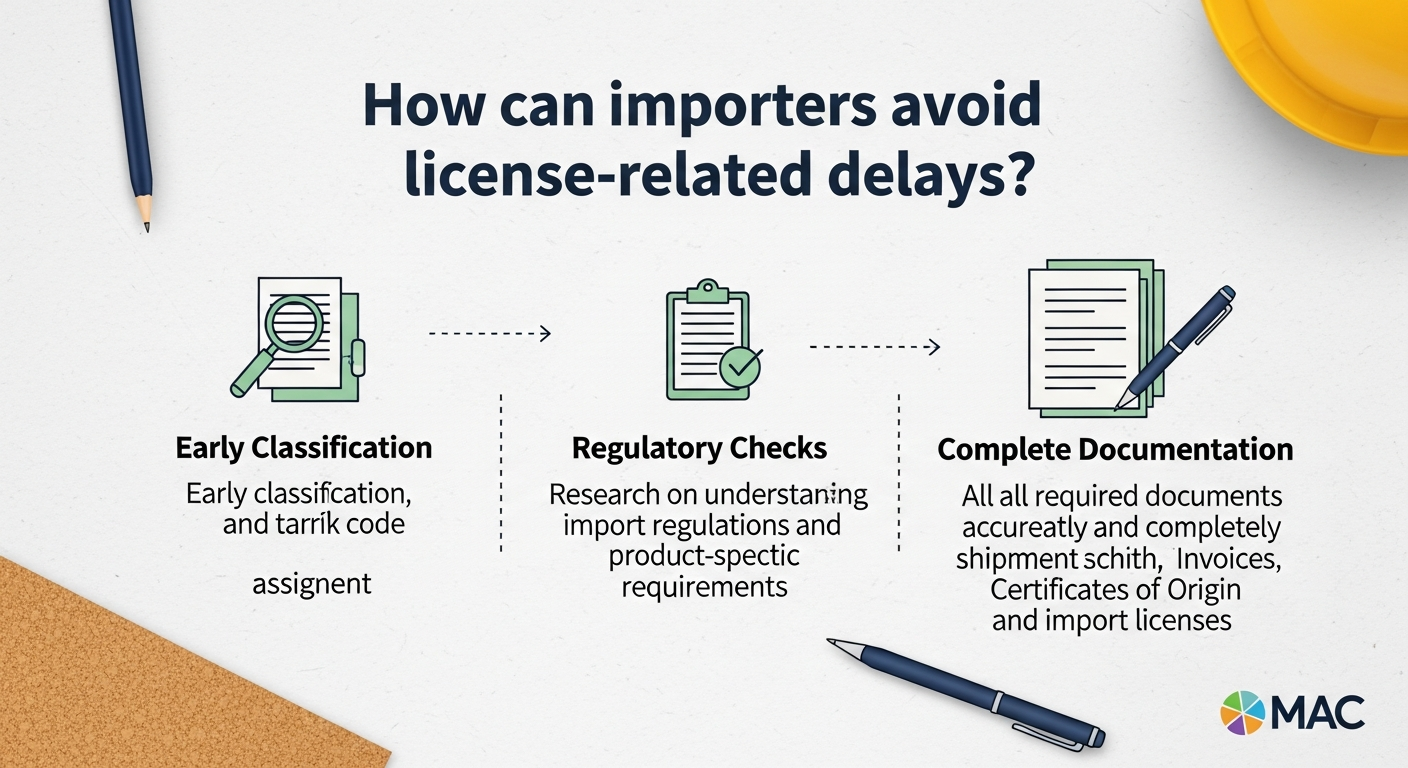
Pre-Shipping Review, Supplier Coordination, and Customs Compliance
Effective strategies include:
- Checking HS codes before placing orders
- Confirming whether the product needs FDA, FCC, EPA, or other agency approval
- Verifying supplier documentation
- Preparing customs bonds and IOR information early
- Using licensed customs brokers to file entries electronically
- Aligning invoice descriptions and HS codes consistently
Strong logistics coordination ensures sensitive or regulated shipments—such as electronics with wireless functions, batteries, cosmetics, or outdoor equipment—meet US import standards.
Conclusion
A US import/export license is not universally required; instead, licensing depends on product type and regulatory agency oversight. Most consumer goods enter the US without a permit, while controlled items follow strict approval rules. By identifying the correct HS codes, reviewing regulations early, and preparing documents before shipping, importers maintain smooth customs clearance and avoid costly delays. With coordinated logistics support, US trade flows remain stable, compliant, and predictable from origin to destination.
 Chinese
  English