
Warehousing solutions for large businesses focus on high-volume storage, automation, real-time visibility, and optimized distribution. Scalable systems maintain accuracy, shorten lead times, and support steady nationwide or global fulfillment.

A clear structure helps enterprises handle complex SKU portfolios, manage peak seasons, and maintain reliable inventory performance across multiple regions.
How do large-scale inbound operations work?
High-volume enterprises receive goods from many suppliers. Efficient inbound systems are essential to avoid bottlenecks.
Inbound operations rely on fast receiving, barcode verification, and structured storage allocation.
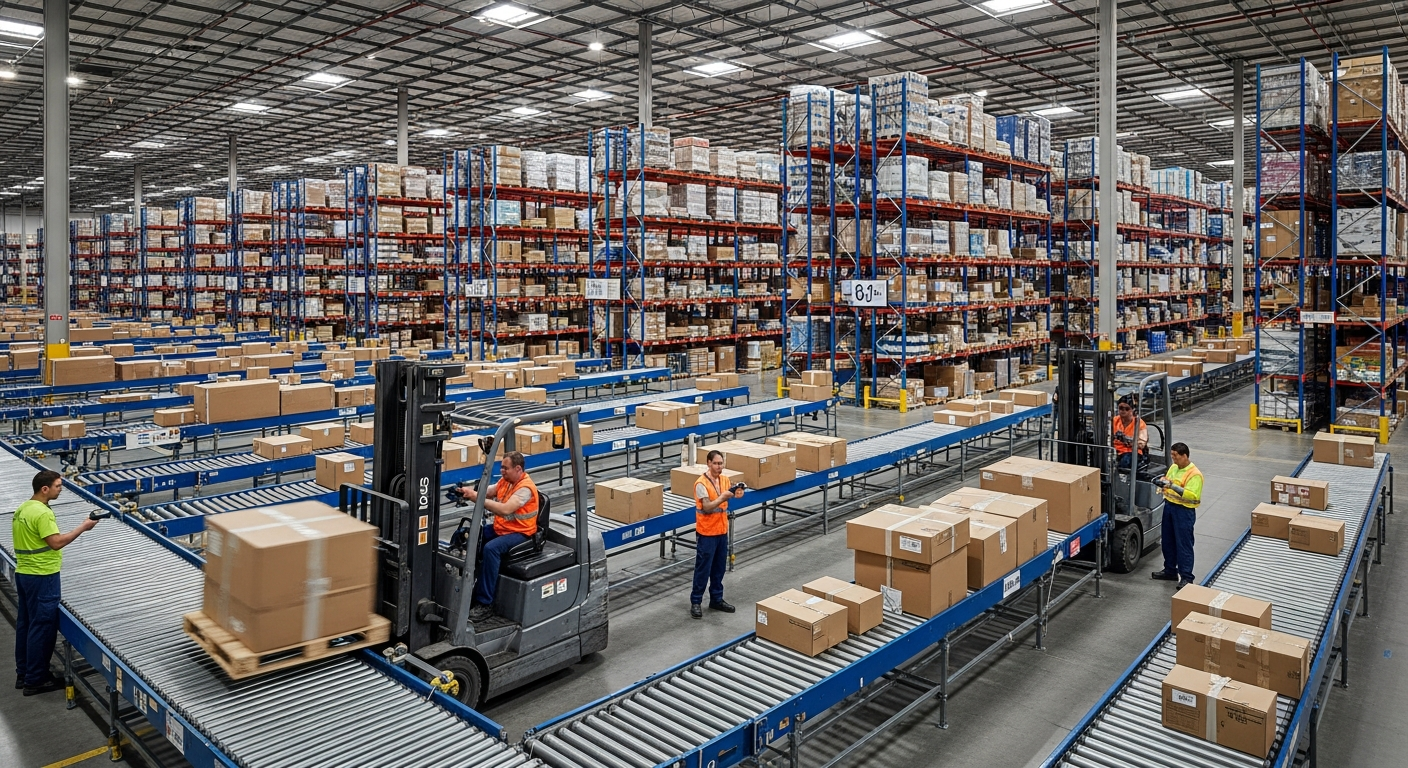
How inbound processing supports large businesses
Inbound workflows include dock scheduling, carton scanning, pallet breakdown, and SKU verification. Large businesses often manage thousands of SKUs across multiple supplier batches. Variations in labeling, packaging, or carton size complicate receiving and may slow early throughput.
Advanced WMS platforms assign immediate storage locations based on SKU velocity, product dimensions, and handling rules. Automated sorters, RFID gates, and AS/RS systems support accuracy at scale. Standardized supplier labels reduce sorting time and ensure smoother stock integration. Strong inbound precision keeps the entire warehouse efficient from the start.
How do storage systems support high-volume operations?
Large enterprises need storage that maximizes capacity while maintaining fast access to fast-moving SKUs.
Storage uses pallet racking, carton flow systems, mezzanines, or automated retrieval depending on SKU profiles.
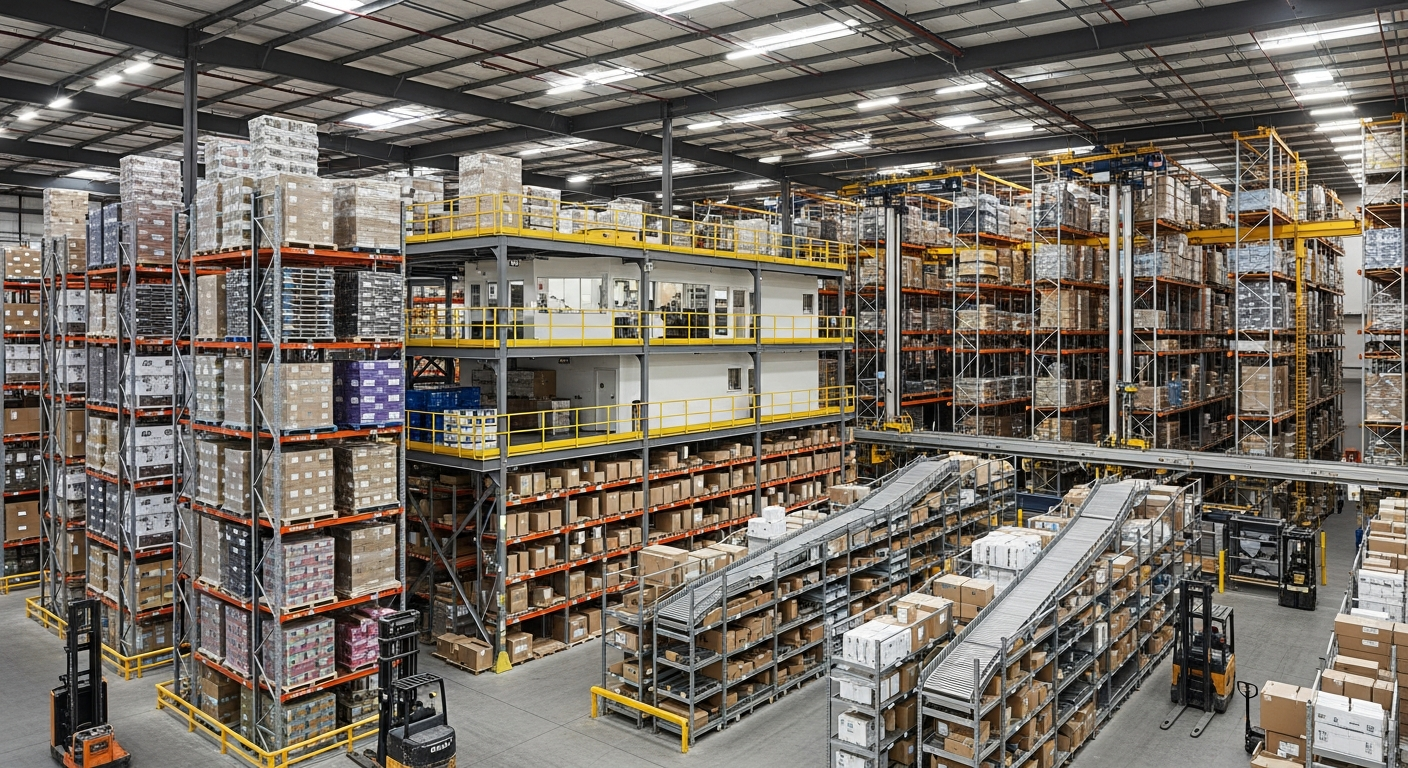
Why scalable storage is important
Enterprises operate with mixed inventory types: bulk goods, fragile items, multi-SKU kits, and seasonal stock. Storage solutions must balance density with accessibility. Pallet racking suits bulk replenishment, while carton flow shelves support high-frequency order picking. Automation—such as shuttle systems or robotic retrieval—enhances accuracy and reduces reliance on manual handling.
Strong storage design helps maintain inventory accuracy, reduce retrieval distance, and minimize operational costs. With clear SKU mapping and real-time stock monitoring, large businesses reduce stockouts, control carrying costs, and maintain stable distribution performance.
How do advanced pick–pack systems improve order accuracy?
Order fulfillment is the core of warehouse operations for large enterprises. Accuracy and speed are essential for both bulk and retail distribution.
Pick–pack systems rely on digital routing, real-time scanning, and packaging standards to maintain accuracy.
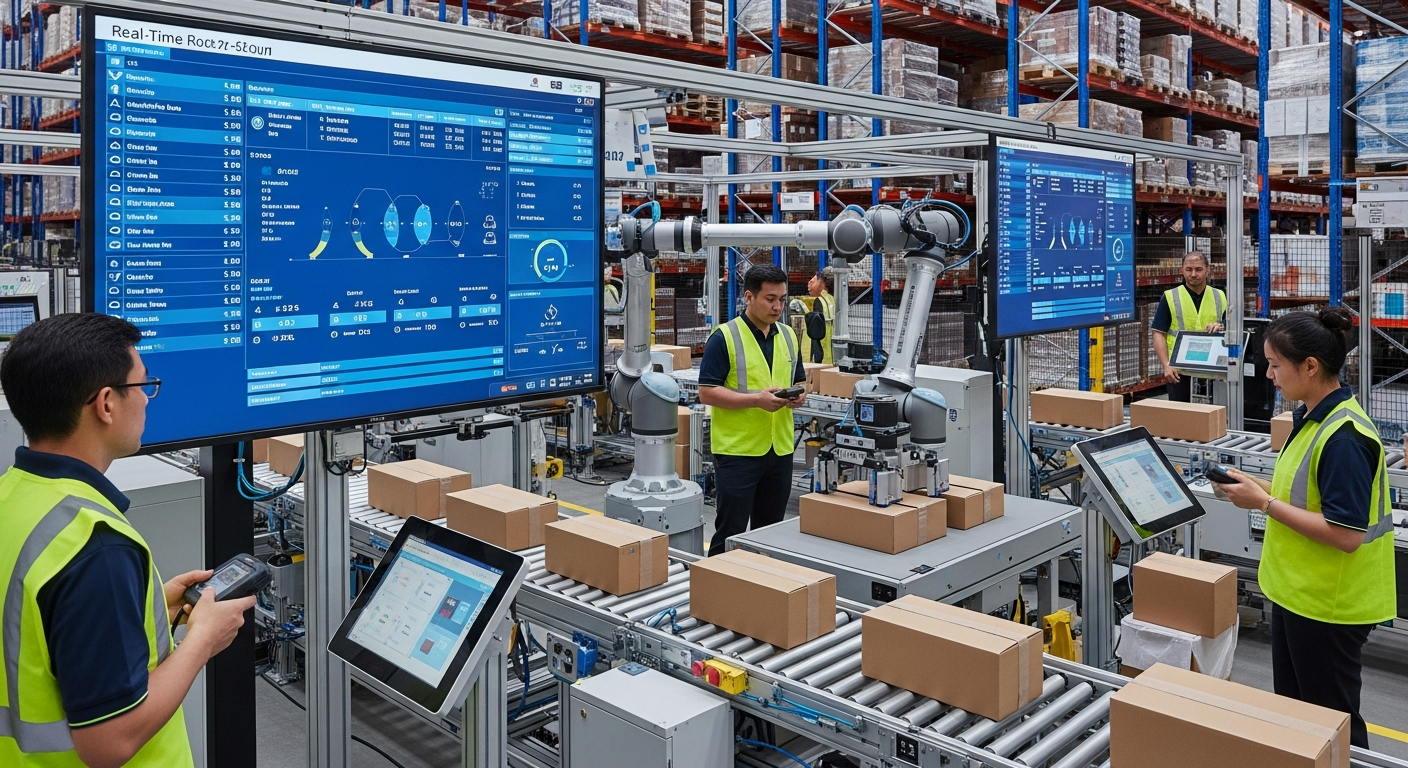
Why high-performance pick–pack matters
Large businesses handle complex orders—multi-line, multi-SKU, or customized bundles. Digital pick paths minimize walking distance and reduce error risk. Batch picking, zone picking, and wave picking support high order volume without congestion. Automated conveyor lines and sorting machines accelerate outbound flow.
Packing standards ensure cartons meet carrier, retail, or export requirements. Incorrect labels or mis-packed cartons cause delays during distribution or international shipping. Consistent quality checks, barcode accuracy, and automated labeling maintain predictable outbound speed and reduce rework costs.
How do fulfillment centers handle national and global distribution?
Enterprises require fast movement across regions or international markets. Distribution speed shapes overall supply-chain performance.
Distribution depends on optimized routing, multi-carrier integration, and accurate documentation.
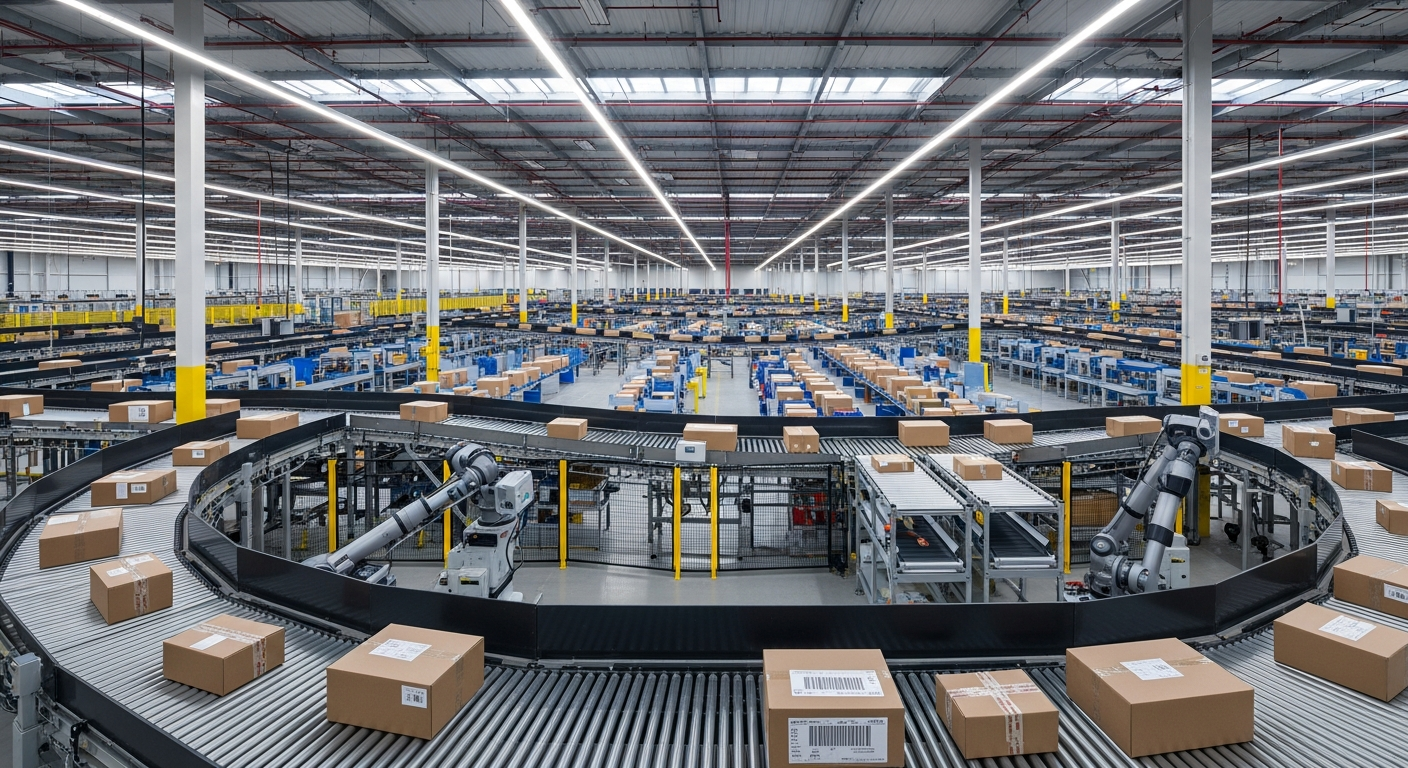
How distribution systems operate
Large businesses often ship through a mix of express, truckload, LTL, airfreight, or ocean freight. Carrier APIs integrate directly with WMS platforms for instant label printing and routing decisions. Shipments move through automated sorting tunnels that classify parcels by region, destination, or shipping tier.
Correct export documentation, HS codes, and compliance checks are essential for global shipments. Clear data reduces customs delays and ensures predictable transit times. With optimized distribution lanes and strong routing software, enterprises maintain consistent delivery even during seasonal peaks.
How does warehouse technology improve visibility and control?
Real-time visibility keeps large operations synchronized across departments, regions, and supply-chain partners.
Advanced systems provide instant stock tracking, automation control, and performance analytics.

Why visibility is essential
Large businesses require continuous monitoring of inbound flow, stock levels, order accuracy, labor productivity, and outbound performance. WMS platforms integrate with ERP systems for synchronized data. RFID tagging, IoT sensors, and digital dashboards track inventory movement in real time.
Predictive analytics forecast stock demand, reduce overstocking, and optimize labor allocation. Automation—robotic picking arms, AGVs, conveyor systems—reduces manual errors and shortens cycle time. High visibility also supports rapid problem resolution, preventing bottlenecks from affecting downstream distribution.
Conclusion
Warehousing solutions for large businesses depend on strong inbound receiving, scalable storage, precise pick–pack systems, optimized distribution, and advanced technology. Each component strengthens speed, accuracy, and cost efficiency. When storage layouts, automation, documentation, and routing follow clear standards, warehouse operations stay predictable, even during high-volume seasons. With stable systems and consistent execution, large enterprises maintain reliable supply performance across regional and global markets.
 Chinese
  English