
Warehousing solutions for large businesses focus on high-volume storage, automation, visibility, and efficient distribution. Scalable systems help maintain accuracy, reduce operational delays, and support stable national or global fulfillment.

A structured warehousing model enables smooth inbound flow, predictable order cycles, and reliable distribution performance across multiple regions.
How do large-scale inbound operations stay efficient?
High-volume warehouses receive goods from many suppliers, making accuracy and speed essential.
Inbound operations rely on fast receiving, barcode verification, and structured storage allocation.
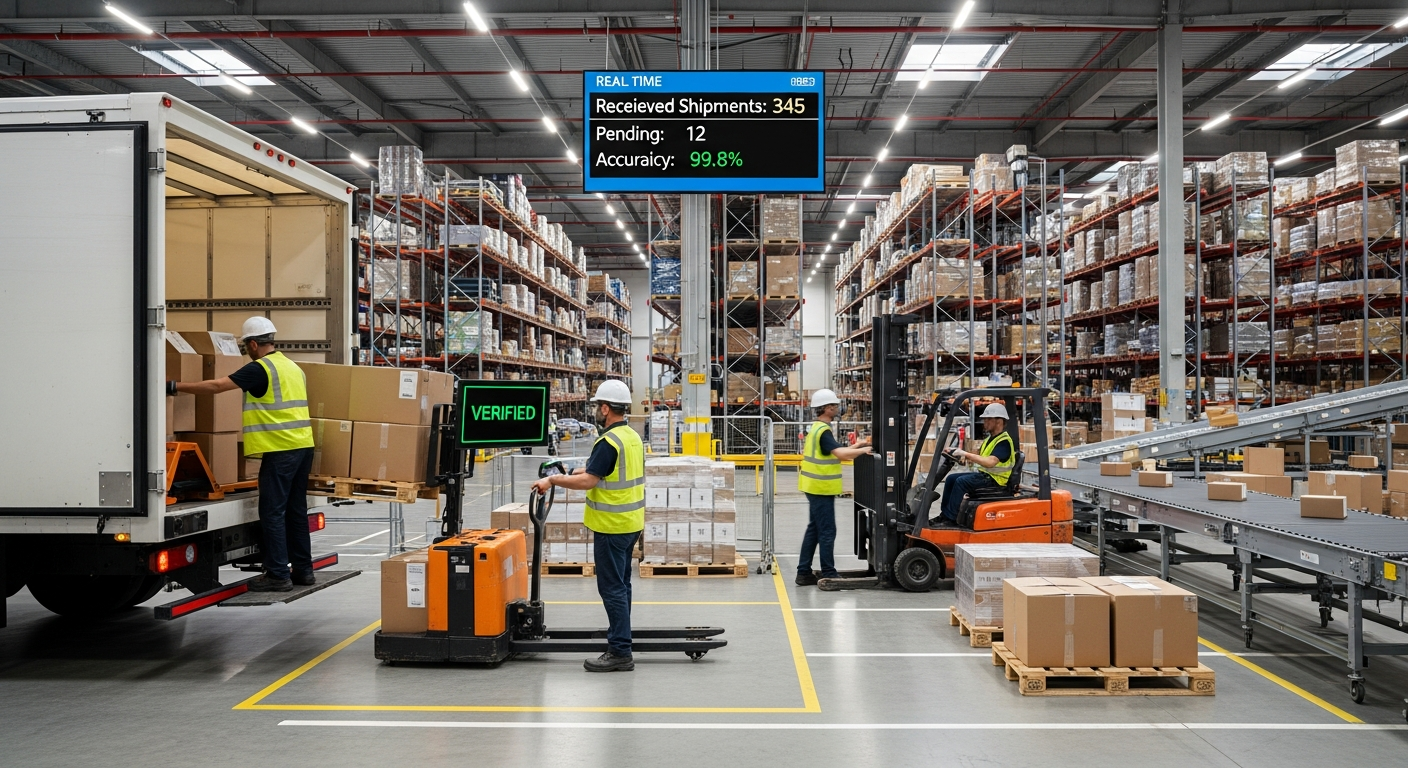
How inbound systems support performance
Large businesses often manage thousands of SKUs arriving through multiple weekly or daily deliveries. These inbound shipments require dock scheduling, pallet breakdown, carton scanning, and quality checks. A strong WMS assigns storage locations based on SKU velocity and product type.
Automation such as RFID gates, conveyor sorters, and AS/RS reduces manual work and minimizes errors. When suppliers use consistent labels and carton standards, receiving becomes faster and more predictable. Strong inbound accuracy stabilizes the entire warehouse environment, supporting efficient outbound performance.
What storage systems work best for large businesses?
Large operations need storage that balances capacity and accessibility, supporting both bulk and high-frequency goods.
Storage uses pallet racks, carton flow shelves, mezzanines, or automated retrieval systems.
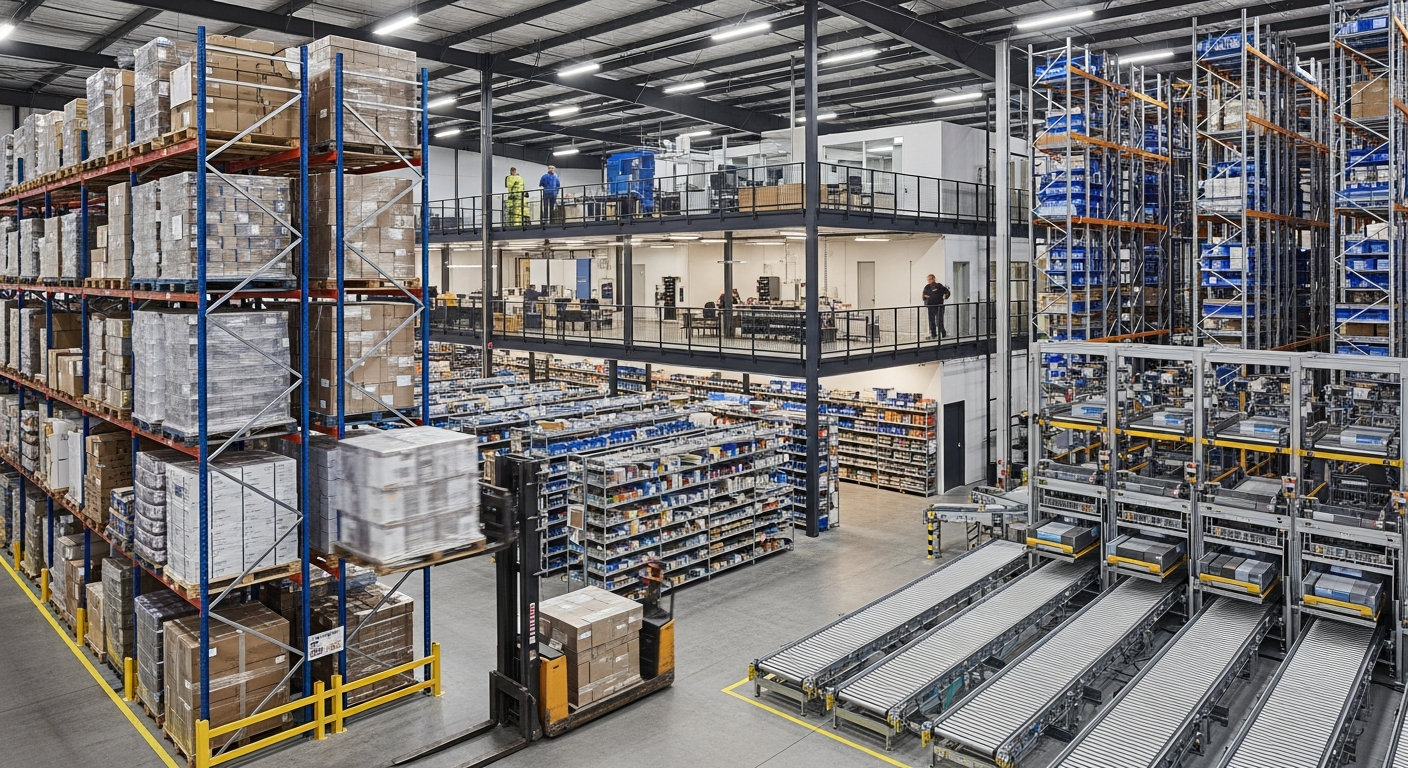
Why scalable storage matters
Enterprises handle a mix of bulky goods, fast-moving items, seasonal inventory, and sensitive products. Pallet racking supports heavy stock, while flow racks improve picking speed for high-turnover SKUs. Mezzanines expand usable space without requiring new buildings.
Automation—shuttle systems, robotics, vertical lifts—reduces travel time and increases accuracy. Clear SKU mapping, capacity planning, and digital inventory visibility prevent stockouts and keep carrying costs controlled. Proper storage design ensures predictable performance during peak seasons.
How do advanced pick–pack systems improve order fulfillment?
Order fulfillment requires speed and precision to handle large order volumes across multiple channels.
Pick–pack systems depend on digital routing, scanning accuracy, and standardized packing rules.

Why high-performance picking is essential
Enterprises often manage complex orders with multiple SKUs per carton. Zone picking, batch picking, and wave strategies minimize walking time and reduce congestion. Automated conveyors and sorting tunnels accelerate downstream movement.
Packing standards ensure cartons match carrier requirements and protect fragile or high-value goods. Automated label printing reduces errors and improves tracking accuracy. A strong pick–pack workflow minimizes rework and supports efficient same-day or next-day fulfillment cycles.
How do large businesses manage distribution across regions or globally?
Efficient distribution ensures fast delivery to domestic customers, retailers, or international destinations.
Distribution relies on optimized routing, multi-carrier integration, and accurate export documentation.
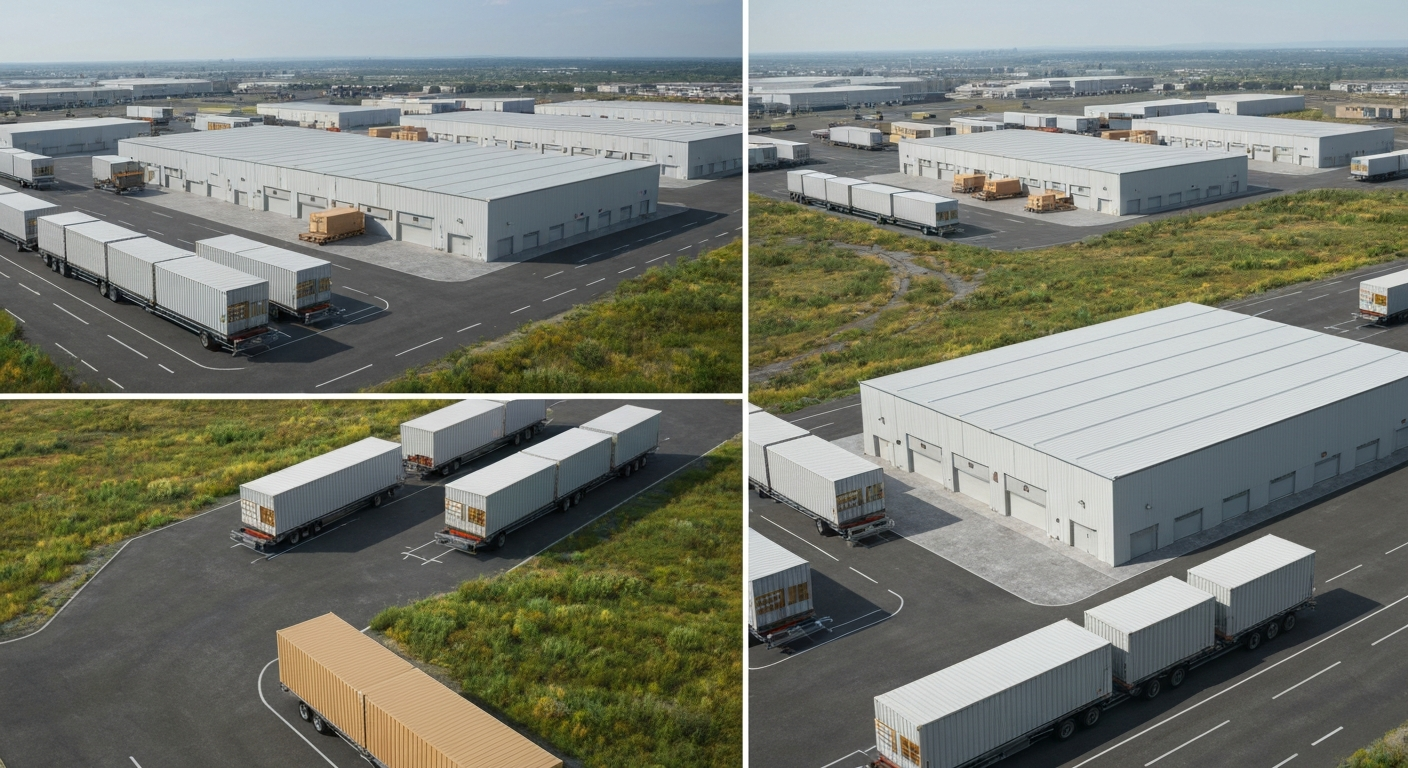
How distribution networks operate
Large businesses often ship via courier, LTL, FTL, airfreight, or ocean freight. Carrier APIs integrated with WMS platforms generate labels automatically and select the best routing option. Automated sorting tunnels classify parcels based on destination and service tier.
International distribution requires correct HS codes, export forms, and documentation for customs. Accurate paperwork reduces clearance time and keeps shipments moving. With optimized routes and real-time tracking, businesses maintain delivery performance even during high-volume periods.
How does warehouse technology improve control and visibility?
Digital systems provide real-time insights into inventory, operations, and fulfillment performance.
Advanced warehouse technologies enhance tracking, automation, and decision-making.
Why visibility strengthens operations
Enterprises rely on WMS platforms for live stock updates, inbound monitoring, and pick accuracy. RFID tags and IoT sensors track goods throughout the warehouse. Dashboards display labor efficiency, order progress, and storage capacity.
Predictive analytics forecast inventory needs and seasonal patterns. Robotics—AGVs, picking arms, automated forklifts—reduce labor pressure and improve consistency. With strong visibility and automated workflows, warehouse operations scale efficiently and stay stable across complex supply networks.
Conclusion
Warehousing solutions for large businesses require strong inbound management, scalable storage, efficient pick–pack processes, optimized distribution, and advanced technology integration. Each component contributes to stable supply flow, accurate inventory, and fast order fulfillment. When workflows remain consistent and data stays clear, warehouses operate reliably through high volumes, seasonal peaks, and multi-region distribution demands. This structured approach ensures long-term operational strength and supports sustained growth across expanding markets.
 Chinese
  English