
Just-in-Time (JIT) logistics is a supply-chain strategy that delivers materials exactly when needed to reduce inventory and improve efficiency.
JIT lowers storage cost, prevents overstocking, and ensures goods arrive at the right place at the right time.
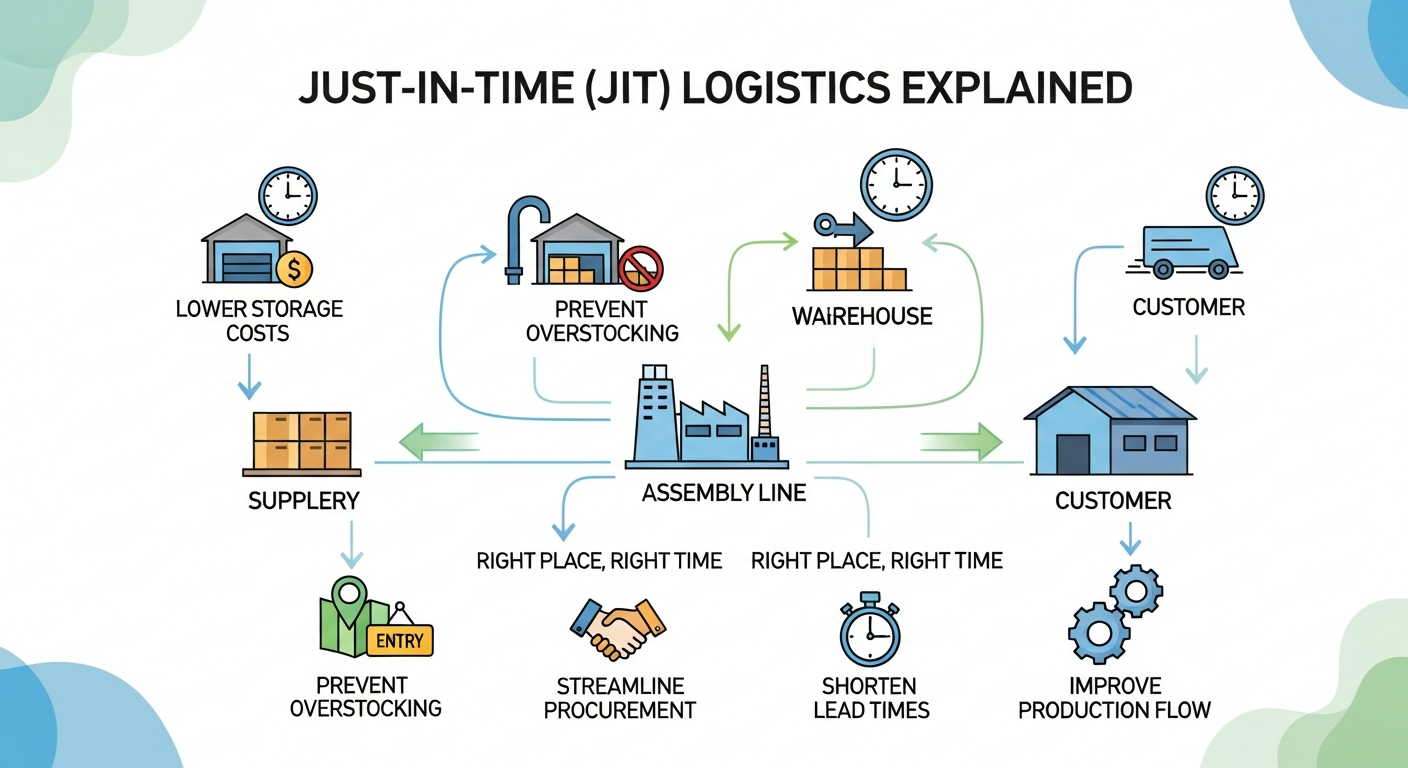
Understanding JIT helps businesses streamline procurement, shorten lead times, and improve production flow without carrying excess inventory.
What is Just-in-Time (JIT) logistics?
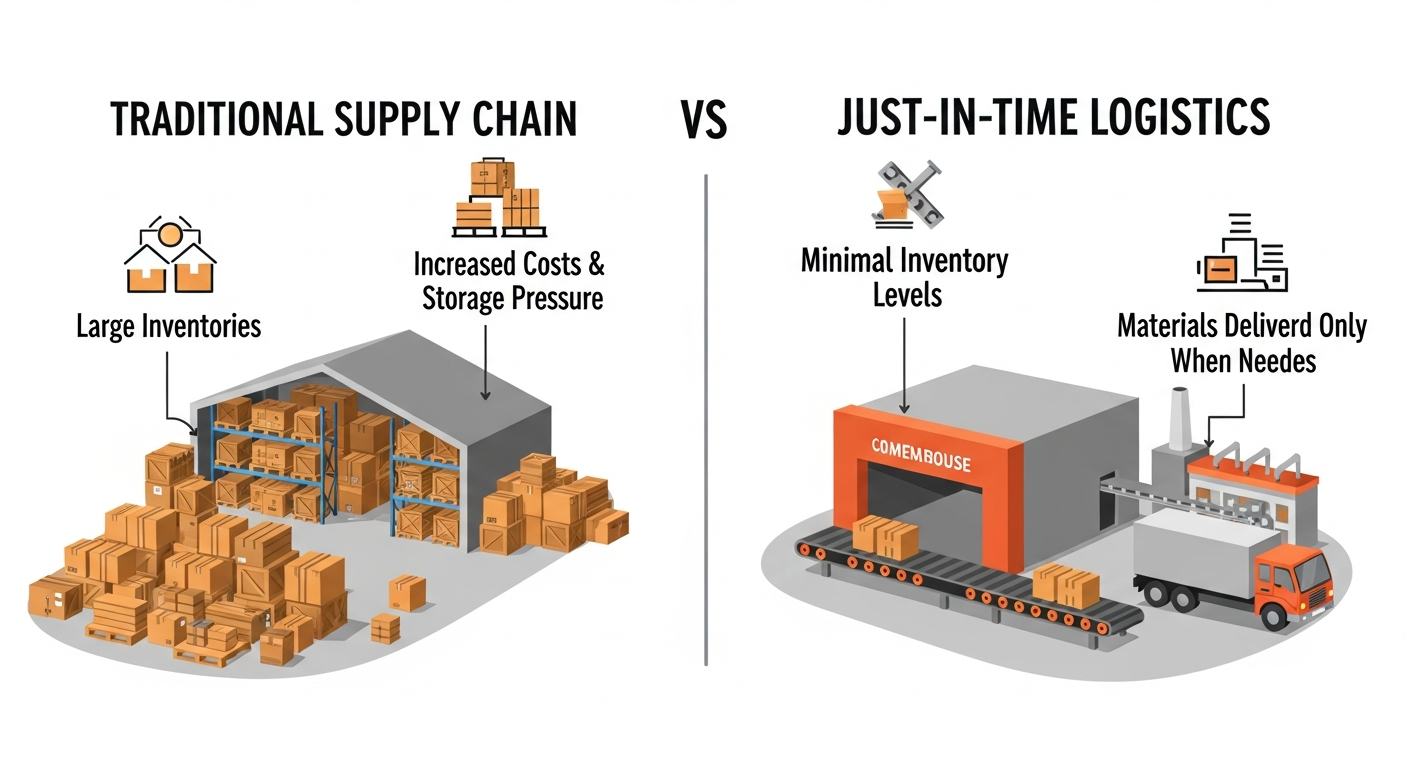
Traditional supply chains rely on large inventories that increase cost and storage pressure.
JIT logistics delivers materials only when needed, keeping inventory levels minimal.
Definition, Origins, and Operational Purpose
JIT logistics began in manufacturing environments where materials must arrive exactly when production requires them. The system reduces stock levels and improves operational flow by coordinating suppliers, warehouses, and transport schedules.
The approach focuses on synchronizing supply with actual demand. Instead of storing large quantities, goods move quickly from suppliers to production lines or distribution centers. This minimizes waste, reduces warehouse needs, and improves responsiveness.
Industries such as automotive, electronics, retail, and FMCG use JIT to increase efficiency and avoid tying capital into excess inventory.
What principles guide JIT logistics?
JIT requires strict coordination to prevent delays or stockouts.
Core principles include timing accuracy, small batch movement, and continuous improvement.
Timing, Standardization, and Flow Optimization
Key principles:
- Demand-driven supply — goods arrive only when needed
- Accurate forecasting — real-time data drives purchase planning
- Short lead times — streamlined routes and fast communication
- Small, frequent deliveries — reduces storage and improves freshness
- Error prevention — quality checks reduce delays
- Continuous improvement — eliminates waste in movement and processing
These principles support a stable, predictable supply chain with minimal excess.
How does JIT logistics work?
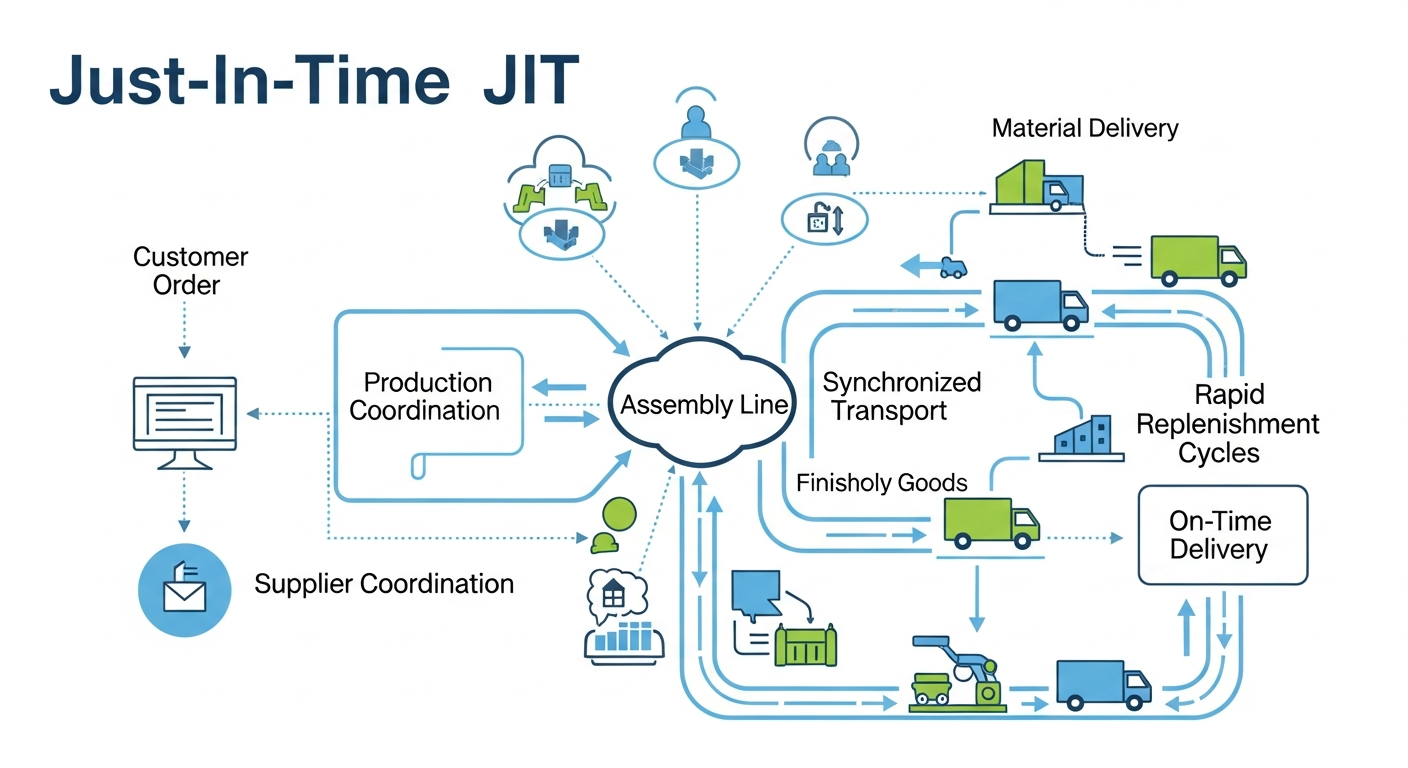
JIT relies on synchronized transport, supplier coordination, and rapid replenishment cycles.
JIT works by aligning production schedules with precise delivery timing.
Supply Synchronization, Routing, and Tracking
Operational flow includes:
- Forecast creation using demand data
- Supplier alignment to prepare small, frequent shipments
- Transport scheduling for consistent arrival times
- Real-time tracking for visibility
- Quality checks to prevent disruption
- Rapid receiving at warehouses or production lines
JIT requires dependable transport partners, clear communication, and strong digital systems to handle precise timing.
What are the advantages of JIT logistics?
Companies adopt JIT to reduce inventory cost and improve operational efficiency.
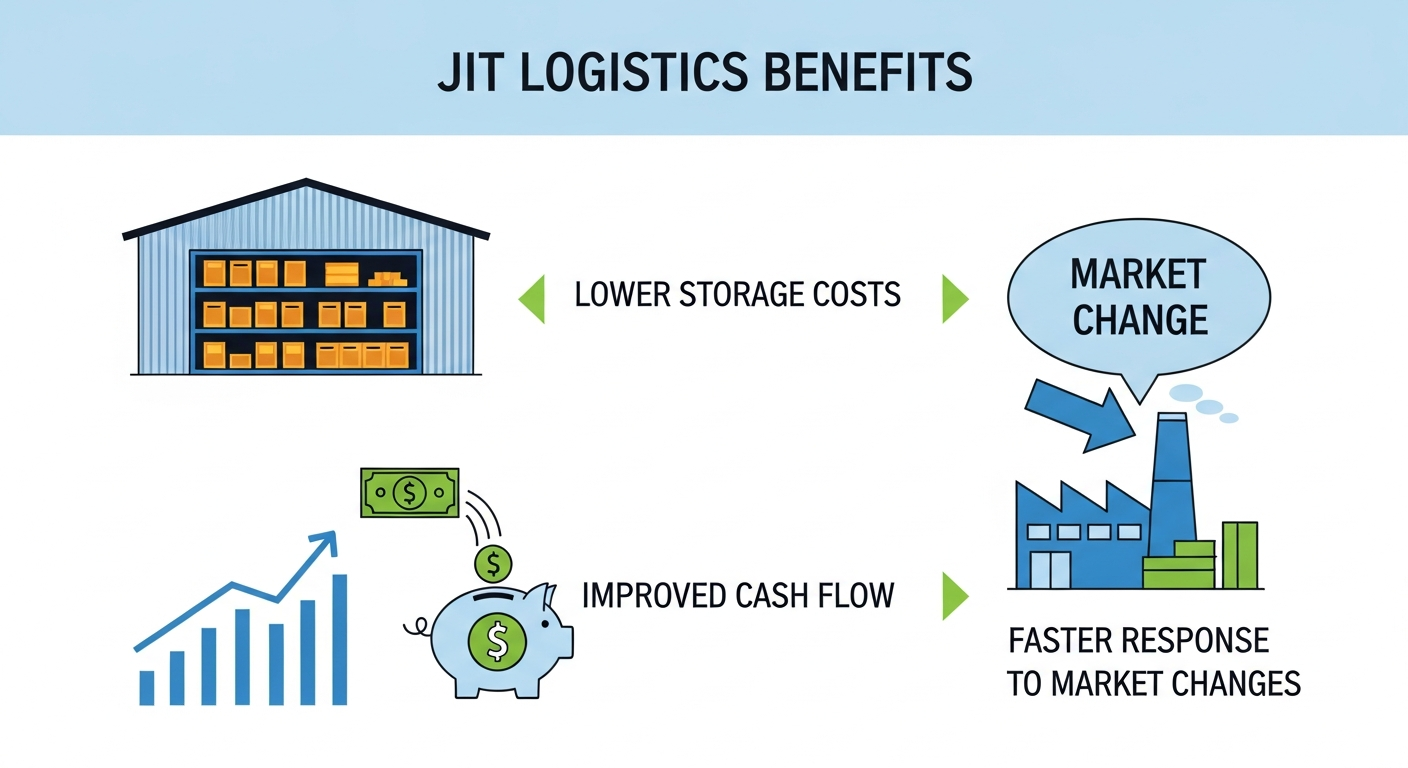
JIT benefits include lower storage cost, improved cash flow, and faster response to market changes.
Cost Optimization, Flexibility, and Efficiency
Key benefits:
- Minimal inventory reduces storage and carrying cost
- Better cash flow due to lower stock investment
- Less waste from obsolete or expired items
- More production space without large storage areas
- Higher responsiveness to demand fluctuations
- Lower risk of overproduction
- Improved quality control with smaller, more frequent batches
JIT is especially effective for businesses with predictable demand and strong supplier networks.
What challenges come with JIT logistics?
JIT reduces buffers, so disruptions affect production more quickly.
Challenges include supply risk, transport delays, and forecasting errors.
Risk Exposure, Lead-Time Pressure, and Supplier Reliability
Common challenges:
- High dependency on suppliers
- Transport delays creating stockouts
- Vulnerable to weather or customs disruptions
- Requires precise communication
- Limited room for error
- Increased pressure during peak seasons
To reduce risk, businesses often build strong relationships with reliable logistics partners and add contingency planning.
Which industries use JIT logistics?
JIT supports industries where timing and efficiency directly affect production flow.
Many sectors rely on JIT for cost savings and continuous operations.
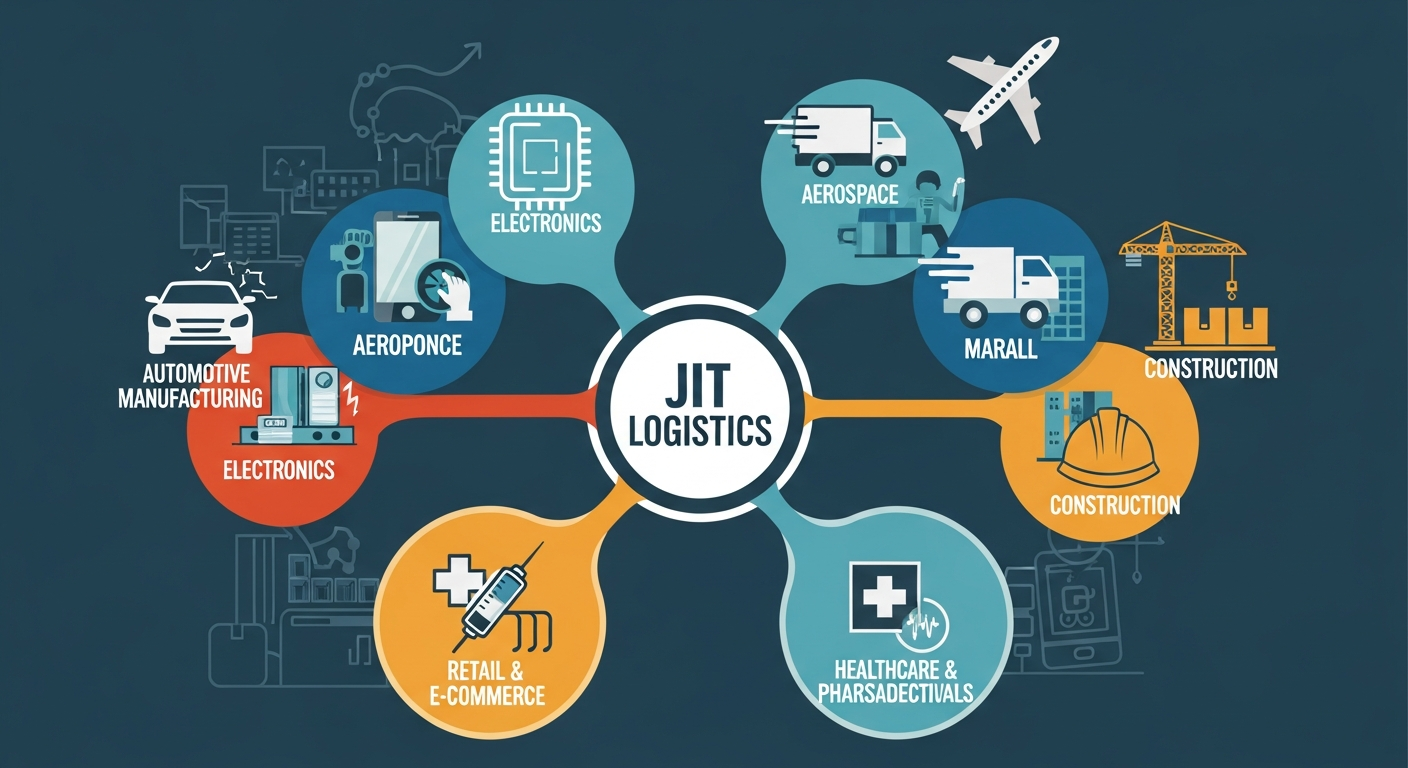
Manufacturing, Retail, and High-Tech
Industries applying JIT include:
- Automotive
- Electronics manufacturing
- Aerospace
- FMCG
- Retail replenishment
- Medical devices
- Industrial machinery
These sectors depend on predictable delivery timing and frequent, small-volume shipments.
What skills and systems are needed to run JIT logistics?
Reliable JIT execution depends on strong digital tools and supplier coordination.
Effective JIT requires tracking systems, planning software, and integrated communication.
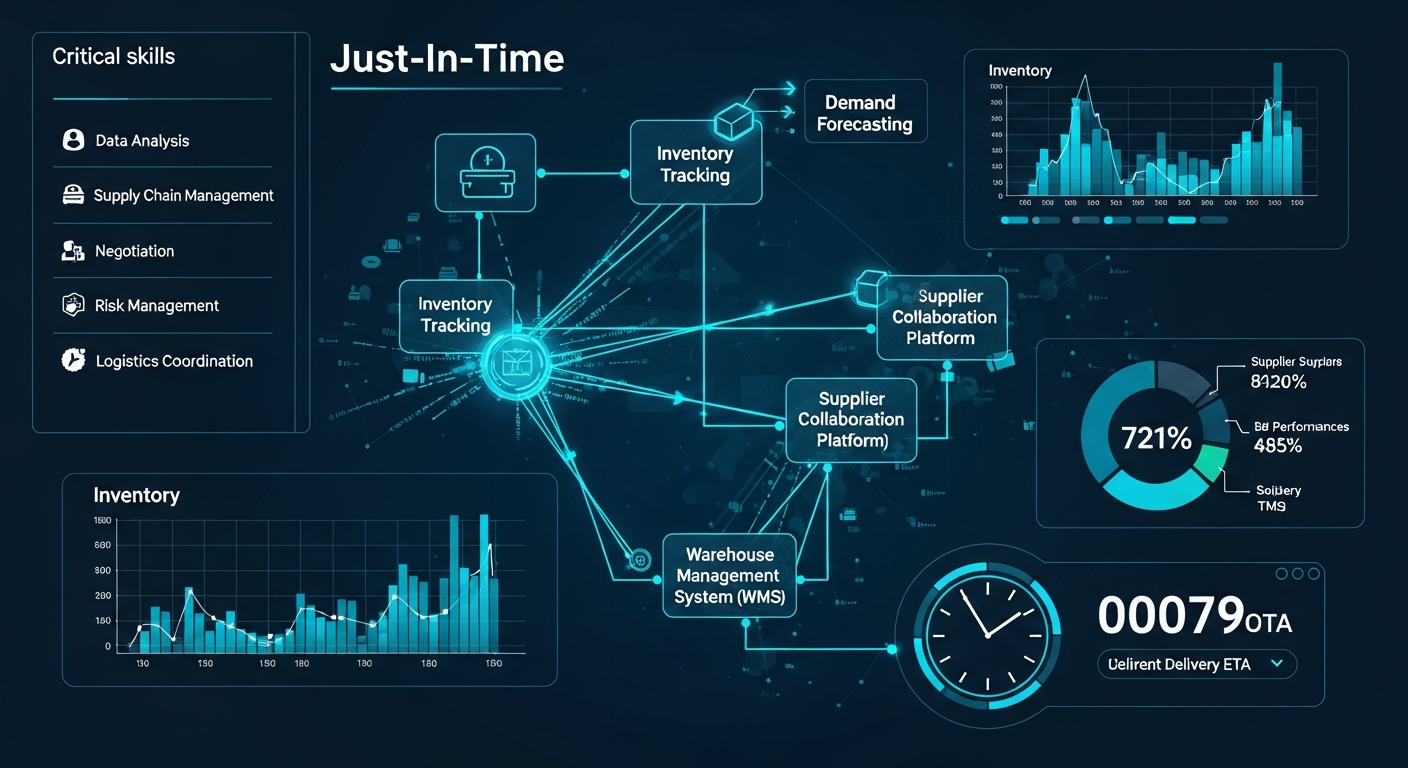
Technology, Data Accuracy, and Collaboration
Important elements:
- Real-time tracking systems
- Demand forecasting software
- Supplier performance monitoring
- Fast customs clearance workflows
- Multimodal logistics planning
- High-frequency shipping capabilities
Visibility is essential for preventing delays and maintaining smooth JIT operations.
How does JIT integrate with modern logistics providers?
Modern logistics companies support JIT by offering time-critical transport and warehouse services.
Providers ensure scheduled deliveries, consolidation, and rapid response.
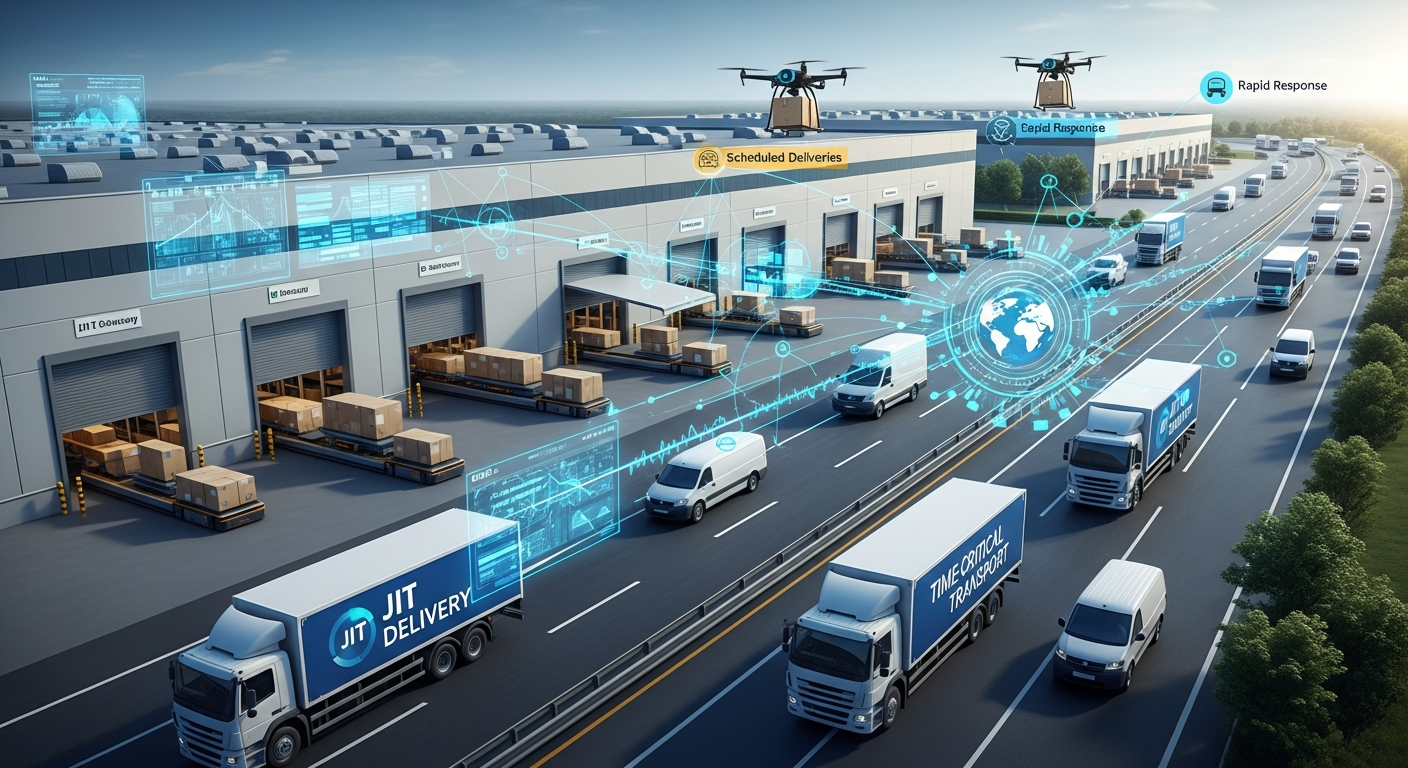
Consolidation, Transport Reliability, and Fast Processing
Service support includes:
- Time-definite transport scheduling
- Cross-docking for rapid throughput
- Multi-supplier consolidation
- Automated inventory updates
- Real-time communication and tracking
- Regional distribution centers for fast replenishment
Reliable coordination ensures goods arrive exactly when needed without unnecessary stock buildup.
Conclusion
Just-in-Time logistics is a demand-driven supply-chain method focused on delivering goods precisely when needed. With small, frequent shipments, optimized routing, and strong supplier coordination, JIT reduces inventory cost and increases efficiency. When supported by accurate forecasting, stable transport partners, and real-time visibility, JIT enables businesses to operate leaner, faster, and more competitively across global markets.
 Chinese
  English