
Project logistics manages the transport of oversized, heavy, high-value, or complex cargo for large industrial or infrastructure projects.
Project logistics coordinates planning, engineering, permits, and multimodal transport to move specialized cargo safely and efficiently.
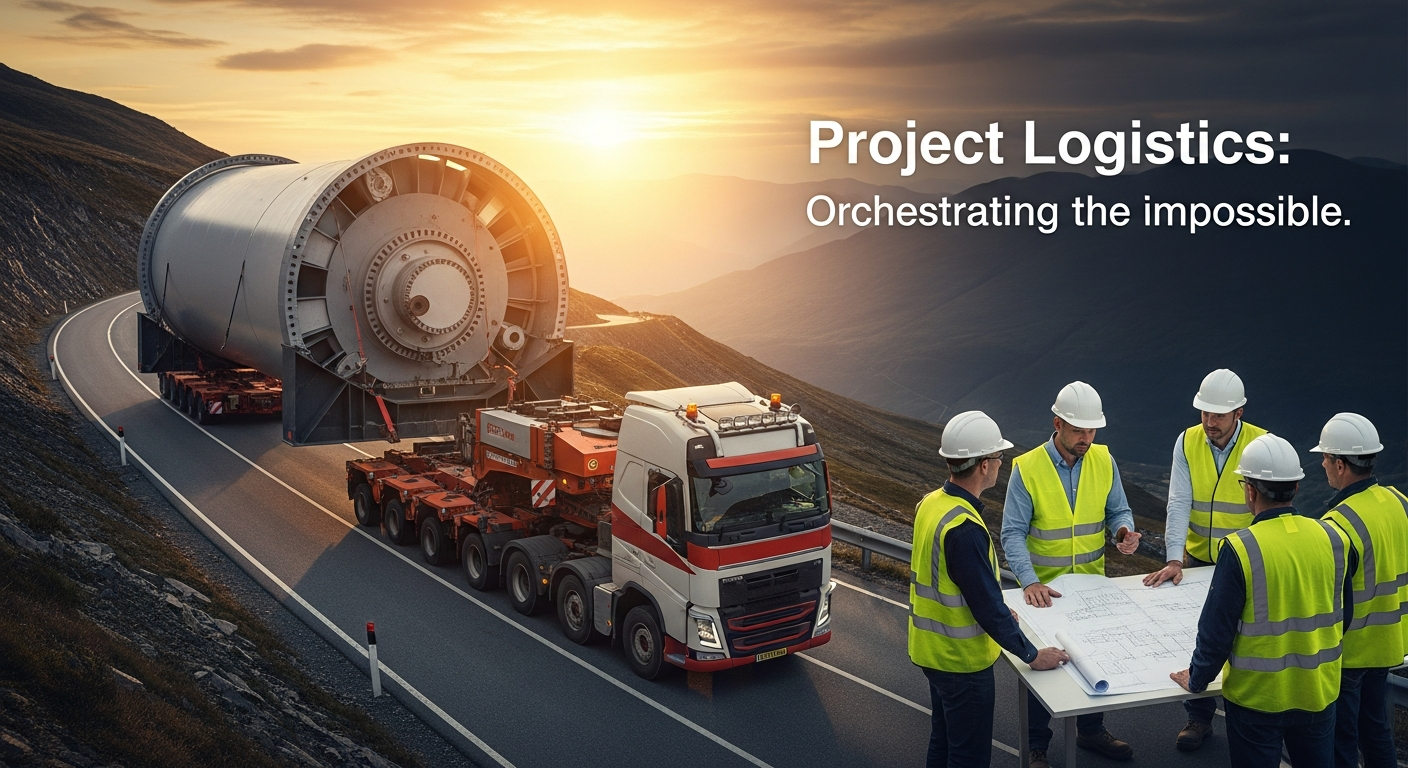
Clear understanding of project logistics helps importers manage heavy machinery, construction materials, and large project components sourced globally.
What does project logistics involve?
Standard shipping cannot handle large or irregular industrial cargo without specialized planning.
Project logistics involves coordinating engineering, routing, lifting, permits, and multimodal movement for complex shipments.
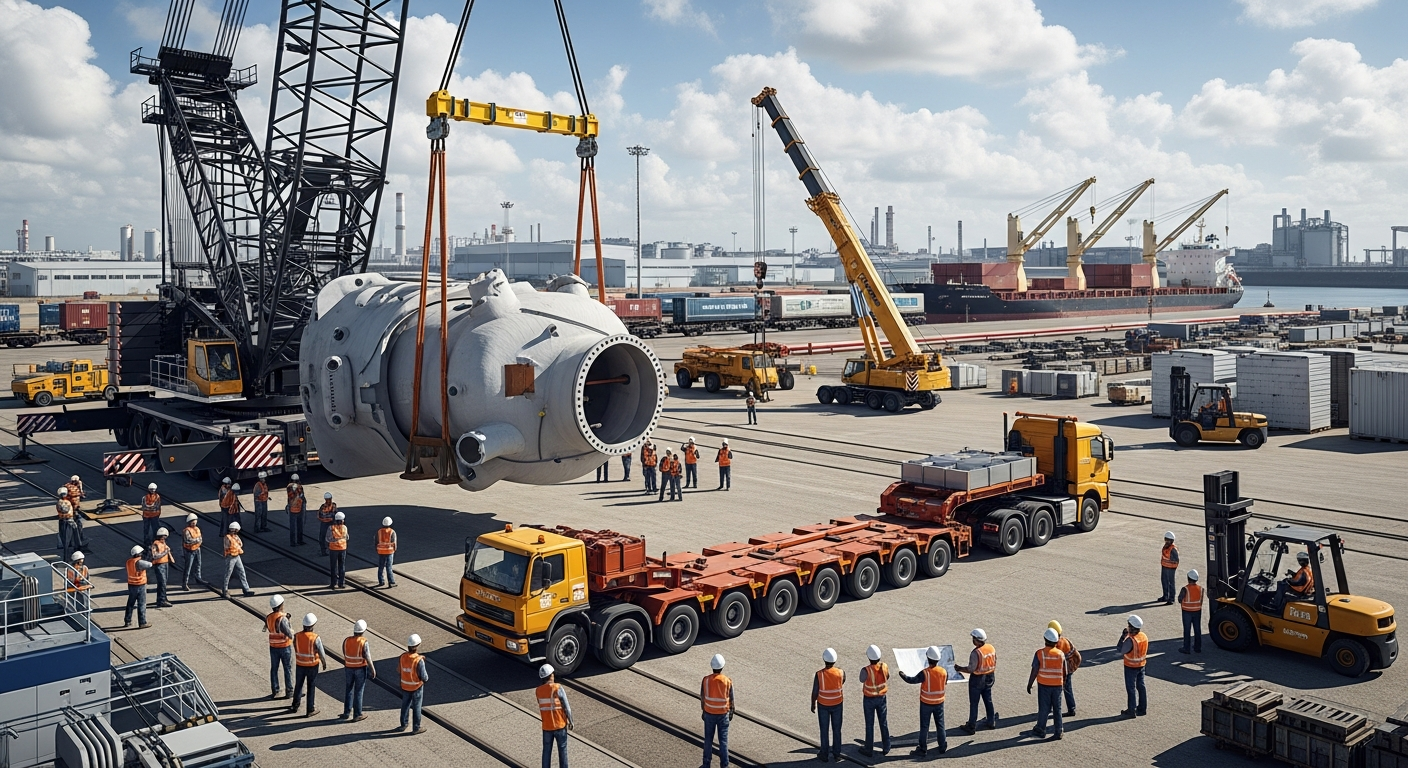
Project Scope, Cargo Type, and Operational Planning
Project logistics covers the end-to-end movement of complex freight such as turbines, generators, steel structures, mining equipment, modular buildings, or factory lines. The process includes route surveys, custom packaging, engineering drawings, heavy-lift planning, and multimodal scheduling. Cargo may move by ocean (break bulk), barge, rail, and heavy-haul trucking.
Each project has unique requirements—oversized cargo dimensions, special cranes, escort vehicles, customs rules, and weather constraints. Planning starts months ahead, involving port authorities, engineers, surveyors, and specialized carriers. Efficient execution prevents costly delays, damage, or safety risks.
Project logistics is essential for industries like energy, oil and gas, construction, mining, and manufacturing.
When should project logistics be used?
Regular shipping solutions cannot support very large or sensitive cargo.
Project logistics is used when goods exceed normal container limits or require complex handling.
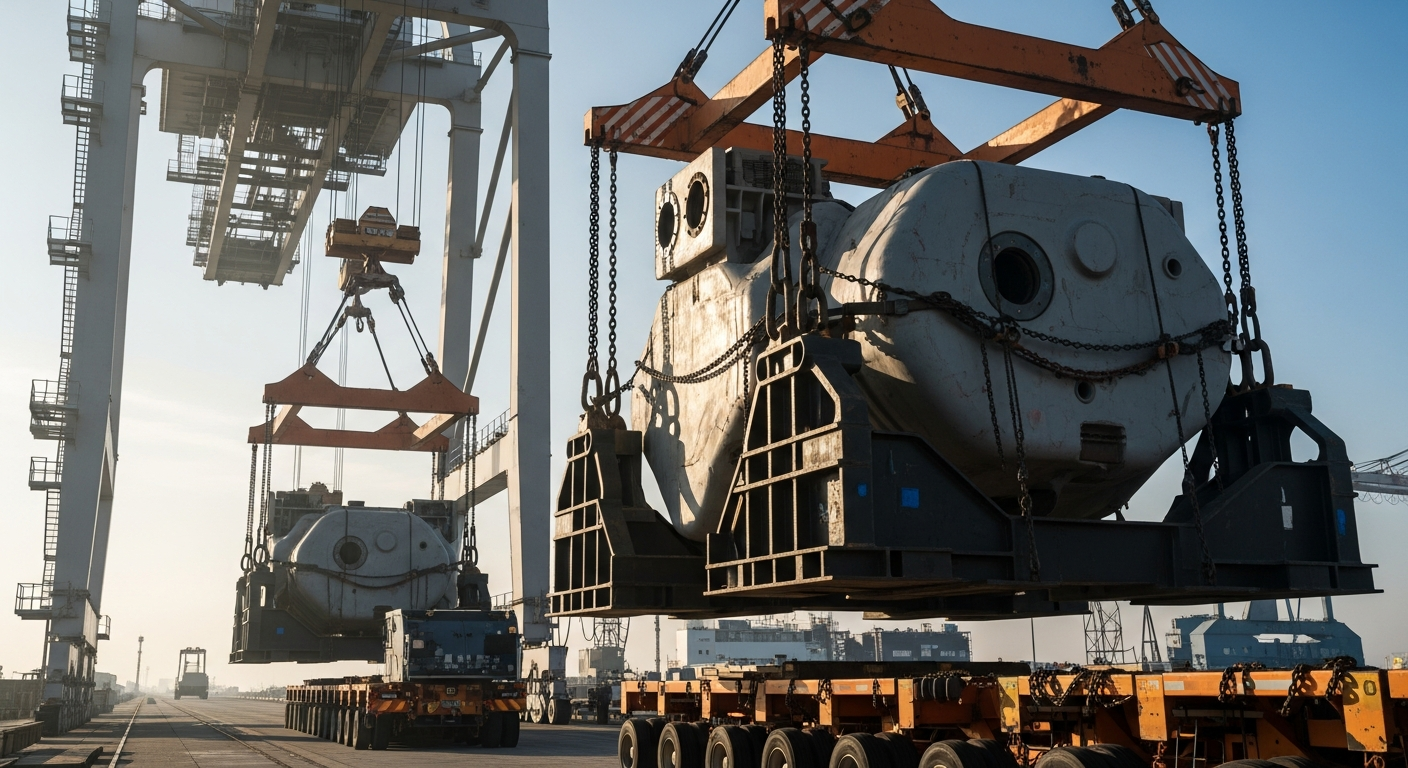
Oversized Cargo, Heavy Loads, and Specialized Movements
Project logistics becomes necessary when:
- Cargo cannot fit into 20GP/40HQ containers
- Machinery weighs tens or hundreds of tons
- Cargo requires break bulk or heavy-lift operations
- Moving factory systems or modular buildings
- Transporting wind turbines, generators, or transformers
- Construction materials need coordinated timing
Many industrial buyers rely on project logistics for point-to-point movement of critical assets. Precision helps prevent delays in construction schedules or shutdowns in industrial installation.
How does project logistics work step-by-step?
Oversized cargo demands more preparation and engineering than standard freight.
Project logistics works through surveying, engineering design, multimodal routing, and controlled execution.
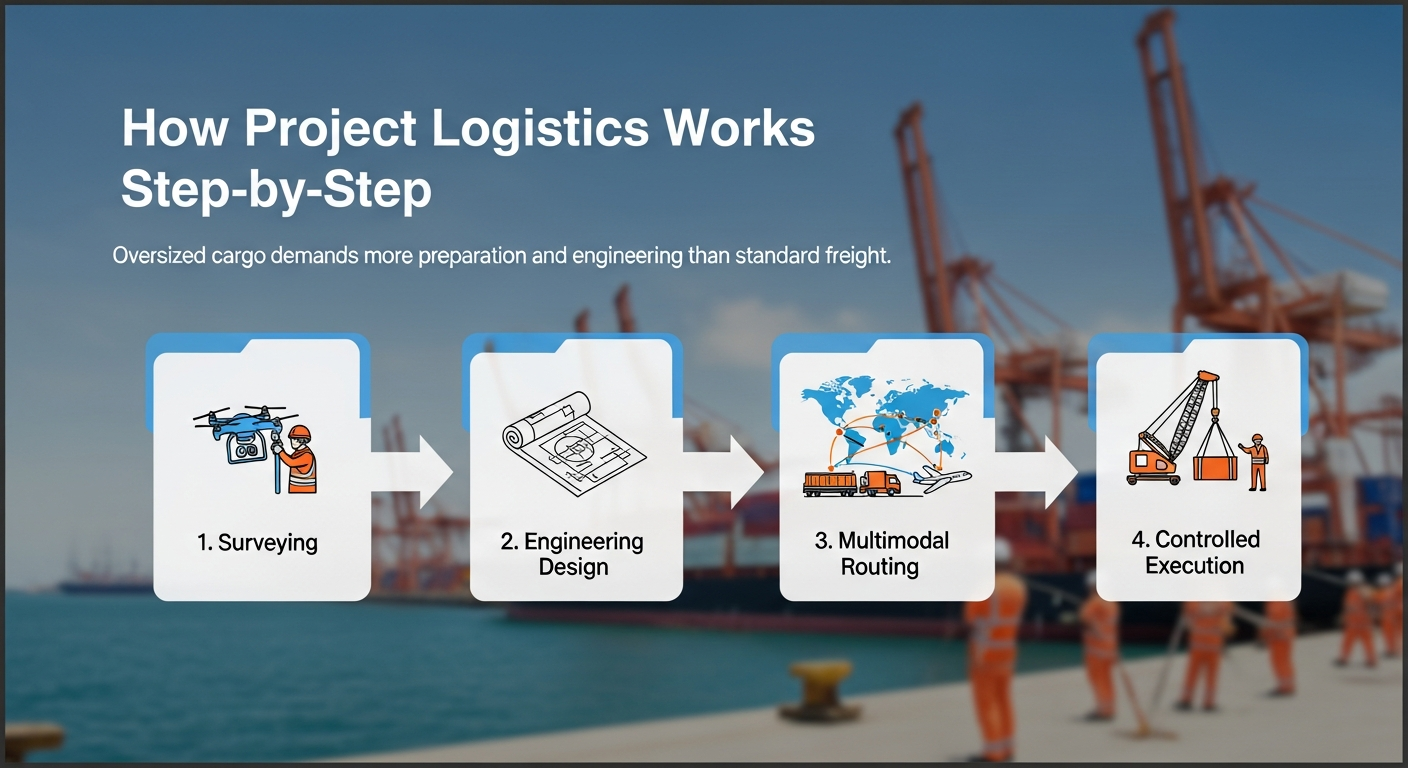
Planning, Execution, and Delivery
A typical project logistics workflow includes:
-
Early-stage assessment
Engineers evaluate cargo specs, lifting points, and stability requirements. Route surveys confirm obstacles like bridges, tunnels, or weight-restricted roads. -
Custom packaging and load design
Cargo receives reinforced crates, steel frames, or protective coverings. Secure locking or lashing points are added. -
Multimodal routing
Shipments may combine break bulk vessels, barges, rail lines, and heavy-duty trucking. Each handoff requires compatibility checks and equipment coordination. -
Permits and escorts
Oversized cargo often needs police escorts, special permits, or restricted-time movements. -
Port and terminal operations
Heavy-lift cranes or specialized rigs transfer cargo to vessels. Teams inspect securing and balance before departure. -
Final-mile delivery
Cargo discharges and moves to the project site with controlled unloading and installation support.
This coordinated flow minimizes transit risks and ensures critical timelines are met.
What types of cargo fall under project logistics?
Project cargo includes oversized, heavy, long, high-value, or technically sensitive equipment.
Project logistics covers industrial machinery, energy components, and structural freight.
Heavy Industry, Construction, and Energy Applications
Common project cargo includes:
- Wind turbine blades, towers, nacelles
- Power generators and turbines
- Transformers and electrical modules
- Steel pipes, beams, and structural components
- Mining equipment and heavy vehicles
- Oil and gas drilling systems
- Prefabricated building modules
- Factory assembly lines and CNC machines
These items require engineered lifting solutions and specialized handling safety protocols.
What challenges come with project logistics?
Project cargo moves through multiple jurisdictions with tight safety requirements.
Project logistics challenges include weight restrictions, route planning, permits, and handling risk.
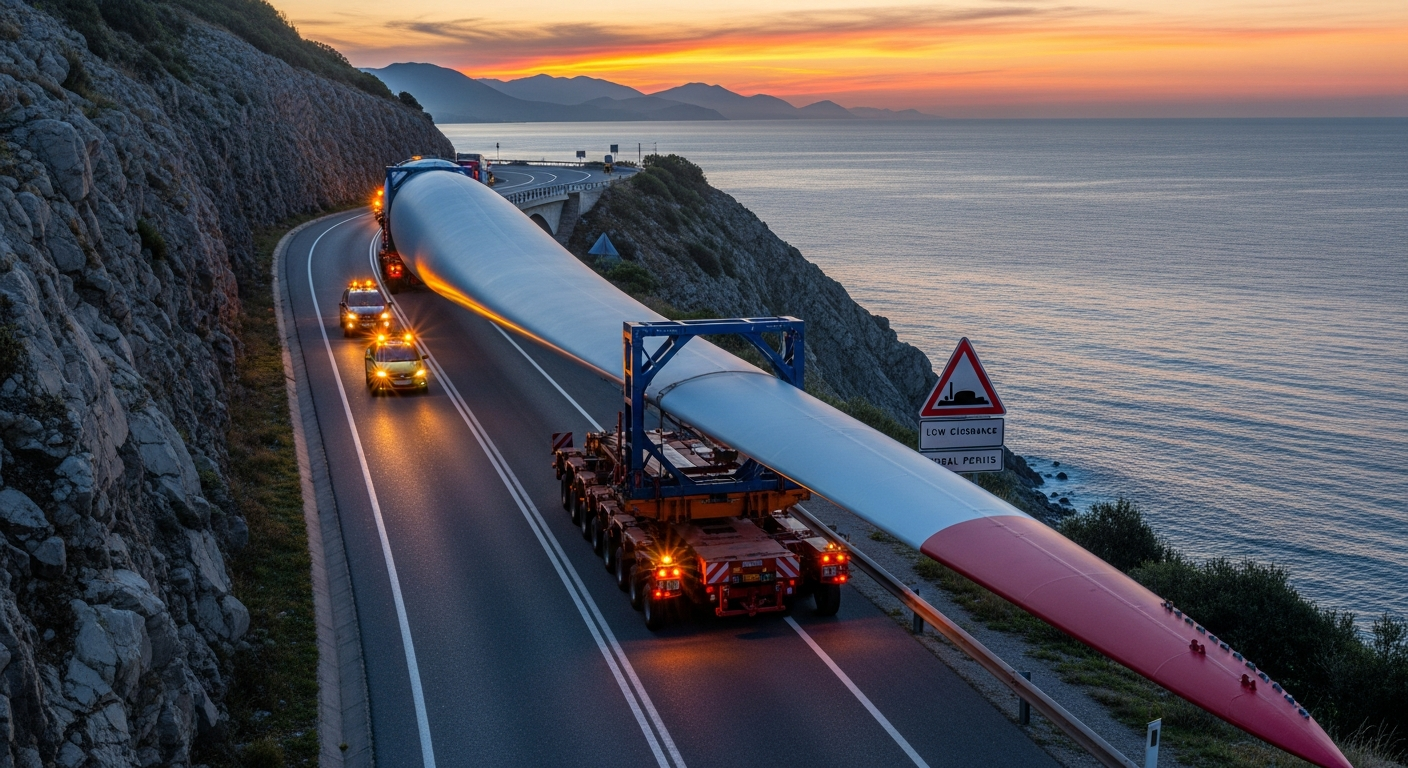
Engineering Complexity, Regulatory Barriers, and Operational Risk
Typical challenges include:
- Road and bridge weight limits
- Limited port capabilities for heavy lifts
- Weather exposure on open-deck or break bulk vessels
- Long lead times for permits and escorts
- Terminal congestion during peak seasons
- Storage constraints at job sites
- Customs complexity for specialized cargo
Poor planning increases the risk of cargo shifting, damage, or compliance violations. Successful project logistics requires early engineering reviews, accurate drawings, and robust coordination across carriers and authorities.
What equipment is used in project logistics?
Specialized hardware ensures safe handling of oversized or heavy freight.
Project logistics uses cranes, heavy-lift vessels, modular trailers, and engineered lifting gear.
Heavy-Lift Tools, Transport Vehicles, and Support Systems
Typical equipment includes:
- 250–1,000+ ton cranes
- Heavy-lift ships (HLVs)
- SPMT trailers (self-propelled modular transporters)
- Barges for inland waterways
- Spreader bars, lifting beams, and rigging gear
- Steel cradles and reinforced platforms
- Escort vehicles for oversized transport
Each project requires load diagrams showing stress points, center of gravity, and lifting angle calculations.
How does project logistics connect to break bulk shipping?
Many oversized items cannot fit inside containers.
Project logistics relies heavily on break bulk vessels for large industrial cargo.
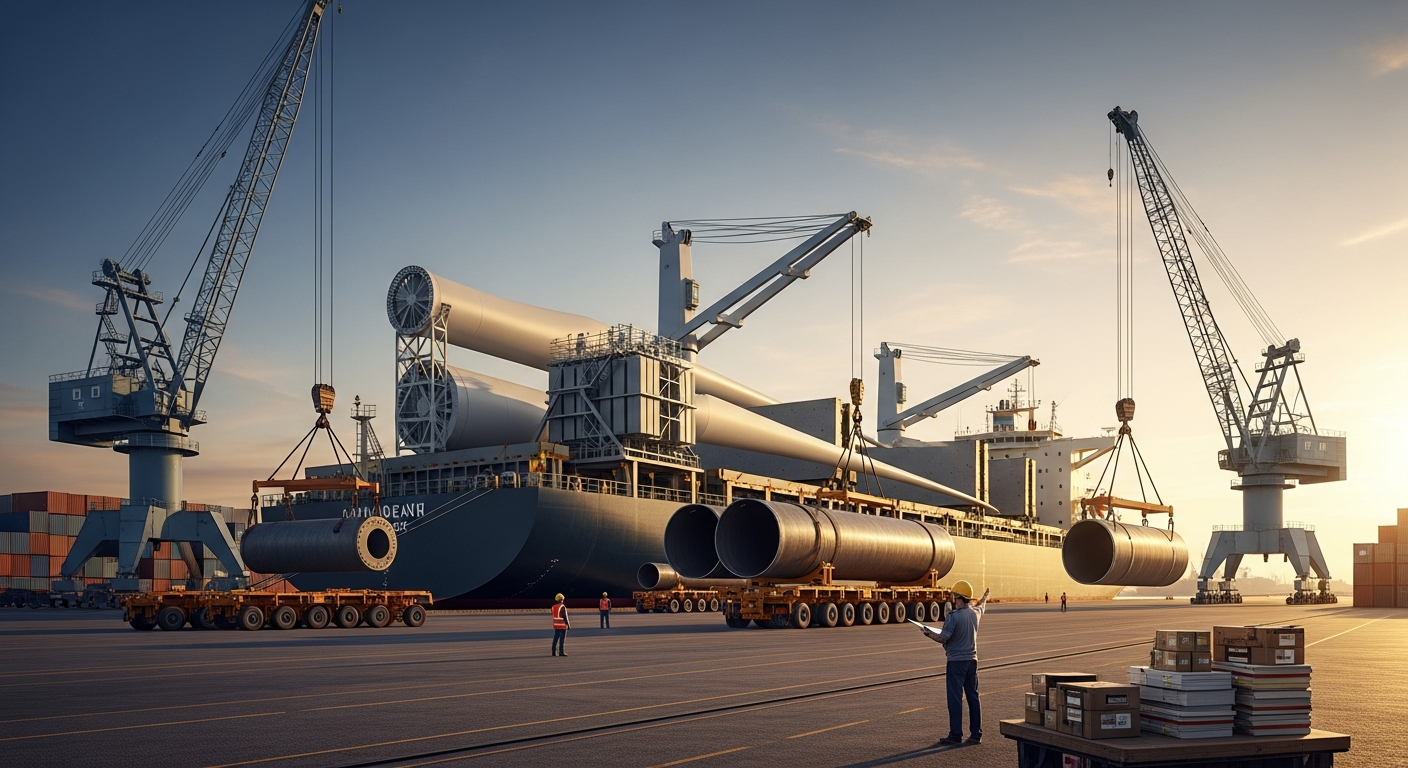
Vessel Selection, Heavy-Lift Planning, and Port Handling
Break bulk vessels provide deck space, lifting capacity, and flexibility to position cargo safely. Ports must support heavy-lift operations with cranes, dockside rigs, and skilled operators.
Project logistics teams design lifting and securing plans, ensuring safe placement on deck or in the cargo hold. This coordination ensures compliance with international maritime standards.
What documents are required for project logistics?
Complex cargo requires detailed engineering and regulatory documentation.
Project logistics documentation includes drawings, weight certificates, permits, and customs files.
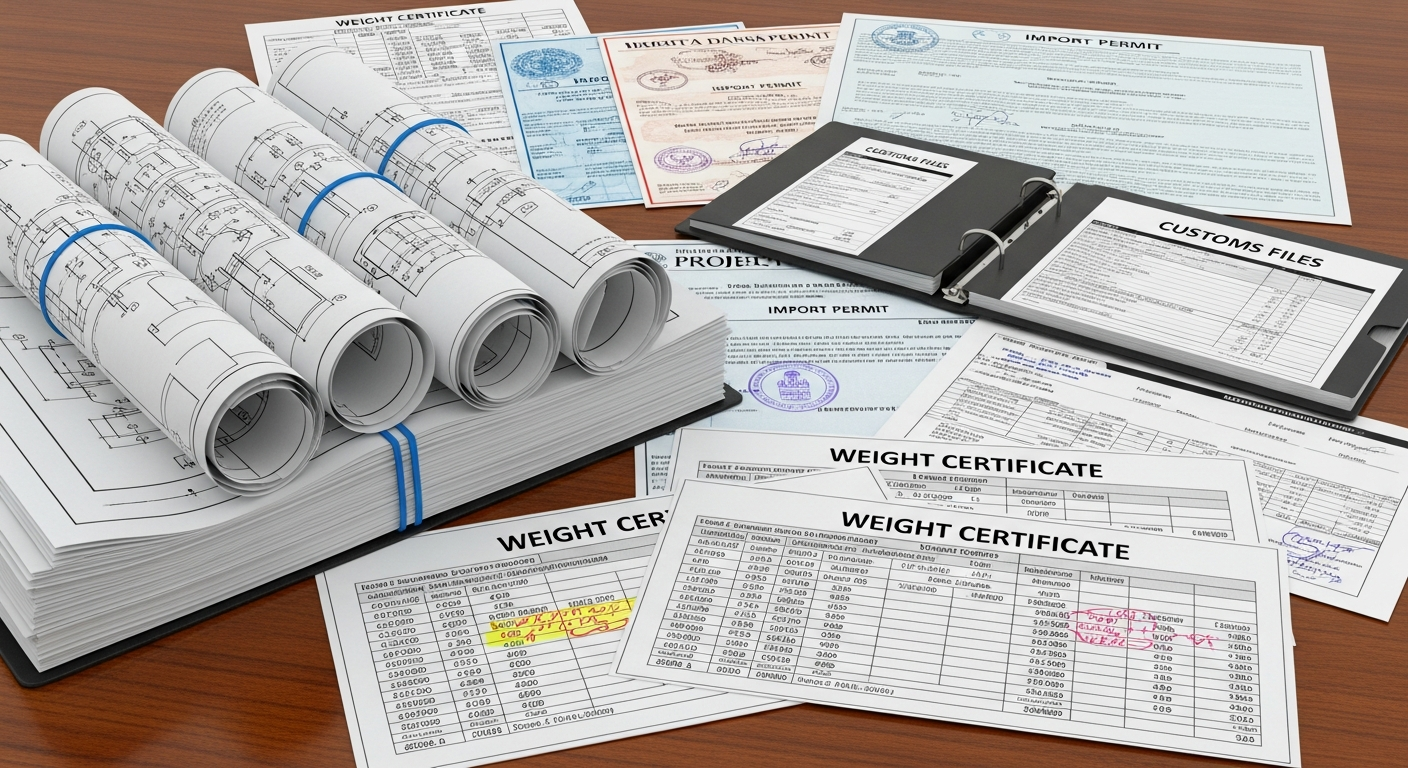
Engineering Files, Shipping Papers, and Customs Compliance
Common documents include:
- Commercial invoice and packing list
- Bill of lading (break bulk or specialized)
- Engineering drawings (3D models, lifting diagrams)
- Weight certificates
- Route surveys and transport permits
- Insurance certificates
- Hazardous material files (if applicable)
- Customs declarations and HS codes
Accurate documentation ensures authorities approve routes, ports accept cargo, and customs clears equipment efficiently.
Conclusion
Project logistics manages oversized, heavy, or highly specialized cargo through engineered planning, multimodal routing, and strict safety coordination. It supports large construction, energy, mining, and industrial projects where standard shipping cannot be used. With precise measurements, reliable documentation, and expert handling teams, project logistics ensures complex cargo moves safely from origin to job site—on time and in full.
 Chinese
  English